Home AC Checklist Before Extreme Heat: Filters, Drainage and Outdoor Unit
Smartor 편집팀
August 24, 2026

When an air conditioner runs longer than usual or one room will not cool during extreme heat, the first instinct is often to keep lowering the thermostat. That does not address a clogged filter, blocked return grille, debris around the outdoor unit, or a condensate drainage problem. It can also distract from warning signs—such as a burning odor, a breaker that trips repeatedly, ice on the refrigerant line, or a major water leak—that call for shutting the system down and getting qualified help. The goal of a pre-heat-wave check is not to take the equipment apart. It is to separate safe homeowner observations from work that belongs to an HVAC or electrical professional.
This guide provides general home-maintenance and safety information for U.S. homes, with a focus on central air conditioners and heat pumps operating in cooling mode. The equipment manual, lease, condominium or HOA rules, and local building and electrical requirements take priority. Refrigerant, high-voltage components, motors, internal coils, and electrical controls should be handled by qualified professionals. If someone may be developing a heat-related illness, move the person to a cooler place and seek medical help or call 911 when appropriate; equipment troubleshooting comes second. This article is not medical, legal, or individualized professional advice.
For heat-health precautions and ways to find a cooler location, see Smartor’s U.S. extreme heat safety checklist. The steps below focus on preparing the cooling system and responding to equipment problems.
Confirm that the thermostat is in cooling mode, the set point is below the current room temperature, and any programmed schedule reflects what the household actually wants. If the model uses replaceable batteries, follow its instructions when the display is dim or settings keep resetting. A smart thermostat being offline does not necessarily mean the HVAC equipment has failed, so look at the wall control and confirm whether air is actually moving.
Turning the set point far below the desired temperature generally does not make a typical air conditioner suddenly produce colder air. It may simply keep the system running longer. Choose a consistent setting the household can tolerate, including sleeping and away periods, and test whether the system starts, runs, and stops normally before the hottest part of the day. Heat pumps and staged or variable-capacity equipment may behave differently from basic single-stage systems; the manual remains the best model-specific reference.
If the filter compartment is intended for routine user access, turn the system off and photograph the size printed on the existing filter and the direction of its airflow arrow before removal. Filters with the same face dimensions can have different thicknesses, and installing one backward can interfere with proper operation. Replace a filter that is loaded with dust, wet, damaged, or collapsed using a compatible product. If it is a reusable filter, let it dry completely before reinstalling it.
ENERGY STAR advises inspecting, cleaning, or changing filters monthly in central air conditioners, furnaces, and heat pumps. That is an inspection rhythm, not a claim that every disposable filter must be thrown away every month. Pets, construction dust, smoke, filter design, and runtime all affect the actual interval. The U.S. Environmental Protection Agency says that people seeking better particle capture should consider at least MERV 13, or the highest rating the system fan and filter slot can accommodate. Ask a qualified technician when compatibility is uncertain. Automatically choosing the highest number can restrict airflow in a system that was not designed for it.
When wildfire smoke and fine particles are also a concern, Smartor’s wildfire smoke indoor-air guide explains how HVAC filtration and portable air cleaners fit together. Cooling and particle filtration overlap, but a filter does not remove every gas or indoor pollutant.
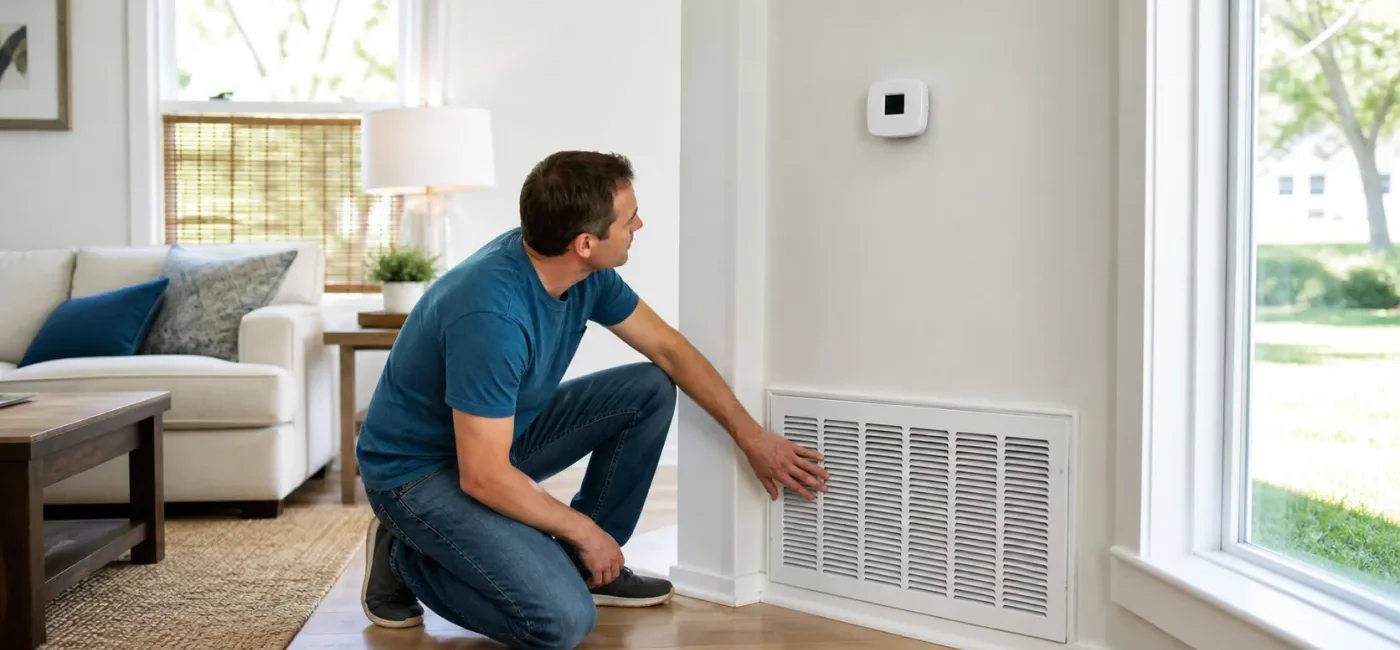
Look for a couch, storage box, curtain, or laundry blocking a large return-air grille. Make sure supply registers in individual rooms are not hidden by furniture or thick rugs. With the system off, gently clean visible surface dust; do not push tools deep into ductwork. Closing many vents to force cold air toward one room can disrupt system balance, so do not make widespread damper changes without manufacturer or technician guidance.
If only one room feels hot, compare door position, afternoon sunlight, blinds, heat-producing electronics, and vent obstruction. Weak airflow at every register may involve the filter, blower, coil, duct system, or controls. Weak airflow in just a few rooms may point to a damper, disconnected or leaking duct, or a room-specific heat-load issue. Record the pattern rather than opening walls or ducts.
Air conditioners remove moisture from the air and send that condensate to a drain. Look for standing water near the indoor unit or auxiliary drain pan, a ceiling stain below an attic unit, a musty odor, or a drain that visibly overflows. ENERGY STAR includes condensate-drain inspection in a typical maintenance visit because a clogged drain can contribute to water damage and indoor humidity problems.
Do not insert wire, harsh chemicals, or compressed air into a drain simply because an opening is visible. The wrong method can damage piping or force water into the equipment. If water is contacting electrical components, spreading across a ceiling or wall, or repeatedly activating a float switch, shut the system down when safe and contact a professional or property manager. Renters should provide written notice with the time, affected area, and photographs rather than merely drying the floor and restarting the unit.
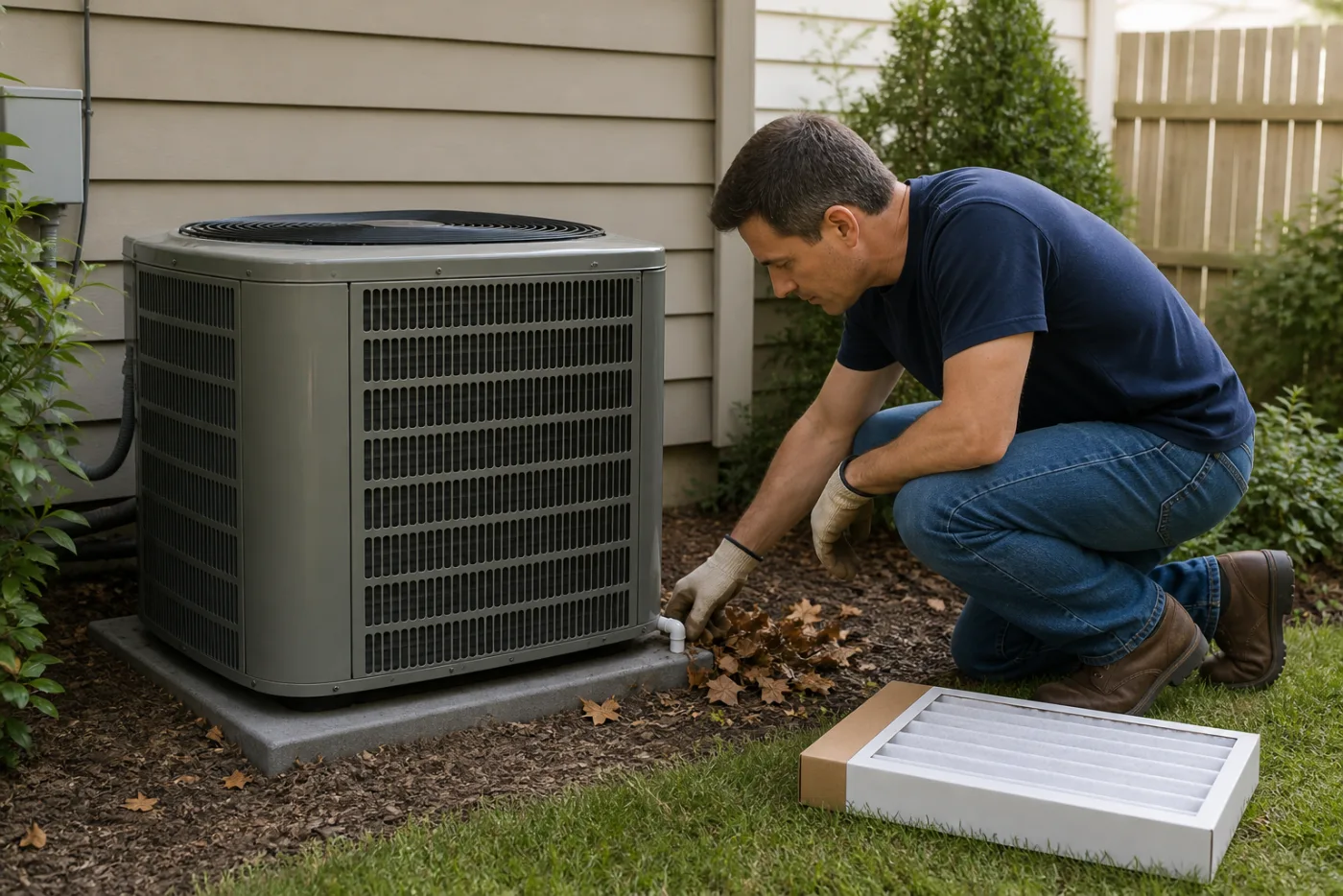
Check whether loose leaves, grass clippings, plastic, vines, or stored items are blocking the sides or top of the outdoor condenser. Without opening a service panel, remove only debris that can be reached safely and maintain the clearance specified by the manufacturer. Direct lawn-mower discharge away from the coil and do not use the condenser as a shelf or cover it while it is operating.
Do not blast the coil with a pressure washer, scrub delicate metal fins aggressively, or put a hand through the fan grille. Electrical energy can remain hazardous inside certain components even when you believe power is off. If the unit is tilted, wire insulation is damaged, a refrigerant line is iced, or the fan is stationary while the unit makes a loud sound, take a picture from a safe distance and call a qualified technician.
Close exterior doors and windows, select cooling mode, and observe whether the system starts. Check for air at the supply registers and suction at the return grille. From a distance, listen for abnormal metal-on-metal sounds or severe vibration at the outdoor unit. Keep hands away from the fan and all electrical equipment. If the home approaches the set point, note whether the system cycles off normally.
A properly operating unit may run for a long time on a very hot afternoon. Runtime alone does not prove low refrigerant. More useful clues are a clear change from normal behavior, the trend in indoor temperature, airflow, humidity, noise, water, and ice. If you have a digital room thermometer, record readings from the same location at consistent intervals. Do not attempt to diagnose refrigerant charge from a single supply-air temperature reading.
Ready.gov recommends window coverings, weather-stripping, insulation, and using the oven less during extreme heat. These steps do not repair failed equipment, but they can reduce solar gain, air leakage, and heat generated inside the home, which lowers the burden on a functioning system.
Confirm the thermostat mode, close open windows, and check the filter and vents. If the outdoor unit is not operating, ice is visible on the line, or the room temperature does not decline over time, stop repeatedly lowering the set point and request service. Do not add refrigerant or a leak-stop product yourself.
Look for a dirty filter and blocked return or supply vents. If a wet or frozen coil may be involved, do not keep running the system. Blower motors, controls, ducts, and coil conditions cannot be confirmed from a quick exterior check. Tell the technician which rooms are affected and when the change began.
Do not repeatedly reset it. Even one trip can indicate overload, a short, motor trouble, or a wiring issue. If the panel is hot or produces an odor or sound, do not touch it; contact an electrician or emergency services as appropriate. Never power a central air conditioner through an extension cord.
Determine whether water is approaching electrical equipment and shut the system off if that can be done safely. Do not simply wipe up the water and restart. The condensate drain, pan, pump, and possible coil icing need attention. Renters should document the time, ceiling or flooring affected, and any property damage, then notify management in writing.
Do not break the ice or pour hot water on it. Restricted airflow, a filter issue, blower trouble, or a refrigerant-related problem can all be involved. Turn the equipment off, watch for water as it thaws, and arrange professional diagnosis.
Stop using the system and move to safety. Call 911 if you see smoke, sparks, or fire. Do not put water on an electrical fire, and do not open equipment or an electrical panel unless you are trained and the situation clearly calls for it.
ENERGY STAR describes a typical pre-season professional visit as including thermostat settings, electrical connections, condensate drainage, coils, refrigerant level, blower components, and safe control operation. That list is useful when asking a contractor what a maintenance visit includes; it is not an invitation for a homeowner to disassemble and test all of those components.
Rules on rent withholding, repair-and-deduct remedies, hotel expenses, and habitability vary by state and by the facts of the lease. Do not stop rent or deduct repair costs based only on a general internet article. Check with the appropriate local housing agency or a qualified legal professional. This guide is not legal advice.
A household with pets notices weak airflow at every register and cannot remember the last filter change. With the system off, the resident finds a visibly loaded filter, photographs its size and arrow, and installs a compatible replacement in the correct direction. Airflow improves, and a monthly inspection reminder goes on the calendar. If overheating, noise, or weak performance had remained, the filter change would not be treated as a complete diagnosis.
The rest of the home cools, but an afternoon bedroom remains hot. A bed partly blocks the supply register and direct sun enters through an uncovered west window. Moving the furniture and closing the shade reduces the difference. The household does not close every other register in an attempt to force air into the room. If the problem persists, a technician can evaluate the duct and room heat load.
In a rental home, a stain and dripping water develop below the attic air handler. The resident does not open the equipment. Photos are taken, cooling is stopped when safe, and the landlord receives immediate written notice. Rather than waiting for the stain to dry and turning the unit back on, the resident requests inspection of the drain and auxiliary pan to limit additional damage.
The air conditioner runs for a long stretch, but there is no smoke, ice, water, odd noise, or breaker trip, and the indoor temperature is slowly falling. The household closes blinds, postpones oven use, and records the temperature trend instead of repeatedly changing the set point. If the home still cannot approach the target later in the evening or performance is clearly worse than normal, service is requested.
Not necessarily. ENERGY STAR advises inspecting, cleaning, or changing it monthly. The actual replacement interval depends on the filter type, manufacturer instructions, pets, dust or smoke, and system use. Do not continue using a filter that is wet or damaged.
No. EPA recommends considering MERV 13 or the highest rating the system can accommodate. Check the equipment documentation and existing specifications, and ask a technician about compatibility and airflow if the answer is unclear.
That depends on the equipment and manufacturer instructions. Avoid a pressure washer, which can bend fins and create electrical problems. A user-level check generally means clearing loose debris around the closed unit. Follow the manual or professional guidance for coil cleaning.
Not by itself. Extreme outdoor temperature, humidity, insulation, solar gain, and equipment capacity all affect runtime. Service is more urgent when the indoor temperature does not decline or when long operation occurs with ice, water, odor, abnormal noise, or repeated breaker trips.
A homeowner observation cannot reliably confirm it. Warm supply air or ice may also occur with airflow and blower problems. Refrigerant measurement, leak detection, and repair belong to a qualified technician.
Only if the indoor conditions remain safe. Ready.gov says not to rely on a fan as the primary cooling device. If the home keeps heating up or a vulnerable person is present, move to a cooling center or another air-conditioned place and watch for heat-illness symptoms.
Check the lease and access rules first. Some leases make routine filter changes a resident duty, while locked mechanical rooms and common systems remain under building control. Ask management in writing for the correct filter and responsibility line.
ENERGY STAR recommends pre-season checkups—cooling equipment in spring and heating equipment in fall. Contractors can become busy after a heat wave begins, so a recurring calendar reminder before the cooling season is practical.
A useful pre-heat-wave AC check stays within a clear boundary: verify the thermostat, filter, vents, visible drainage, and space around the outdoor unit; document normal operation; and stop when a warning sign appears. Repeated breaker trips, a burning smell, major water, ice on a line, or a stationary condenser fan are not problems to outsmart with thermostat changes. Pair the maintenance checklist with an alternate place for people to cool down, and the household can respond to equipment trouble without losing sight of heat safety.
브라우저 메뉴에서 앱 설치 또는 홈 화면에 추가를 선택해 주세요.
[…] Read this guide in English → […]