
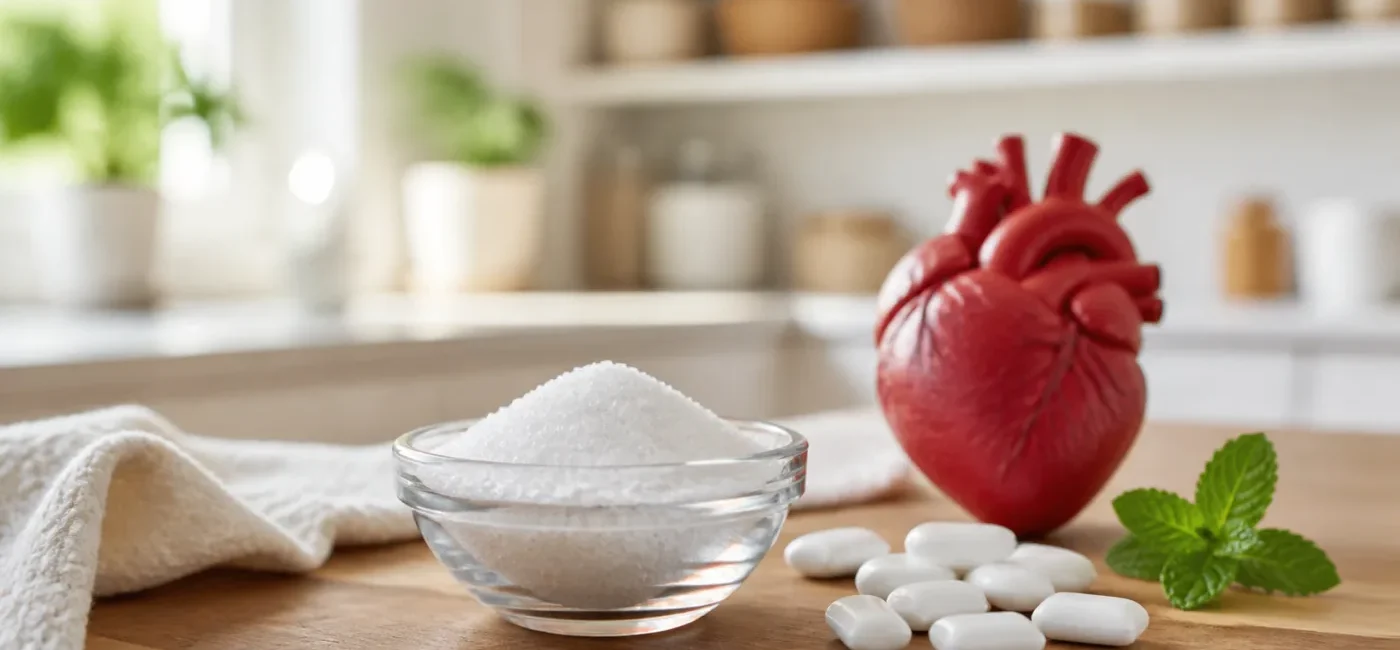
A new cardiovascular study does not mean everyone should immediately throw away every package of sugar-free gum, mint, toothpaste, or baking sweetener that contains xylitol. It does give consumers a good reason to look more carefully at how much they use, why they use it, and whether several products are adding up during the day. Research presented at the European Society of Cardiology (ESC) Congress 2026 found that people with higher blood levels of xylitol experienced more major cardiovascular events—a combined outcome of cardiovascular death, heart attack, or stroke—than people with lower levels.
The critical word is association. The study was observational, so it cannot prove that eating xylitol caused those events. Blood xylitol may reflect diet, the body’s own metabolism, health conditions, or a combination of factors. The practical response is therefore neither panic nor dismissal. People who use spoonfuls of xylitol powder, eat multiple sugar-free products every day, or already have a high cardiovascular risk can review their labels and discuss their actual exposure with a clinician. A toothpaste that is used as directed and spit out is also not the same exposure as a powdered sweetener that is swallowed in substantial amounts.
Key takeaways
- The 2026 ESC report analyzed 17,710 participants from two prospective observational cohorts in Canada and Europe.
- Participants in the highest quarter of blood xylitol levels had a 57% higher relative risk of a major adverse cardiovascular event over six years in the Canadian cohort and an 18% higher relative risk over 30 years in the European cohort, compared with the lowest quarter.
- Those percentages are relative comparisons between groups. They are not a statement that an individual has a 57% or 18% chance of a heart attack or stroke.
- The study found a relationship but did not prove causation. Unmeasured health or metabolic factors could still help explain the results.
- The findings do not establish a safe or unsafe daily dose for consumers and do not create a universal recommendation to stop all xylitol immediately.
- People with existing cardiovascular disease or multiple risk factors have the strongest reason to review high-dose or repeated use with their physician or registered dietitian.
What happened
According to the ESC’s August 2026 research summary, investigators examined two large cohorts: the Canadian Longitudinal Study on Aging (CLSA) and the Norfolk arm of the European Prospective Investigation into Cancer (EPIC-Norfolk). Together, the analysis included 17,710 participants. Researchers grouped participants by measured blood xylitol levels and followed them for major adverse cardiovascular events, defined as cardiovascular death, myocardial infarction, or stroke.
In the Canadian cohort, the highest quartile of blood xylitol was associated with a 57% higher risk than the lowest quartile over six years after adjustment for known cardiovascular risk factors. In EPIC-Norfolk, the highest quartile was associated with an 18% higher risk over 30 years. The reported relationship generally rose across xylitol levels. The analysis accounted for factors including age, sex, smoking, lipid levels, diabetes, hypertension, and body mass index, but statistical adjustment cannot eliminate every possible difference between groups.
The 2026 findings matter partly because they follow a 2024 study by members of the same research group. That earlier European Heart Journal paper combined analyses in higher-risk patients with platelet experiments and a small human intervention. It reported that xylitol could increase platelet responsiveness and signals related to clot formation. The newer work asked whether the association could also be detected in larger general-population cohorts over much longer follow-up. It did, but it remained observational rather than a randomized trial that assigned people to consume xylitol for years.
How to read the relative-risk numbers
A “57% higher risk” means the comparison measure was 1.57 times as high in the top blood-level group as in the bottom group. It does not mean 57 of every 100 people had an event. If a hypothetical baseline risk were 2%, a 57% relative increase would produce about 3.14%; if the baseline were 20%, the corresponding figure would be about 31.4%. Those examples only explain the math—they are not the event rates in this study. A person’s starting risk varies greatly with age, prior cardiovascular disease, smoking, blood pressure, cholesterol, diabetes, kidney health, and other factors.
Why causation is still uncertain
A high blood xylitol level is not automatically a precise record of how much xylitol-containing food someone ate. Xylitol occurs in very small amounts in some foods and can also be produced in the body as part of glucose metabolism. Kidney function, metabolic health, dietary patterns, timing of the blood draw, and other variables may influence the measurement. Researchers can adjust for measured differences, but no observational analysis can guarantee that every confounding factor was captured.
The publicly available report also does not translate blood quartiles into a consumer rule such as a specific number of gum pieces or grams of powder per day. It cannot tell an individual that one serving will cause a heart attack, and it cannot prove that every use pattern is harmless. Claims at either extreme go beyond the evidence.
Who may be affected
The first people to review their routine are those who deliberately use substantial amounts, not someone who encounters xylitol occasionally. Examples include adding several spoonfuls of xylitol powder to coffee, drinks, or baking; chewing sugar-free gum throughout the day; or combining mints, candy, protein products, beverages, and other “sugar-free” foods. The front label does not reveal the full picture. A product may contain xylitol, another sugar alcohol such as erythritol, sorbitol, or maltitol, or a blend.
People with coronary artery disease, a previous heart attack or stroke, peripheral artery disease, or a history of clotting problems may reasonably take a more cautious approach. The same applies to people whose baseline risk is elevated by diabetes, high blood pressure, high LDL cholesterol, smoking, chronic kidney disease, older age, or several of these factors together. This is not proof that xylitol will harm these groups. It means a new and unresolved safety signal may matter more when the consequences and starting risk are already higher.
People who use sugar substitutes to manage diabetes should not automatically replace xylitol with large amounts of sugar. Added sugar can create different problems for glucose control, weight, dental health, and cardiovascular risk. A better approach is to reduce overall sweetness where practical, choose unsweetened drinks and minimally processed foods more often, and fit any sweetener into a personalized eating plan with a clinician or registered dietitian.
Oral-care products need separate consideration. Toothpaste is generally designed to be spit out, not eaten. Follow the package directions and supervise children so they do not swallow it. Households with dogs also face a separate, immediate safety issue: xylitol can be extremely dangerous to dogs. Keep gum, mints, toothpaste, and baking ingredients out of reach, and contact a veterinarian or animal poison service immediately if ingestion is suspected.
What to do now
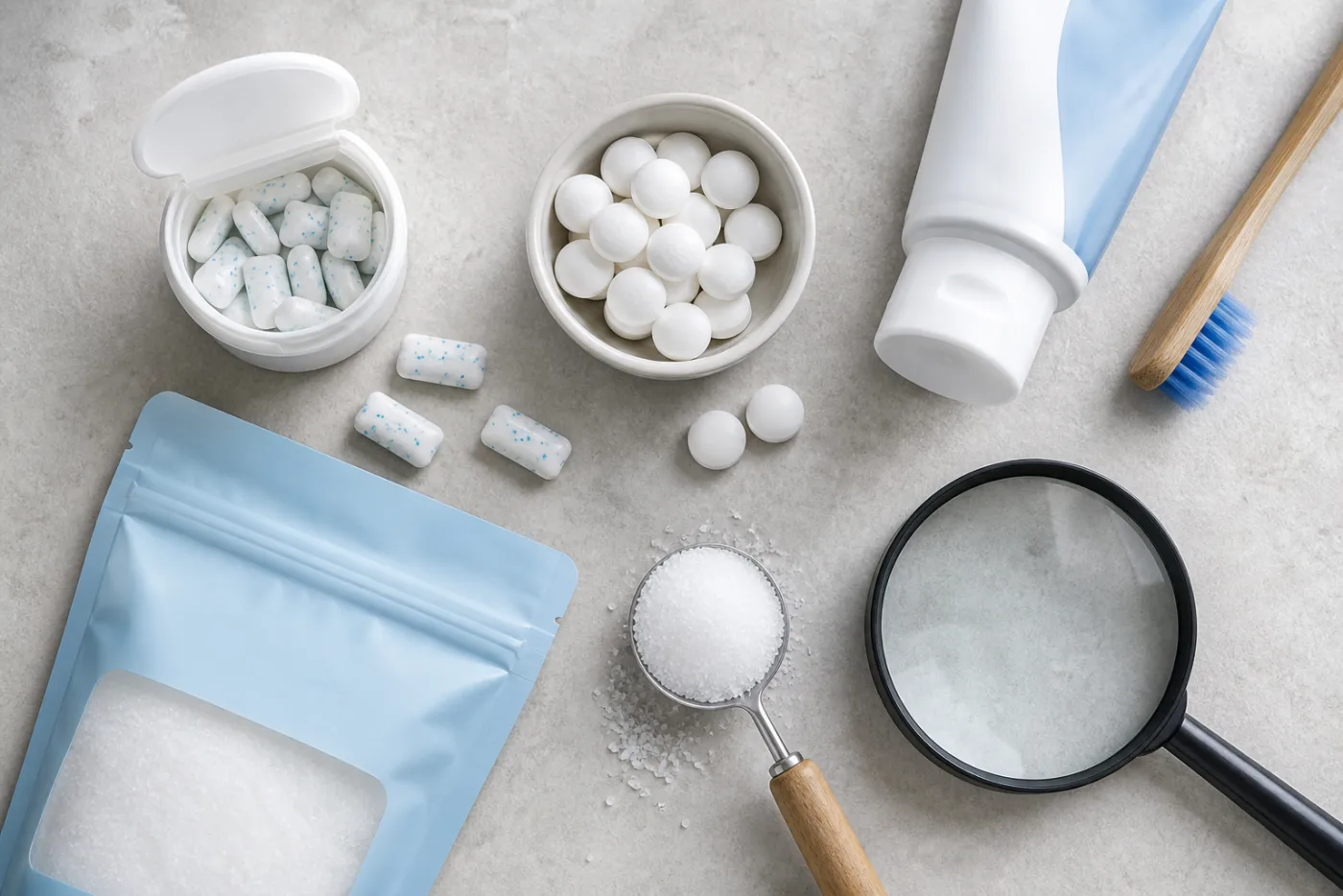
- Gather the relevant products. Check sugar-free gum, mints, candy, drinks, jam, baking mixes, protein foods, powdered sweeteners, toothpaste, and mouthwash. Remember items kept in a car, desk, gym bag, or travel kit.
- Read the full ingredient list. Look specifically for “xylitol.” Do not rely only on front-label phrases such as “sugar-free,” “no added sugar,” or “keto,” because they do not identify which sweetener was used.
- Separate swallowed products from spit-out products. Food, gum, mints, and powders create a different exposure than toothpaste or mouthwash used according to directions. Do not simply count every item as equivalent.
- Keep a three-to-seven-day record. Write down the product, amount per use, number of daily uses, and reason for using it. Even when the exact grams of xylitol are not disclosed, this reveals which habits are most frequent.
- Address the largest optional sources first. Reconsider multiple spoonfuls of bulk powder or continual snacking on sugar-free products before worrying about a rare exposure. Avoid compensating by sharply increasing added sugar.
- Do not diagnose symptoms by ingredient. The study did not identify an immediate symptom unique to xylitol. Chest pain, shortness of breath, facial drooping, one-sided weakness, or difficulty speaking requires emergency evaluation; call 911 rather than waiting for a dietary appointment.
- Bring specifics to a clinician. Photos of ingredient panels, the amount of bulk powder used, and the daily frequency are much more useful than saying only that you eat “sugar-free products.”
Make substitutions carefully
The goal is not to swap xylitol for unlimited sugar or simply move to another sweetener without considering the whole diet. Replacing sweet drinks with water or unsweetened tea, reducing dessert frequency, and choosing whole foods such as fruit, nuts, or plain yogurt can lower reliance on sweetness overall. If sugar alcohols have also caused bloating, gas, or diarrhea, mention those effects during the same review because large amounts can produce gastrointestinal symptoms in some people.
If you have used xylitol gum for dental reasons, do not abandon the rest of your oral-health routine. Brushing with fluoride toothpaste, flossing, regular dental visits, drinking water, and limiting frequent sugar exposure remain foundational measures. Whether to continue, reduce, or replace a xylitol product can be decided with a dentist or physician who understands your dental needs, cardiovascular history, and actual intake.
How to verify the information
Start with the ESC’s own research release. It states the study title, presentation date, cohorts, participant count, follow-up periods, adjusted factors, outcome definition, and the central limitation that observational work cannot establish causality. If a social post or video mentions only a dramatic percentage, check whether it identifies the comparison group, distinguishes relative from absolute risk, and explains whether the results have been published as a peer-reviewed full paper.
For product questions, compare the package’s ingredient list with the U.S. Food and Drug Administration’s consumer information on sugar substitutes. The FDA describes xylitol as one example of a sugar alcohol, alongside sorbitol, lactitol, mannitol, erythritol, and maltitol. Checking only “Total Sugars” on the Nutrition Facts panel can miss the ingredient; read the ingredient list for the actual name.
The 2024 European Heart Journal paper is the primary source for the earlier mechanistic and clinical signal. It helps readers distinguish evidence from platelet experiments and observational cohorts from proof that a particular consumer product causes a clinical event. Each type of evidence answers a different question, and none should be stretched beyond its design.
Frequently asked questions
Should I stop chewing xylitol gum today?
The observational findings did not produce a universal instruction for everyone to stop immediately. If use is occasional, start by checking frequency and whether other products add more xylitol. If you have high cardiovascular risk or chew it repeatedly all day, discussing alternatives with your clinician or dentist is reasonable.
Should I ask for a blood xylitol test?
There is no standard recommendation in the published consumer guidance for routine clinical xylitol testing. A research measurement should not be interpreted as a stand-alone diagnostic test. Managing established risks—blood pressure, cholesterol, glucose, smoking, activity, and prescribed treatment—remains the priority.
Does every sugar-free product contain xylitol?
No. Products may use another sugar alcohol, a high-intensity sweetener, or a blend. Read the complete ingredient list rather than assuming from “sugar-free” on the front.
If xylitol occurs naturally, doesn’t that make it safe?
Natural occurrence alone does not determine safety at every dose or in every form. Tiny amounts in whole foods and concentrated amounts added to processed products or sold as bulk powder are different exposures. The reverse is also true: “natural” does not make a substance dangerous. Dose, route, individual health, and the quality of evidence matter.
Is going back to sugar safer?
Not automatically. High added-sugar intake carries established concerns for glucose control, weight, dental health, and cardiometabolic health. Focus first on reducing the frequency and intensity of sweetness, then make a personalized choice rather than treating one-for-one substitution as the only option.
Does xylitol in toothpaste count the same as food?
Toothpaste is intended to be spit out after use, so its exposure is not equivalent to swallowing a sweetened food or bulk powder. Follow label directions. If a child is swallowing toothpaste or someone is intentionally ingesting it, show the specific product and estimated amount to a pediatrician, dentist, or poison-control professional.
Does chest pain after a sugar-free product mean xylitol caused it?
No one can identify the cause of chest pain from that timing alone. New or severe chest pain, trouble breathing, cold sweats, pain spreading to the jaw or arm, facial droop, one-sided weakness, or speech difficulty may be an emergency. Call 911 first and review ingredients only after urgent evaluation.
This article provides general consumer information and is not a diagnosis or treatment plan. Do not change medication, a diabetes meal plan, or dental treatment without guidance from a qualified professional.