U.S. Home Vacancy Rate Falls to 1.2%; ATTOM Counts 8,040 Vacant Foreclosures
Smartor 편집팀
October 29, 2026

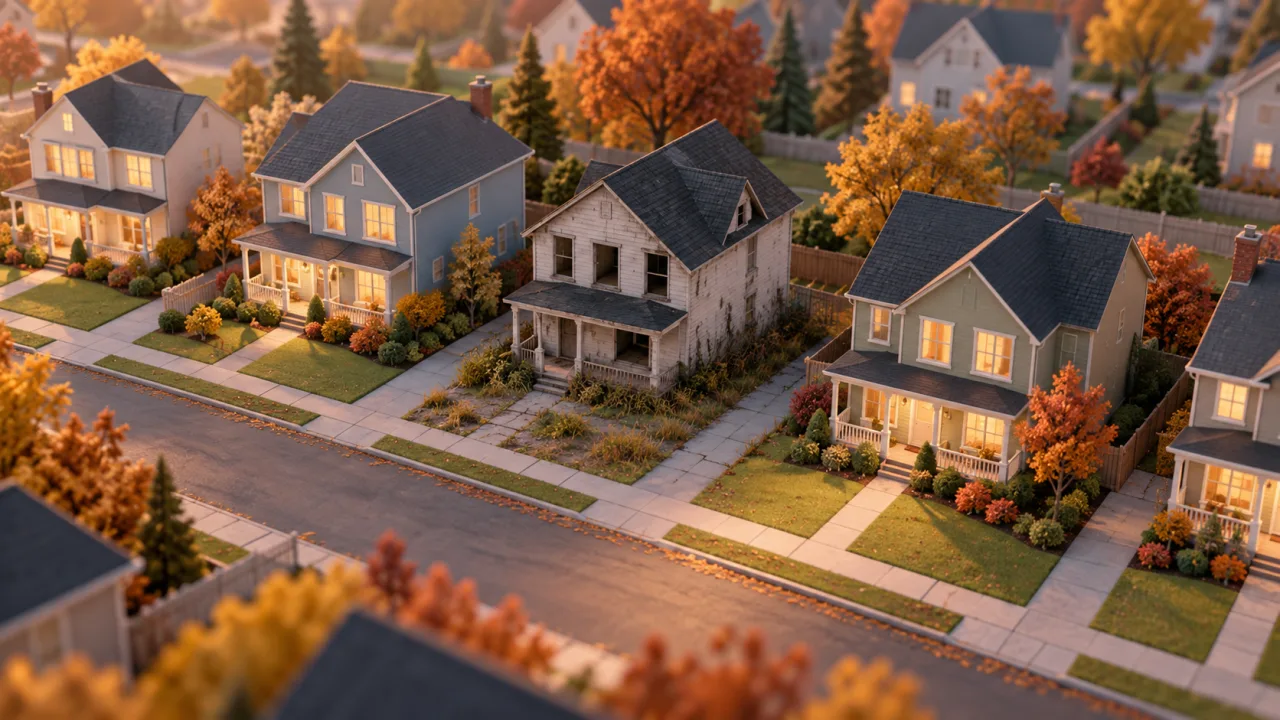
Featured image: AI-generated explanatory illustration of residential vacancy. It does not depict a specific neighborhood or any property in the study.
The U.S. residential vacancy rate fell to 1.2% in ATTOM’s fourth-quarter 2026 Vacant Property and Zombie Foreclosure Report, down from 1.3% in both the preceding quarter and a year earlier. The property data company also reported a decline in the share of homes left vacant by their owners before foreclosure proceedings were completed.
ATTOM analyzed approximately 105.1 million residential properties. Of those, 269,195 were in the foreclosure process, and 8,040 were classified as “zombies”—homes abandoned before that process had concluded. These properties accounted for 3% of homes in foreclosure, down from 3.3% in both the previous quarter and the fourth quarter of 2025.
The two rates measure different groups. The 1.2% vacancy rate covers all residential properties analyzed, regardless of ownership or foreclosure status. The 3% zombie rate measures vacant, abandoned homes within the group already in foreclosure; it does not mean that 3% of all U.S. homes were in foreclosure.

Despite the lower national rates, the number of zombie properties rose from the preceding quarter in 29 states. Among states with at least 50 such properties, Wisconsin recorded a 20.9% increase to 52, Maryland a 19.2% increase to 180, and Pennsylvania a 17.2% increase to 252. Texas rose 15.7% to 192.
Arizona moved in the opposite direction, with a 34.9% decline to 56 zombie properties. Florida fell 19.6% to 2,220, while California declined 10.4% to 267. The differing state results show that the national decline was not a uniform local trend.
New Hampshire had the lowest overall residential vacancy rate at 0.3%. Vermont, New Jersey and Connecticut each stood at 0.4%. The highest rates were in Oklahoma at 2.4%, Kansas at 2.3%, and Alabama and West Virginia at 2.1% each. Those figures concern all residential properties analyzed in each state, not just homes in foreclosure.
Among the 164 metropolitan statistical areas that met ATTOM’s reporting thresholds, Baltimore, Maryland, and Youngstown, Ohio, each had zombie rates of 13% of properties in foreclosure. Ten metro areas, including Bridgeport, Connecticut, and El Paso, Texas, had no zombie properties recorded.
ATTOM chief executive Rob Barber described the national declines in vacancy and zombie foreclosure rates as modest, while noting that conditions differed across states. Vacant and abandoned homes continued to account for a relatively small portion of the nation’s housing stock, he said.
The report combines public property records, including county tax assessor data, with vacancy information updated monthly. Its metro-area comparisons include only areas with at least 100,000 residential properties and 50 properties in foreclosure. The fourth-quarter figures describe conditions at the time of analysis, rather than a cumulative foreclosure total through the end of the year.
브라우저 메뉴에서 앱 설치 또는 홈 화면에 추가를 선택해 주세요.