Basement Flood Prevention: Sump Pump, Drainage and Insurance Checklist
Smartor 편집팀
August 17, 2026

When heavy rain is in the forecast, towels and buckets should not be your first line of defense. Basement water does not come only from a river overflowing its banks. Roof runoff can collect beside the foundation, settled soil can direct water toward the house, a sump pump can stop when the power fails, or a sewer backup can enter through an entirely different route. Useful preparation connects all of those failure points: where water travels outside, how it might enter, what happens during an outage, and how you will stay safe if prevention is not enough.
This guide walks U.S. homeowners and renters through a practical outside-to-inside inspection. It covers gutters and downspouts, grading, window wells, sump pumps, backup power, basement storage, insurance questions, a home inventory, and the first decisions to make if water appears. Drainage systems, electrical layouts, sewer connections, permits, and building codes vary by property and location, so structural changes and electrical work should be reviewed by qualified local professionals and the authority having jurisdiction.
“The basement flooded” describes the result, not the cause. Treating every wet basement the same can lead to an expensive repair that misses the real problem. You can begin narrowing it down by walking around the exterior and inspecting walls and floor joints inside. Look for four broad paths:
During rain, observe only from a safe indoor or ground-level location. Record the first place water appears and the timing: “below the window soon after rain began,” “at the wall-floor seam after several hours,” or “the floor drain gurgled first.” Those details can help a drainage or foundation professional diagnose the source. Do not assume discolored water, sediment, or a sewage odor is harmless rainwater. Avoid skin contact and improvised cleanup when contamination may be present.
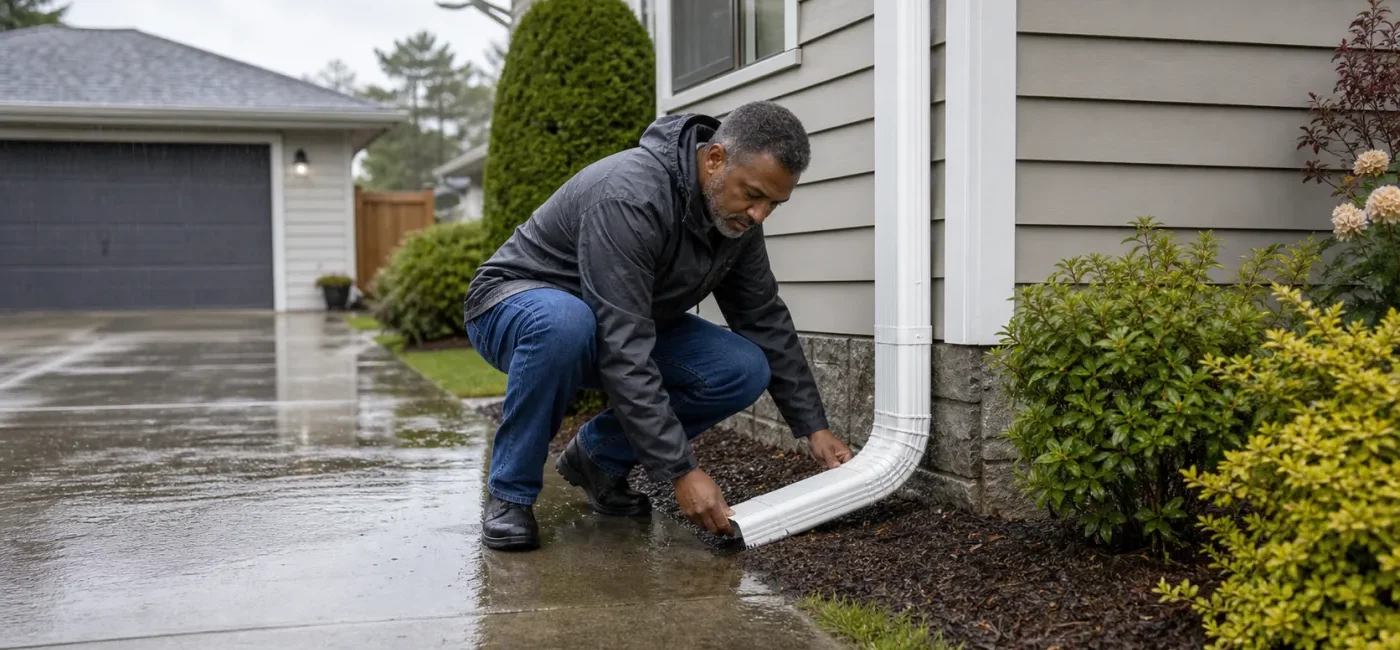
The first place to inspect is not the basement floor but the route water takes off the roof. From the ground, look for sagging gutters, separated joints, missing downspout sections, and visible leaves at outlets. During rain, you may be able to spot an overflow from a safe window or ground-level position. Never climb a ladder or walk on a wet roof during lightning, strong wind, or a storm.
There is no single downspout-extension length that fits every home. Soil, slope, frost, drainage infrastructure, and local rules differ. The goal is a lawful discharge point from which water will not return toward the foundation. Avoid creating a new problem by directing runoff at a neighboring property or a walkway that can freeze.
A yard that looks flat when dry can reveal clear water paths during a shower. Look for a sunken planting bed, settlement around an air-conditioning pad, low ground under a deck, the bottom of an exterior stairwell, and window wells that can act like small reservoirs. Before the storm, remove leaves, loose mulch, toys, and trash from visible drainage openings.
Do not simply pile soil or mulch against the house to create a quick slope. That can cover siding, ventilation, flashing, or wood components and introduce moisture or pest problems. Major regrading, French drains, retaining walls, and window-well replacement should be planned only after underground utilities, permits, discharge rules, and site conditions are understood. Temporary barriers and sandbags must not block an exit or redirect water onto someone else’s property; follow local emergency-management instructions.
Renters should focus on documentation and timely written notice rather than modifying structural, plumbing, or electrical systems. Photograph pooling water, blocked drains, old moisture marks, and a failed pump alarm with the date preserved. Send the report to the landlord or property manager and confirm the after-hours emergency number. Responsibility and required procedures vary by lease and state law, so do not make an unauthorized alteration based on general online advice.
A sump pump moves water out of a pit, but hearing the motor run does not prove that the system works. The float, electrical supply, check valve, discharge pipe, outdoor outlet, and high-water alarm must work together. Follow the manufacturer’s instructions for testing. If you find a damaged cord, burning smell, repeated breaker trip, loose connection, or water near electrical components, stop and call a qualified electrician or pump professional.
A typical inspection sequence looks like this:
Do not casually open a sealed lid connected to a radon-mitigation system. Do not route pump discharge into a sanitary sewer unless the local authority explicitly allows that configuration. A professional should evaluate freezing risk, check-valve placement, backup capacity, and a suspected obstruction based on the actual site.
Severe storms can bring rising water and an outage at the same time. A main electric pump that works perfectly on a normal day cannot protect the basement without power. Battery backup pumps, water-powered backups, and standby generators may be options, but suitability depends on water service, plumbing, electrical capacity, expected flow, maintenance, and local code. Compare how each system is activated, how long it can operate under load, how it signals failure, and what recurring maintenance it requires.
Never operate a portable generator in a home, basement, crawlspace, garage, or near doors, windows, and vents. Carbon monoxide cannot be seen or smelled. Never backfeed household wiring through a receptacle; that can energize utility lines and endanger workers and neighbors. A code-compliant transfer arrangement and qualified electrician are required. Battery systems also need more than a glowing status light: inspect charging, terminals, age, alarm operation, and performance under an approved test load.
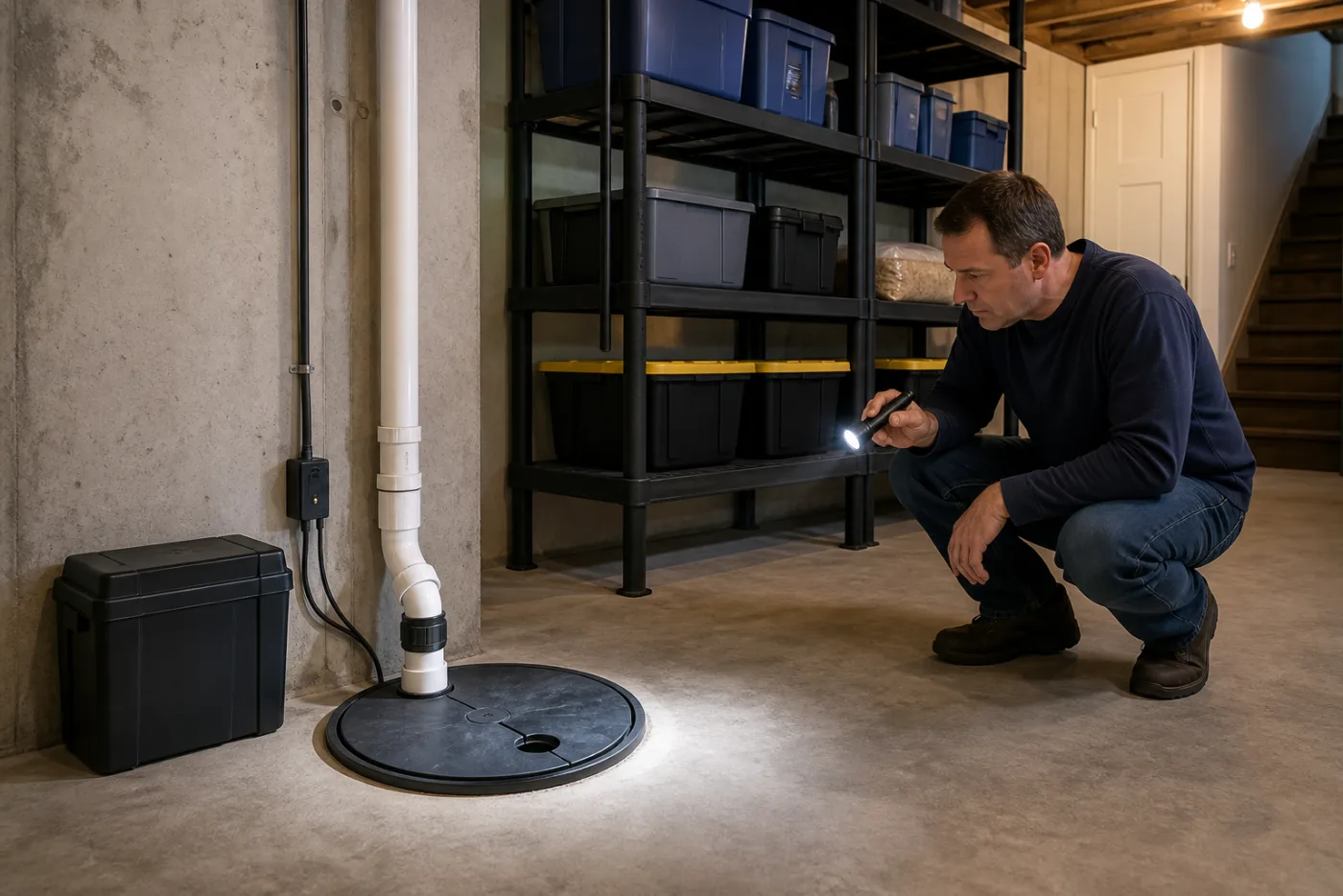
Even when you cannot guarantee a dry basement, you can reduce damage. Move paper records, family photos, electronics, tool batteries, seasonal clothing, food, and household chemicals off the concrete floor. Use sturdy shelving. Place heavy items low enough to prevent tipping but above a plausible water level. Keep chemicals in original, labeled containers and follow storage instructions so leaking products cannot mix.
Do not improvise blocks under a furnace, water heater, washer, freezer, gas appliance, or electrical panel. Elevating utilities may be a valuable mitigation project, but it requires structural, gas, plumbing, combustion, and electrical planning. FEMA mitigation guidance should be applied with local flood elevations, manufacturer requirements, and building codes. Renters should not move installed equipment without the owner’s approval.
A common mistake is assuming homeowners or renters insurance automatically covers every kind of water damage. Surface flooding, sewer or drain backup, and a sudden internal plumbing leak may be treated differently. The National Flood Insurance Program, administered by FEMA, explains flood insurance separately from standard property coverage. Your eligibility, covered property, exclusions, limits, deductible, effective date, and waiting period must be checked in the actual policy and sales channel.
Send these questions to the insurer or agent and request written answers:
Do not wait for a storm warning to start this conversation. New coverage may not be effective when the storm arrives. At the same time, do not apply one advertised waiting period to every policy or situation. Confirm the effective date for your address and policy in writing. Keep the claim number, policy number, and contact information somewhere accessible even if your phone is unavailable.
A pre-loss record is more reliable than memory. Walk slowly through each room while recording furniture, electronics, tools, appliances, and the contents of storage bins. Take separate close photos of model and serial numbers when relevant. Digitize receipts, appraisals, and installation contracts you already have. Preserve the recording date and keep a protected copy that is accessible away from the home. Secure the storage account and do not include passwords or unnecessary identity numbers in the same file.
Your document packet might include policy declarations, insurer and agent contacts, mortgage or lease information, contractor contacts, pump and drainage manuals, and receipts from prior repairs. Store a paper copy in a water-resistant pouch and a secured digital copy elsewhere. For medications and health information needed during an outage or evacuation, pair this plan with Smartor’s emergency medication and medical information kit guide.
Consider a detached home built in the 1980s. It has one basement sump pump, and the area below a window well became damp during a previous storm. The family first checks current local alerts and evacuation information. In daylight, they inspect gutters and downspouts from the ground, clear visible debris at a drain opening, and confirm that discharge does not return toward the foundation or window well. They examine the window-well cover and drainage without sealing an opening with improvised adhesive.
Inside, they follow the manual to test the main pump and high-water alarm and check the service record for the backup battery. Boxes of photographs and a laptop move to sturdy shelving, while power strips come off the floor. One person records a current video of the rooms and prints insurance contacts. Phones and power banks are charged, and the family identifies the service company to call if the pump reports a fault. During the storm, nobody walks into pooled basement water to “take a quick look.” If water may reach an outlet or panel, they contact the fire department and utility from a safe location instead of crossing water to reach a breaker.
This plan does not promise that flooding is impossible. It reduces personal risk and the cost of recovery when several defenses fail together. For storm terminology and immediate protective actions, use current local alerts along with Smartor’s severe-thunderstorm safety guide.
Do not automatically enter a wet basement. Water may have reached cords, receptacles, appliances, or an electrical panel. If the breaker is downstairs or reaching it requires crossing water, do not attempt to shut it off yourself. Call the utility or fire department from a safe location.
Do not walk or drive through floodwater. Ready.gov warns that people cannot reliably judge moving water or hidden road damage by sight. Do not risk a life to move a vehicle. Respect road closures and evacuation directions.
Do not treat possible sewage as ordinary cleanup water. Keep children and pets away. Ask public-health officials or a qualified restoration contractor about ventilation, protective equipment, disinfection, and disposal. People with open wounds or weakened immune systems should be particularly cautious around potentially contaminated areas.
Do not immediately seal wet walls. Trapping hidden moisture can compound damage. Establish electrical, structural, and contamination safety first, then plan water removal, drying, and material disposal. EPA guidance emphasizes prompt drying and safe cleanup after water damage to reduce mold problems.
Do not discard everything before documenting it. Life safety comes first, but if access is safe, photograph the overall scene and damaged items. Contact the insurer before disposal when practical and save receipts for emergency steps taken to prevent further loss. Do not assume every expense will be reimbursed.
Mistake 1: Judging the pump by sound. A running motor cannot help if the pipe is blocked or the outlet returns water toward the house. Verify the full route from activation to exterior discharge.
Mistake 2: Installing a backup and forgetting its battery. Charging, terminals, alarms, replacement records, and an approved operating test all matter. Follow the manufacturer and installer’s schedule.
Mistake 3: Assuming homeowners insurance covers every water loss. Flood and sewer backup may require different coverage. Ask cause-specific questions before a loss and retain written answers.
Mistake 4: Building a quick slope with deep mulch. Covering siding or wood and holding moisture against the wall can create a different problem. Grading and drainage must fit the site.
Mistake 5: Running a generator in a garage with the door open. An open garage door does not prevent carbon monoxide from entering the home. Follow the manufacturer’s outdoor-clearance instructions and use an approved electrical connection.
Mistake 6: Climbing a ladder after the storm starts. Wet surfaces, wind, and lightning turn a simple gutter check into a serious hazard. Inspect on a clear day and prioritize people once weather deteriorates.
There is no universal interval for every model and installation. Follow the manufacturer’s manual and your installer’s maintenance schedule. An additional check before the rainy season, before a long absence, and after electrical or plumbing work is practical. Record the date and result somewhere other than on a tag that could be damaged by water.
A coating may be one component for a specific moisture condition, but it cannot correct every failed gutter, reverse grade, moving crack, groundwater-pressure problem, or sewer backup. Document where and when the water first appears and diagnose the source before choosing a treatment.
It depends on the cause, policy terms, exclusions, type of property, and sometimes the storage location. Do not ask only about generic “water damage.” Ask separately about outside flooding, sewer or drain backup, and an internal plumbing leak, then request a written answer.
Improvised cords in a wet area can create shock and fire hazards. Ask a qualified electrician whether any power method complies with the pump instructions and electrical code. If water has reached electrical equipment, stay out and call emergency services and the utility.
The answer depends on the contamination source, area, materials, ventilation, HVAC involvement, and occupants’ health. Sewage contamination, extensive damage, or health risks may require professional help and public-health guidance. Review EPA’s official mold-cleanup information and establish electrical and structural safety first.
No. A flood map is an important risk tool, but it does not eliminate intense-rainfall, drainage, development, or building-specific low-point problems. Check the address in FEMA’s Map Service Center and ask local officials about drainage and past events.
Basement-flood preparation is not about buying one expensive device. It is a process of redirecting runoff, preparing for pump and power failure, moving people and belongings away from danger, and organizing insurance records before they are needed. Today, elevate important items and save contacts. On the next clear day, inspect roof drainage and grading, then schedule qualified review of the pump, discharge, and electrical systems. Once heavy rain begins, protect people before property.
브라우저 메뉴에서 앱 설치 또는 홈 화면에 추가를 선택해 주세요.
[…] basement flood-prevention checklist provides a more detailed drainage and sump-pump sequence. Do not take on unsafe roof, ladder, […]