Southern Ibaraki M5.9 Earthquake: Tokyo-Area Safety and Transit Guide
Smartor 편집팀
August 22, 2026

A strong earthquake beneath southern Ibaraki Prefecture shook a broad part of the Tokyo metropolitan area at about 2:00 a.m. Japan Standard Time on August 23, 2026. The Japan Meteorological Agency (JMA) reported a magnitude of 5.9, a depth of about 70 kilometers, and a maximum seismic intensity of lower 5 on Japan’s seven-point scale. JMA also said this earthquake posed no tsunami risk. The U.S. Geological Survey (USGS) analyzed the same event as magnitude 5.8 at a depth of 61 kilometers, about 4 kilometers north of Toride. Small differences between agencies are normal because they use different sensor networks and calculation methods.
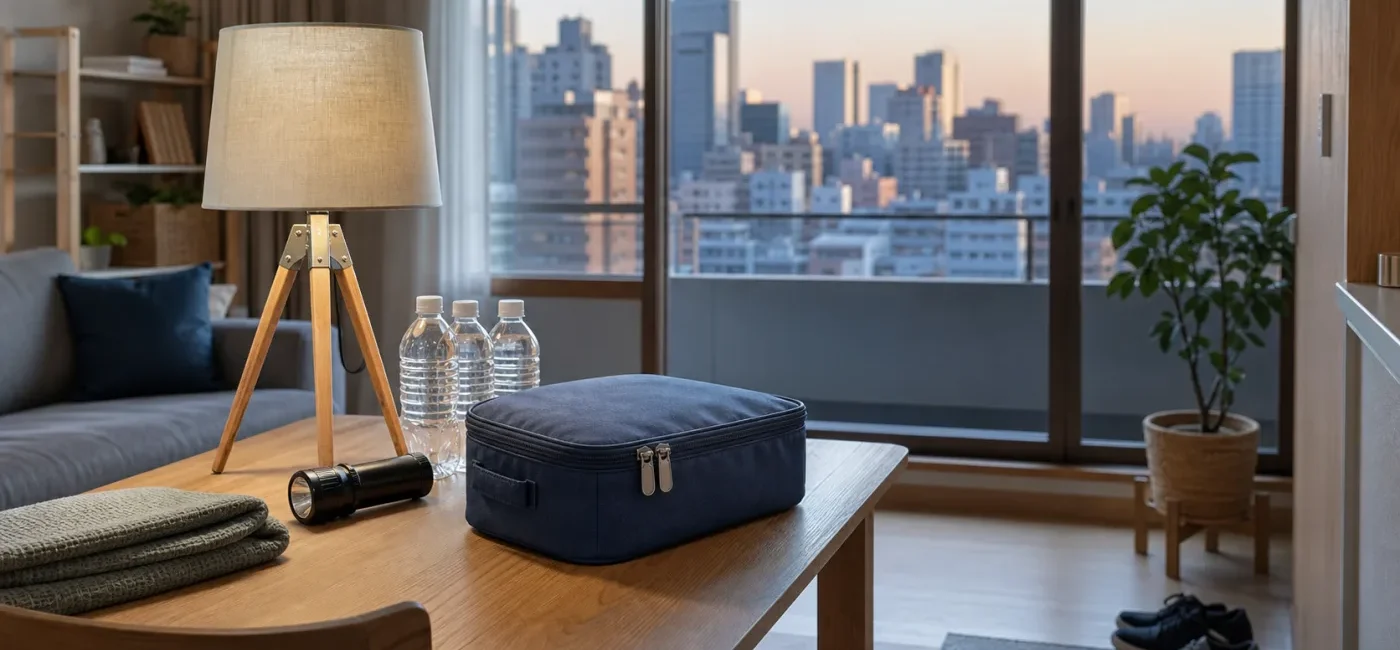
For residents and visitors in Tokyo and the surrounding prefectures, the practical priority is not debating a decimal point. Check people for injuries, look for falling hazards, gas odors and electrical problems, and verify trains and flights with the operator that actually runs them. Keep shoes and a charged phone nearby in case of additional shaking, but do not make decisions based on recycled videos or social posts claiming that a larger earthquake is certain to strike at a specific time.
JMA’s second detailed bulletin located the hypocenter near 36.0 degrees north and 140.1 degrees east in southern Ibaraki. Lower 5 intensity was observed in multiple Ibaraki communities, including Koga, Ryugasaki, Shimotsuma, Joso, Toride, Ushiku and Tsukuba. The same level was recorded in parts of southern Saitama, northwestern Chiba and Adachi Ward in Tokyo. Many other Tokyo wards and communities across the metropolitan region, including parts of Yokohama and Kawasaki, recorded intensity 4.
Japan’s seismic intensity scale is not the same as magnitude. Magnitude describes the overall size of one earthquake. Intensity describes the strength of shaking at a particular location. Distance from the source, local soil, building height and structural characteristics can change how the same earthquake feels from one block or building to another. A neighbor’s mild experience is not a reason to skip checking your own building, and a frightening personal experience does not by itself prove widespread structural damage.
At lower 5 intensity, many people may feel frightened and want to hold onto something stable. Unsecured furniture can move and poorly placed objects can fall. Actual damage varies, so check whether doors still open normally, whether new cracks have appeared in walls, columns or ceilings, and whether furniture blocks an exit. If you see large diagonal cracks, tilting, fallen concrete, a distorted door frame or hear unusual structural sounds, do not decide on your own that the building is safe. Move to a safer location if instructed and wait for the building manager or local authority to assess it.
The difference between JMA’s 5.9 and USGS’s 5.8 is not evidence that one agency is unreliable. Agencies use different station networks, waveforms and magnitude methods, and early estimates can be revised as more data arrive. For personal safety, the local intensity, visible damage, utility problems, transportation notices and official instructions matter far more than a one-tenth difference in magnitude.
JMA’s detailed bulletin explicitly states that this earthquake poses no tsunami risk. The event was analyzed as a relatively deep inland earthquake, and the USGS event record also shows no tsunami flag. There is therefore no official basis to evacuate the coast solely because of this event. Do not carry that conclusion over to a future earthquake, however. If you are at the coast and feel very strong or prolonged shaking, or if JMA or a local authority issues a tsunami warning, follow the new warning immediately.
Additional earthquakes can occur after a strong shock. No individual or social-media account can reliably specify the exact time and size of an aftershock. Posts saying a larger earthquake “will definitely happen within hours” or naming a precise date are not official alerts. Keep emergency notifications enabled and monitor JMA and local authorities. If shaking starts again, drop low, cover your head and neck, and hold on while staying away from glass and objects that could fall.
In areas that recorded intensity 4 or lower 5, inspect shelves, televisions, microwave ovens, bookcases, framed pictures, dishes and cabinet doors. Put on sturdy shoes before walking through a dark room, and do not pick up broken glass or ceramics with bare hands. Apartment elevators may stop automatically for inspection, and gas or water systems may shut down. Use stairs until an elevator has been officially cleared, but first check that the stairwell and emergency exit are not damaged.
If you smell gas, do not create a flame or operate a light, fan or appliance switch. If it is safe to do so, open a door or window, leave the area and contact the building manager or gas company from outside. Do not restart a shut-off gas supply without following the meter and utility company instructions. Stay away from a wet electrical panel or any outlet showing sparks, discoloration or a burning odor.
Check the emergency-exit diagram on the hotel room door and keep room keys, shoes, phone, power bank and a copy of your passport together. During shaking, protect yourself from falling objects before trying to run into a corridor. After it stops, listen for announcements and ask staff whether any part of the building is closed. Use marked stairs rather than elevators if an evacuation is ordered. The Japan National Tourism Organization’s visitor hotline and the multilingual Safety tips app can help when language makes official information harder to follow.
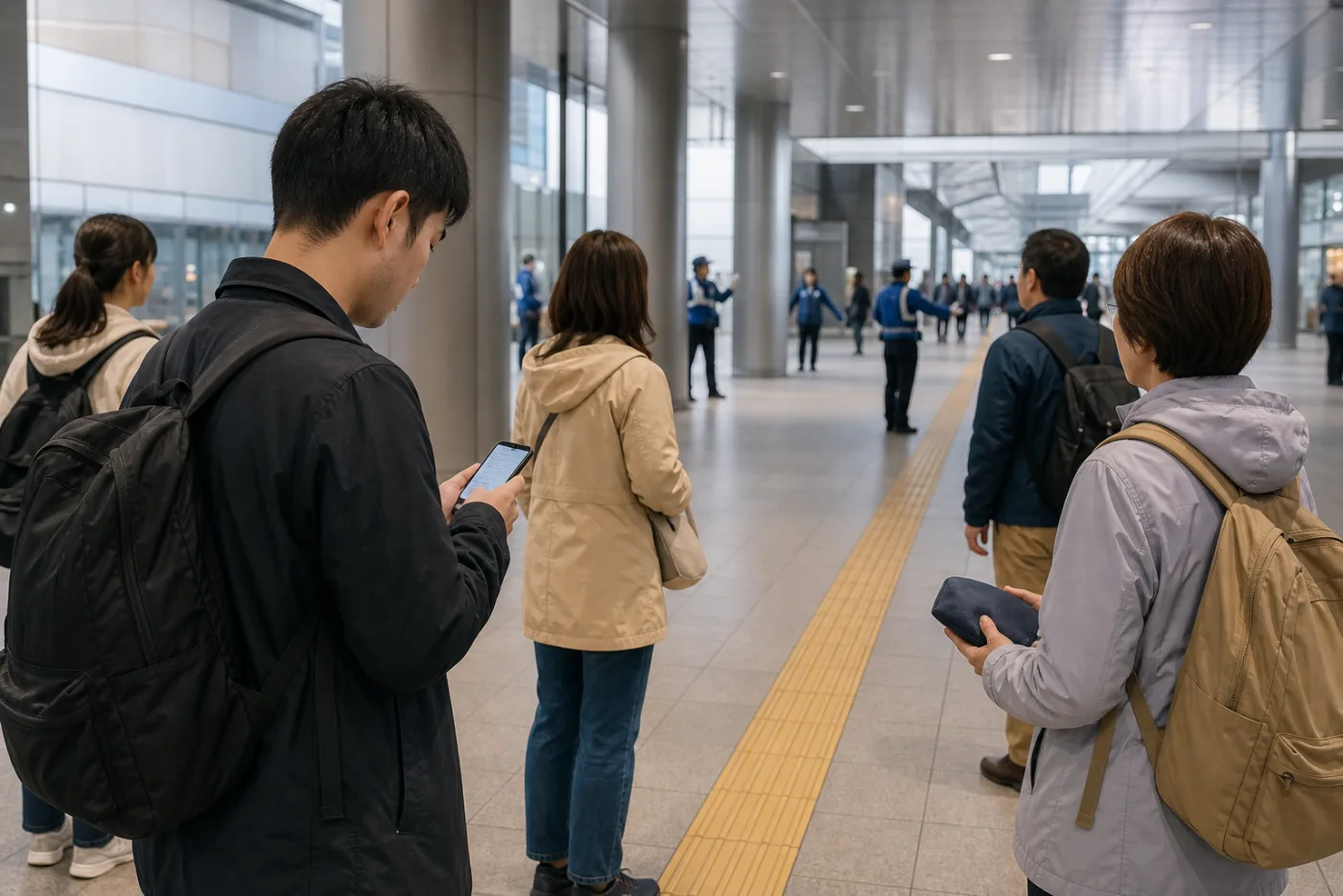
Rail operators may slow trains, hold them, or inspect individual sections based on earthquake sensors and track conditions. JR lines, subways and private railways can have different status at the same time, so a broad post saying “Tokyo trains are running” or “Tokyo trains are stopped” is not enough. At a station, step back from the platform edge and glass. Never enter the tracks or force open an emergency door. Follow staff instructions even if a route-planning app shows a train as available.
Old search-result snippets and screenshots can stay online after the situation changes. Open the official service page for JR East, Tokyo Metro, Toei Transportation, or the specific private railway or bus company you plan to use. Check both the line name and update time. If the airport train is disrupted, separately confirm the flight, terminal and check-in information with the airport and airline.
An earthquake does not automatically cancel every flight. Effects vary by runway inspection, terminal operations, ground transportation and airline scheduling. If you are heading to Narita or Haneda, check the airport rail line or road route and the airline’s departure record separately, then allow extra time. If your flight is actually delayed or canceled, save the reservation number, receipts and disruption notice. Smartor’s flight delay and cancellation checklist offers a useful documentation method, but the operating airline’s contract and Japan-departure rules control your specific rebooking, hotel or refund options.
Elevator shutdowns, power interruptions and congested communications can create disproportionate risk for people with mobility or medical needs. Check medications, a photo of the prescription, medical information, hearing-aid batteries and mobility-device power. Contact a helper early. If a powered medical device may run out, call the building manager, medical provider or local emergency service rather than waiting for the battery to fail. For longer-term preparation, use Smartor’s emergency medication and medical information kit guide, but do not stop or change a prescribed medication on your own.
Limit entry if doors are suddenly jammed, the floor appears tilted, new diagonal cracks cross walls or columns, ceiling panels sag, pipes have ruptured or parts of the exterior have fallen. Do not stand directly under glass, signs or tile on a building facade while making calls. In an apartment building, read management notices. If water service stops, do not repeatedly use sinks and toilets when a leak or sewer problem may be present.
Keep refrigerator and freezer doors closed as much as possible during an outage. Use flashlights instead of candles. Never operate a portable generator or fuel-burning device indoors, in a hallway, or near an open balcony door or window. Carbon monoxide cannot be detected by smell. Notify building staff if smoke or carbon-monoxide alarms appear damaged rather than attempting unsafe electrical repairs.
First decide whether your current location is safe. Second, verify that the next mode of transportation is actually operating. Third, confirm that the destination hotel, attraction or airport is open and accessible. Do not rush out just because one train appears to be moving. If you cancel a long-distance booking, save screenshots of the operator’s disruption notice, your reservation and receipts, then ask the hotel, railway or airline about changes and refunds.
When networks are busy, send only what matters: “I am safe / Current location: ___ / Building looks normal or I am evacuating / Next check-in: ___ / Please text rather than call.” Share verified official links and what you directly observed. Do not forward dramatic damage footage without confirming its date and location, and do not post your room number or passport details publicly.
No. JMA listed Tokyo’s 23 wards among the lower 5 areas, but observation points varied. A lower 5 reading was recorded at a station in Adachi Ward, while many other wards recorded intensity 4. Check your specific building and local authority notices.
JMA reported 5.9 and USGS reported 5.8. That difference can result from distinct sensor networks and calculation methods, and estimates may be revised. Base safety decisions on local shaking and hazards, not the decimal.
No. The tsunami statement addresses ocean-wave danger from this earthquake. Falling objects, furniture movement, fire, gas or electrical faults, elevator and transportation inspections, and additional shaking still require attention.
Running into a corridor during shaking can expose you to falling objects. Protect your head and neck first. Once shaking stops, check the evacuation map and follow announcements and staff instructions. Leave by the marked stairs if fire, visible damage or an evacuation order makes it necessary.
It may mean the operator cleared that section, but it does not mean every line and connection is normal. Check the exact line and transfer route, and follow any crowd-control or boarding restrictions from station staff.
If your lodging and destination are safe, transportation is officially operating, and there is no closure or evacuation notice, you may be able to proceed with extra time and basic supplies. Carry water, a charged phone, identification and sturdy shoes. Postpone the plan if any part of the route or building has not been cleared.
No one can reliably specify the exact time and size. Follow JMA alerts instead of unsupported predictions. Keep shoes, flashlight and phone within reach while sleeping, and know the route to the exit.
Move to safety first, report a lost passport to police, and contact your embassy or consulate. A secure digital copy of the photo page and reservation information can help establish identity, but never post passport images publicly.
Smartor Editorial Team · Sources checked August 22, 2026, U.S. Eastern Time. Earthquake and transportation information can change; recheck official pages immediately before acting.
브라우저 메뉴에서 앱 설치 또는 홈 화면에 추가를 선택해 주세요.
[…] Smartor 편집팀 August 22, 2026 Read this guide in English → […]