Delaware Tornado Recovery: Power, Debris and Insurance Safety Guide
Smartor 편집팀
August 23, 2026

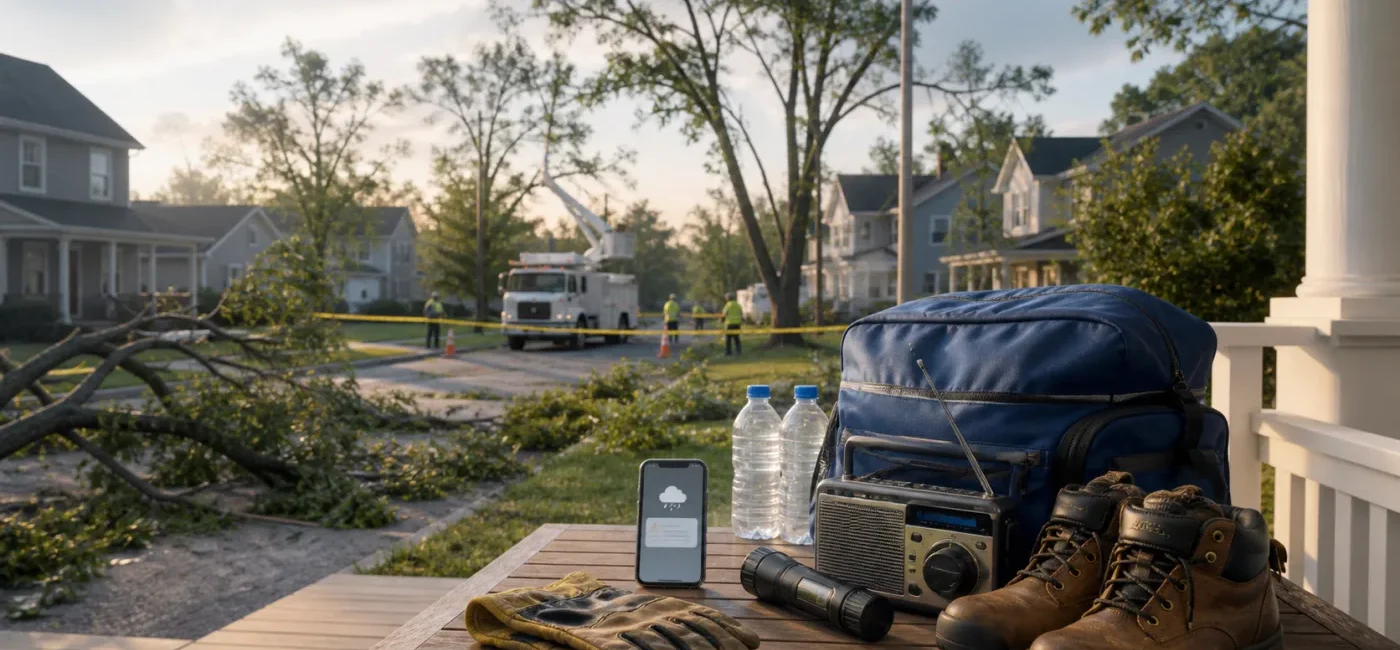
After a tornado and powerful storms damage buildings, trees and electrical equipment, calm weather can create a false sense that the danger has passed. The first hours of recovery can still expose people to energized power lines, unstable roofs and walls, sharp debris, leaking fuel, carbon monoxide and partially blocked roads. If your home or business was affected in central Delaware, do not rush inside for photographs. Confirm that re-entry is allowed, then work in this order: protect people, isolate utility hazards, prevent additional damage only when it is safe, and document the loss for insurance.
Powerful storms moved through Delaware and the Philadelphia region on Thursday evening, August 20, producing tornado warnings, heavy rain and flash-flood concerns. According to NBC10 Philadelphia’s on-the-ground reporting, a confirmed tornado in Dover damaged buildings, trees and power lines and caused outages. Dover’s mayor declared a state of emergency; it was lifted Friday morning. Police said no injuries had been reported at that point. A citywide emergency ending does not certify every private property, road shoulder or electrical service as safe.
FOX 29 reported a preliminary National Weather Service assessment describing the Dover tornado as at least EF-1 with estimated winds up to 105 mph. Survey teams were still evaluating other damage areas, including Hartly. A final path, width or rating can change after investigators review more damage indicators. Treat unsourced social-media maps and claims about additional tornadoes as unconfirmed until the National Weather Service publishes its findings.
Roof damage and fallen trees were also reported around Hartly and Marydel in western Kent County. WBOC reported from the area that Kent County Public Safety and the National Weather Service were reviewing several damage locations and that no injuries had been reported there at the time. Tornado damage can be highly uneven. An intact home next door is not proof that your roof connection, exterior wall or utility equipment is sound.
Residents and businesses in Dover, Hartly, Marydel and nearby damage areas may need to manage roof leaks, broken glass, outages, disrupted communications, localized road closures and debris disposal. Renters should notify the property owner in writing. Personal-property losses may fall under renters insurance, while structural repairs are generally handled through the property owner’s coverage; the actual policy controls.
Households without power face added risks involving portable generators, candles, food temperature and electrically powered medical equipment. Anyone who depends on oxygen equipment, refrigerated medication or another powered medical device should use the emergency procedure supplied by the manufacturer and healthcare provider and arrange a safe power source or alternate location promptly.
Commuters and visitors can encounter utility vehicles, nonworking traffic signals, localized closures and branches even after most roads reopen. Never drive around a barricade because a navigation app suggests the route. Check an official city, county, police, transportation or utility update immediately before travel.
Relatives, neighbors and volunteers helping with cleanup also need permission and proper equipment. Good intentions do not make a roof, large tree, wet electrical panel or partially collapsed wall safe. Leave chainsaw work, roof access, major tree removal and utility repairs to qualified and properly equipped professionals.
The National Weather Service’s after-a-tornado guidance says to keep listening for updated warnings, stay out of damaged buildings, report downed power lines to local authorities, and wear long pants, long sleeves and sturdy shoes around storm damage. Those precautions remain important after sunrise and under clear skies.
Do not enter a property marked unsafe by police, fire officials or a building inspector merely to collect insurance photos. From a distance, look for a sagging roofline, leaning exterior wall, shifted foundation, damaged service mast or downed electrical connection without walking across debris. If you suspect structural movement, wait for a qualified building or structural professional.
When authorities allow access, avoid going in alone. Tell another person where you are and when you expect to return. Make the first inspection brief and during daylight. Use a flashlight, long pants, long sleeves, work gloves and thick-soled shoes. Do not touch a breaker panel in standing water, and do not use wet appliances, outlets or wiring before a qualified electrician has evaluated them.
Keep children and pets out until nails, glass, insulation, contaminated water and unstable fencing have been addressed. Suspected asbestos, lead, mold or chemical contamination—and demolition that creates heavy dust—requires the right assessment and protective equipment. A basic dust mask is not a substitute for professional hazard control.
Carbon monoxide from portable generators is one of the most serious secondary hazards after an outage. The CDC describes carbon monoxide as an odorless, colorless gas that can cause sudden illness and death. It says to run a generator outdoors, more than 20 feet from every window, door and vent. Never run one inside a house, basement, porch enclosure or garage—even with the garage door open or a fan operating.
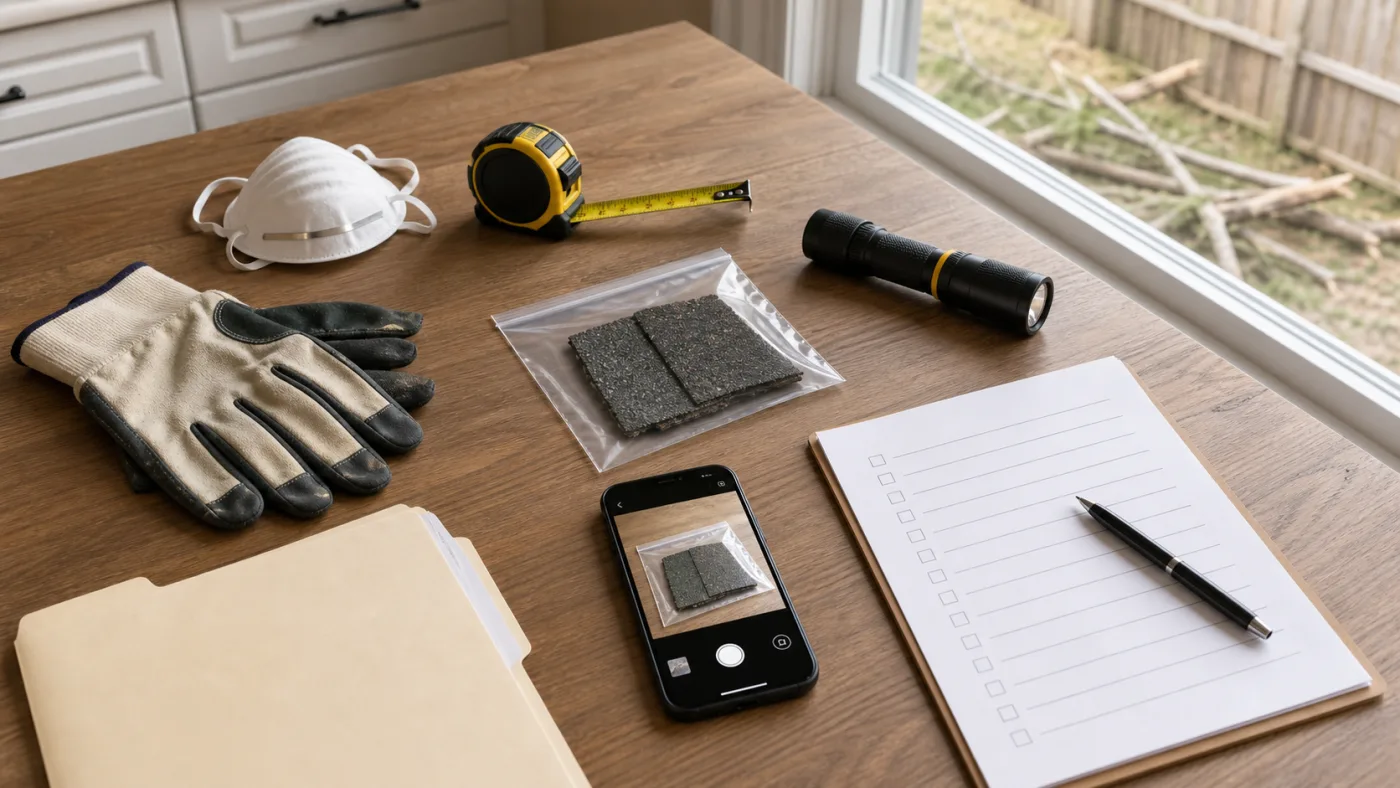
Take pictures only after the area is safe. Start with the address and wide exterior views, then photograph all four corners of each affected room, medium-distance views of each damaged area, and close details. This sequence helps an adjuster understand where each close-up belongs. Move slowly when recording video and identify the room and date. Keep policy numbers, identification documents and unrelated personal information out of the frame.
Do not throw away damaged property automatically before the insurer explains its documentation and disposal requirements. Perishable food, contamination and public-health hazards may require faster disposal under local instructions. If you can safely install a tarp or take another temporary step to stop further rain damage, photograph conditions before and after and keep material and labor receipts. Understand the insurer’s inspection process and scope of coverage before signing a permanent-repair contract.
Use the phone number in the insurer’s official app, on the policy or on the insurance card. Report the date, time, address, general damage type and any immediate need for alternate lodging. Ask for the claim number, adjuster’s name, next contact date, deductible and limits on emergency work. If a contractor claims to represent your insurer or a government agency and demands an immediate signature or cash deposit, stop and verify through the organization’s public number. For unresolved insurance-company issues, review the Delaware Department of Insurance Consumer Services resources.
A pre-loss inventory can make this work easier, but you can reconstruct one with card statements, online orders, email receipts and older family photos. Smartor’s home inventory guide for insurance and disaster recovery explains a practical system for photos, receipts and an off-site backup.
Separate the work zone from normal foot traffic. Never handle boards with nails, broken glass or sheet metal with bare hands. Use heavy gloves and puncture-resistant footwear for minor debris, and do not lift heavy objects alone. Chainsaws, ladders, roofs, large limbs and unstable trees should be handled by trained workers with appropriate equipment and insurance.
A wet ceiling or bowed wall can fail suddenly. Confirm structural and electrical safety before pumping water or removing material. Keep skin away from water that may contain sewage, fuel or chemicals. Your insurer and local government may announce specific debris collection sites and schedules, so do not create a pile in a roadway or place construction debris in normal household bins without checking.
Follow local health officials for drinking-water safety, private-well disinfection and food disposal. Packaging alone does not establish that food is safe. If you do not know how long power was off or what temperature a refrigerator maintained, consult current USDA and local health guidance. Ask a pharmacist before using or discarding medication exposed to heat, water or contamination.
Type official web addresses instead of trusting a link in an ad, text message or social post. Government agencies do not require your bank password, gift cards, wire transfer or one-time authentication code to release disaster aid. Before hiring a contractor, public adjuster or cleanup service, verify licensing where required, insurance, a written estimate and cancellation terms. Never sign a blank form.
No. Ending a broad municipal emergency and clearing an individual building for structural, electrical and gas safety are different decisions. Follow any placard and instructions from fire, police, building officials, the landlord or property manager.
No. It may be energized without visible sparks, and power can return during restoration. Stay well away from the line and anything it touches, then call 911 or the serving utility.
No. Photograph from the ground or another safe position. If the insurer needs an inspection or additional images, arrange a safe method with the adjuster and a qualified professional.
Balance the insurer’s documentation requirement with local health instructions. When it is safe, photograph the item, quantity, brand and model before disposal. Follow health and insurance guidance for spoiled food, sewage exposure, chemicals and other contamination.
No. CDC guidance says never to use a generator in a home or garage and to place it outdoors more than 20 feet from windows, doors and vents. Use a battery-backup carbon monoxide alarm as well.
First verify whether a federal declaration includes your county and the relevant assistance type. Federal aid does not replace insurance. If you have coverage, report the loss promptly, save the claim number, and provide insurance documentation if FEMA opens an eligible program.
Yes. Early reports may reflect a preliminary field assessment. Confirm the final path, width, wind estimate and EF rating in the National Weather Service’s completed survey.
브라우저 메뉴에서 앱 설치 또는 홈 화면에 추가를 선택해 주세요.
[…] Smartor 편집팀 August 23, 2026 Read this safety guide in English → […]