
Dangerous heat is expected to persist across the south-central United States and expand into the Southwest, with afternoon temperatures reaching 100–110°F in the southern Plains and as high as 115°F in parts of the Southwest. In its early-morning August 24, 2026 forecast, the National Weather Service’s Weather Prediction Center warned that high humidity and unusually warm nights would limit recovery and support widespread Major to Extreme HeatRisk through the week.
The practical danger is not limited to the afternoon high. A home that remains hot overnight, a power interruption, an outdoor shift, or a medication that is sensitive to heat can turn a forecast into a health emergency. This guide explains how to check the official risk for your ZIP code, decide when to leave a hot home, protect people who are especially vulnerable, and distinguish heat exhaustion from heat stroke.
Key takeaways
- Forecast area: The August 24 WPC forecast calls for hazardous heat across the southern Plains and Lower Mississippi Valley, gradually spreading into the Southwest. Highs may reach 100–110°F in the southern Plains and up to 115°F in parts of the Southwest.
- Warm nights matter: High overnight temperatures reduce the time people and buildings have to cool down. Check hourly temperatures and HeatRisk, not just the daytime high.
- Know the 90°F indoor threshold: CDC advises using fans only when indoor temperatures are below 90°F. Above that level, a fan can increase body temperature; relocate to an air-conditioned place.
- Heat stroke means 911: Confusion, slurred speech, fainting, very hot skin, or a body temperature above 103°F can signal heat stroke. Call 911, begin rapid cooling, and do not force the person to drink.
- Use local official tools: Check weather.gov alerts, NWS HeatRisk, and the CDC HeatRisk Dashboard for your ZIP code. A national headline or an unlabeled social-media map is not enough to determine local risk.
What happened
The WPC short-range discussion issued at 2:20 a.m. EDT on August 24 covers the period from Monday morning through Wednesday morning, August 26. A strong upper-level ridge centered over the Southwest and south-central United States is expected to keep hazardous heat in place across the southern Plains and Lower Mississippi Valley, then push the most intense heat farther into the Southwest by midweek.
WPC expects daytime highs of 100–110°F across the southern Plains, while parts of the Southwest could reach 115°F. Dozens of daily high and warm-low records may be challenged during the week. Humidity will elevate the heat index in some areas, and warm nights will provide little relief. That combination is why the agency expects broad areas of Major to Extreme HeatRisk rather than a short burst of ordinary summer heat.
The same weather pattern also supports monsoonal thunderstorms from the Southwest into the Rockies and Plains. A heat warning does not cancel the risk of severe wind, flash flooding, or a power outage. Residents may need to monitor both heat alerts and thunderstorm or flood alerts, especially where a loss of electricity would immediately remove air conditioning or affect a medical device.
What the HeatRisk colors mean
NWS HeatRisk is a seven-day impact forecast. It supplements official NWS heat watches, warnings, and advisories; it does not replace them.
- Green 0: Little to no expected risk from heat.
- Yellow 1: Minor risk, mainly for people who are extremely heat-sensitive and lack cooling or hydration.
- Orange 2: Moderate risk for heat-sensitive people, especially without cooling or hydration, with possible effects on some health systems and industries.
- Red 3: Major risk for anyone without cooling or hydration, with effects possible across health systems and industries.
- Magenta 4: Extreme, rare, or long-duration heat with little overnight relief, potentially affecting people, health systems, industries, and infrastructure.
Red or magenta should change behavior. Reduce outdoor exposure, verify that the home is actually cooling, identify an air-conditioned destination, and check on neighbors before symptoms develop. Healthy adults can also become ill when heat, workload, humidity, sun, and limited recovery combine.
Who is affected
People without reliable air conditioning
Top-floor apartments, mobile homes, poorly insulated houses, and rooms with large west-facing windows can hold heat long after sunset. A cooler outdoor reading does not mean the bedroom has cooled. Place a thermometer in the main living area and sleeping area, then check the overnight trend. CDC advises against relying on a fan when indoor temperatures are 90°F or higher.
Older adults, infants, pregnant people, and people with chronic conditions
NWS and CDC identify young children, older adults, pregnant people, people with heart disease or other chronic conditions, and people with limited mobility as especially vulnerable. Someone who lives alone may not recognize worsening symptoms or may be unable to reach a cooling center. Make check-ins specific: ask for the indoor temperature, whether the air conditioner works, whether water is available, and whether the person can relocate.
People taking medication or using powered medical equipment
Some medicines can affect hydration or the body’s response to heat, and some need protection from high temperatures or refrigeration. Do not stop or alter medication without speaking to a clinician or pharmacist. Confirm the storage range on the label, ask what to do during an outage, and prepare backup power or an alternate location for essential devices. Smartor’s emergency medication and medical information kit guide can help organize that plan.
Outdoor and hot-indoor workers
Construction, landscaping, agriculture, delivery, roofing, kitchens, laundries, warehouses, and manufacturing can all create dangerous exposure. OSHA says heat risk depends on more than air temperature: humidity, direct sun, air movement, workload, protective clothing, and acclimatization also matter. Worksites should use appropriate measurements, preferably WBGT where available, and match water, shade, rest, staffing, and work intensity to the actual hazard.
Children, pets, and anyone traveling by car
A parked vehicle can become dangerous quickly even with a window partly open. Never leave a child, a person with a disability, or a pet in a parked car. School runs, appointments, and delivery routes need a last-person-out check rather than an assumption that a stop will take only a minute.
What to do now: a 30-minute heat checklist
1. Save the alert for your ZIP code
Search your city or ZIP code at weather.gov. Read the affected area and the start and end times of any Heat Advisory, Excessive Heat Watch, or Excessive Heat Warning. Save the NWS HeatRisk map and CDC HeatRisk Dashboard as well. Maps can serve different purposes and update at different times, so verify the issuing agency, valid period, and location before sharing a screenshot.
2. Identify the coolest room in the home
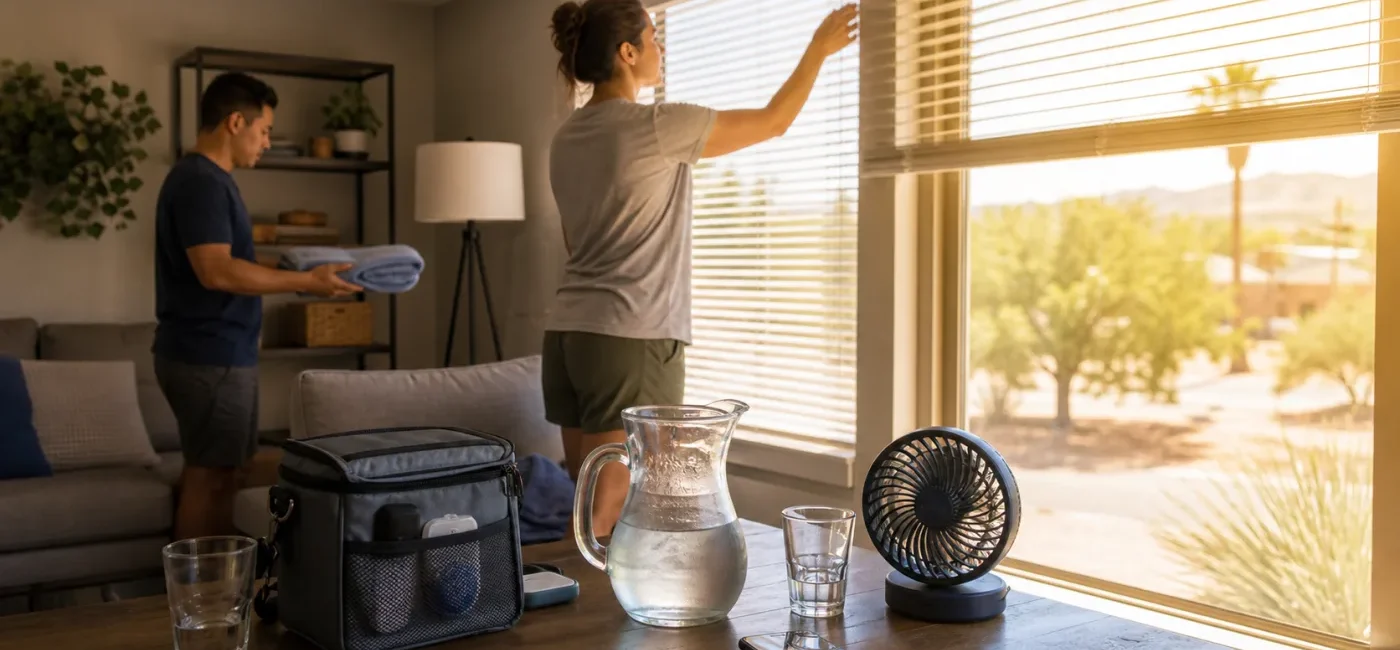
Close blinds or curtains before direct sun reaches the windows. Turn off unused lights and heat-producing appliances, and avoid using the oven during the hottest hours. Check that the air-conditioning filter is not obstructed, but do not open electrical panels or refrigerant systems without proper qualifications. If the home will not cool, change the plan from “wait it out” to “relocate early.”
3. Confirm a real route to a cooling location
Call 2-1-1 or check the city, county, health department, or emergency-management website for cooling-center hours, transit, accessibility, and pet policies. A library or mall may close before the hottest indoor period ends. Do not wait until dizziness or confusion makes driving unsafe. Leave while transportation is available and the person can travel safely.
4. Make hydration and rest easy
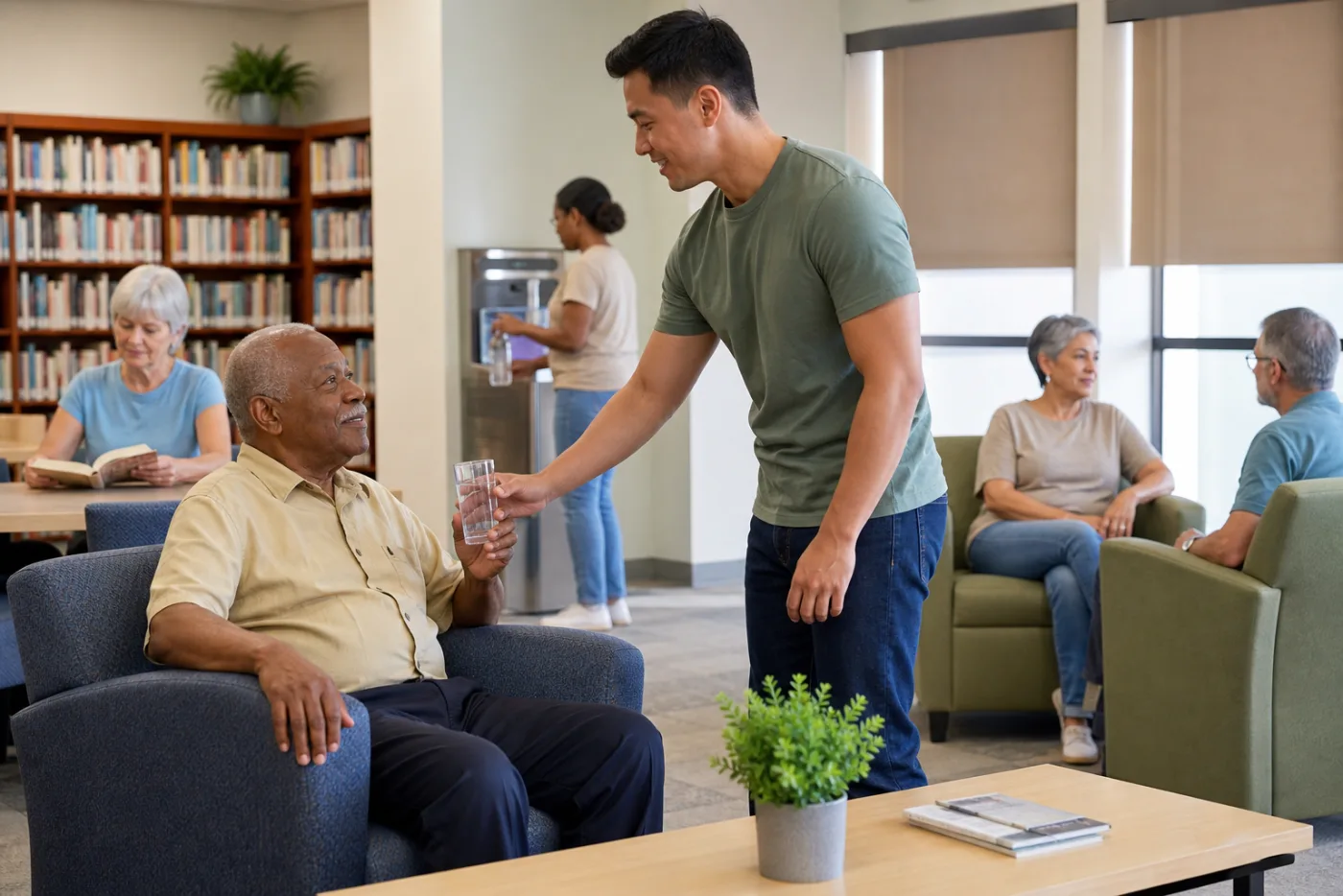
Keep water visible and carry a refillable bottle. Drink regularly throughout the day instead of waiting to become intensely thirsty. Alcohol can impair judgment and hydration, and relying entirely on highly caffeinated or sugary drinks is not a sound cooling plan. Anyone whose clinician has restricted fluids or sodium because of heart, kidney, or another condition should follow that individualized medical advice.
5. Reschedule activity and reduce workload
Move exercise, yard work, roofing, road work, and long walks to the coolest available hours. Add frequent breaks in shade or air conditioning. New workers and people who have not recently worked in heat may lack acclimatization; do not expect a full normal workload immediately. A buddy system helps coworkers notice changes in speech, balance, coordination, and responsiveness.
6. Prepare for an outage
Charge phones and power banks. Locate flashlights, a battery radio, and the utility outage number. A portable generator must run outdoors at least 20 feet from doors, windows, and attached garages—never inside a house, garage, basement, or porch enclosure. Keep refrigerator doors closed and record when the outage began. For food decisions, use Smartor’s power-outage refrigerator and freezer checklist.
Heat cramps, heat exhaustion, or heat stroke?
Heat cramps
Painful muscle cramps, often in the legs or abdomen, and heavy sweating can be an early warning. Stop activity, move to a cool place, rest, and offer small sips of water if the person is not nauseated. Seek immediate medical attention if cramps last longer than one hour.
Heat exhaustion
Signs can include heavy sweating, weakness, cool pale clammy skin, a fast weak pulse, cramps, dizziness, headache, nausea, vomiting, or fainting. Move the person to an air-conditioned place, loosen clothing, and cool the skin with wet cloths or a cool bath. If the person is alert and not vomiting, offer small sips of water. Get immediate medical help if vomiting occurs, symptoms worsen, or symptoms last more than one hour.
Heat stroke
Heat stroke is a medical emergency. Warning signs can include confusion, slurred speech, loss of consciousness, a throbbing headache, very hot red skin, a rapid strong pulse, or a body temperature above 103°F. Call 911 immediately. Move the person to a cooler place and begin cooling with cool wet cloths or a cool bath while help is on the way. Do not give fluids. Do not let the person drive, even if they briefly appear to improve.
How to verify conditions using official sources
- Local alerts: Enter your ZIP code at weather.gov and read the area and valid time for each Heat Advisory, Excessive Heat Watch, or Excessive Heat Warning.
- Impact level: Review the NWS HeatRisk colors for the next seven days. Treat HeatRisk as a supplement to official watches, warnings, and advisories.
- Health actions: Enter your ZIP code in the CDC HeatRisk Dashboard for daily heat guidance and local air-quality context.
- Worksites: Use an employer heat-illness plan, appropriate on-site WBGT measurements, or OSHA-NIOSH resources. A phone heat-index app is useful guidance but is not the same as WBGT.
- Local assistance: Check 2-1-1, the health department, and local emergency management for cooling-center addresses, hours, transportation, and accessibility.
When viewing a forecast screenshot, confirm the issuing agency, date and time zone, valid period, and geographic boundaries. Old maps and alerts from another county are often recirculated during major weather events. Entering a ZIP code manually is safer than relying on an incorrect device location.
Frequently asked questions
Should I watch the temperature or the heat index?
Use both. Air temperature describes the basic environment; heat index accounts for humidity. Outdoor workers also need to consider sun, wind, workload, and clothing, which is why WBGT may be more appropriate at a worksite. HeatRisk adds context about expected impacts, duration, local norms, and overnight conditions.
Is a fan enough?
CDC says to use fans only if indoor temperatures are below 90°F. At or above 90°F, a fan can increase body temperature. Close shades and reduce indoor heat sources, but move to air conditioning if the room is not cooling.
Can I open windows after sunset?
That can help only when outdoor air is genuinely cooler than indoor air, local air quality is acceptable, and the window can be opened safely. Warm overnight lows, ozone, or wildfire smoke may make open windows counterproductive. Check the hourly forecast and AirNow or your local air-quality agency.
How much water should I drink?
Needs vary with activity, body size, health conditions, and medication, so one amount does not fit everyone. Keep water available and drink regularly. Follow a clinician’s instructions if you have a fluid restriction. Dizziness, weakness, headache, or nausea are reasons to stop exposure and cool down—not simply to drink more and continue working.
My air conditioner failed, but the house still feels tolerable. Can I wait?
Use an indoor thermometer, the overnight forecast, HeatRisk, and the health of everyone in the home rather than comfort alone. If the indoor temperature is rising, will not drop overnight, or approaches 90°F, arrange transportation before cooling locations close and before symptoms make travel unsafe.
What if my workplace does not provide enough water or rest?
If anyone becomes dizzy, confused, or faint, stop work, alert a coworker, and prioritize emergency care. Ask the supervisor for the heat plan, water, shade, rest schedule, acclimatization procedure, and measurement method. OSHA says employers must provide a workplace free from recognized hazards likely to cause death or serious physical harm, and several states have specific heat rules.
Can a generator run just outside a window?
No. Ready.gov says generators should run outdoors at least 20 feet from windows, doors, and attached garages. Test battery-backed carbon monoxide alarms. Never operate a generator indoors, in a garage or basement, or in an enclosed porch.
Bottom line
The most useful response to this heat is not repeatedly checking the national high temperature. Check the alert and HeatRisk for your ZIP code, measure whether the home actually cools, relocate heat-sensitive people early, and include medication storage and power loss in the plan. Confusion, fainting, or other signs of heat stroke require an immediate 911 call. Acting before the hottest indoor hours—and before transportation or cooling centers become harder to reach—creates the safest margin.
[…] Read this guide in English → […]