
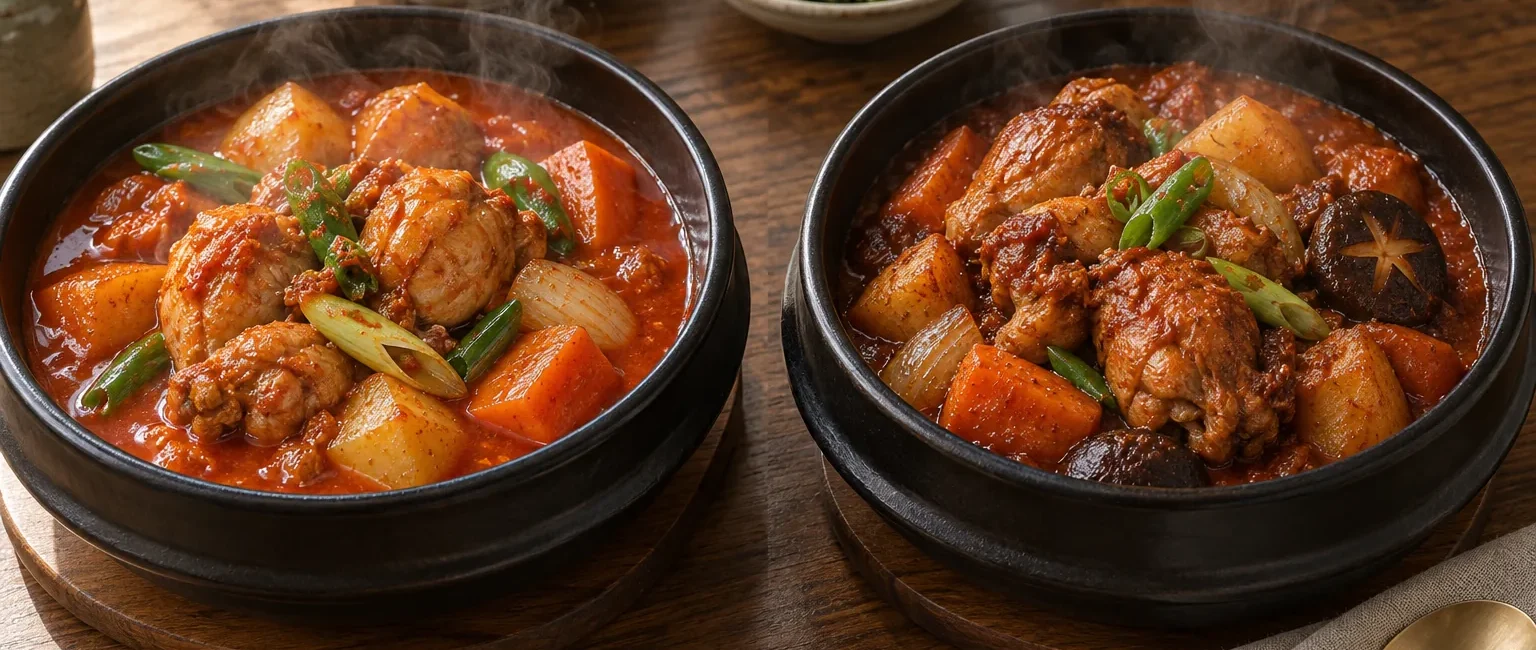
A reliable dakbokkeumtang recipe depends on matching the cooking times of bone-in chicken, potatoes, and seasoning, then reducing the broth to the right consistency during the final 10 minutes. Both methods below make four servings with 1.2 kg (2.65 lb) bone-in chicken. The quick version uses bottled dakbokkeumtang sauce and chicken bouillon for a dependable spicy-sweet result in 45 minutes. The traditional version builds its own anchovy-kelp stock and rests a homemade sauce of Korean pear, onion, gochujang, and gochugaru. Both are practical, flavorful approaches: the shortcut tastes bold and consistent, while the traditional pot develops a longer finish from chicken, vegetables, and stock.
Quick comparison of the two methods
| Category | 45-minute bottled-sauce version | Traditional homemade-sauce version |
|---|---|---|
| Yield | 4 servings, about 2.1 kg including broth | 4 servings, about 2.1 kg including broth |
| Prep / cook / total | 12 / 33 / 45 minutes | 30 / 65 / 95 minutes |
| Active time | About 22 minutes | About 42 minutes |
| Difficulty | Easy | Moderate |
| Estimated U.S. Korean-market cost | About $18–24 | About $23–31 |
| Flavor | Immediate, clearly balanced heat, sweetness, and saltiness with predictable body | Toasty chicken followed by pear-onion sweetness and a longer anchovy-kelp finish |
| Umami sources | Chicken, prepared sauce, chicken bouillon, gochujang | Browned and reduced chicken, dried anchovy, kelp, soy sauce, shiitake |
| Main failure risk | Stacking the salt in sauce and bouillon, or cutting potatoes so small that they collapse | Scorching the sugar-rich sauce or failing to reduce the broth enough |
| Best for | Weeknights, first-time cooks, or consistent results | Weekends, guests, or full control over heat and sweetness |
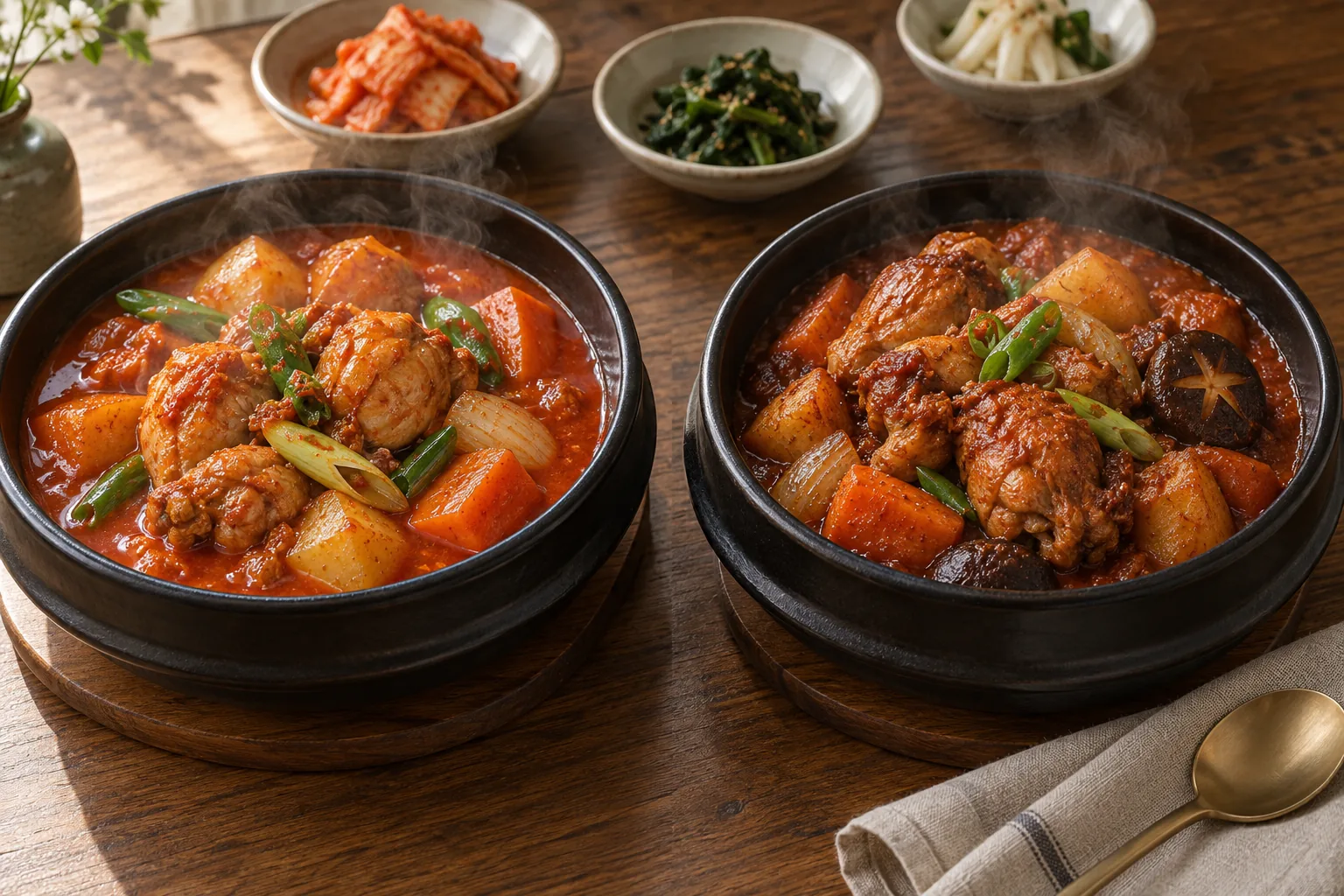
Quick version: 45-minute bottled-sauce dakbokkeumtang
Exact ingredients — 4 servings
- 1,200 g (2.65 lb) bone-in chicken pieces for stew
- 1.5 L (6⅓ cups) cold water, only if needed to remove visible bone fragments
- 400 g (14 oz) peeled potatoes, cut into 4 cm (1½-inch) chunks
- 150 g (5.3 oz) carrot, cut 2 cm (¾ inch) thick
- 200 g (7 oz) onion, cut into 3 cm (1¼-inch) pieces
- 80 g (2.8 oz) large green onion, cut into 4 cm (1½-inch) lengths
- 20 g (0.7 oz) Cheongyang or other hot green chile, sliced diagonally
- 10 ml (2 tsp) neutral oil
- 750 ml (3⅛ cups) water
- 240 g (8.5 oz) bottled dakbokkeumtang sauce
- 4 g (about 1 tsp) chicken bouillon powder
- 15 g (1 Tbsp) minced garlic
- 8 g (1 Tbsp) coarse gochugaru
- 0.5 g (¼ tsp) ground black pepper
Prep 12 minutes · Cook 33 minutes · Total 45 minutes · Active time about 22 minutes
Preparation and cooking
- Trim loose skin and visible lumps of fat from the chicken and check for bone fragments. Avoid splashing raw chicken around the sink. If fragments must be rinsed away, do it once inside a deep bowl with 1.5 L cold water, drain, and pat the surfaces dry. Immediately wash the bowl and sink.
- Cut potatoes into 4 cm chunks, carrot 2 cm thick, onion into 3 cm pieces, and green onion into 4 cm lengths. Slice the chile. Mix 240 g prepared sauce, 750 ml water, 4 g bouillon, 15 g garlic, and 8 g gochugaru in a bowl.
- Heat 10 ml oil in a wide pot at least 26 cm (10 inches) across over medium-high heat for 1 minute. Arrange chicken skin-side down in one layer. Sear for 4 minutes, turn, and cook for 3 minutes. This dries and browns the surface; it does not cook the chicken through.
- Pour in the sauce mixture and scrape the bottom. Bring the entire pot to a boil over high heat, 6 to 7 minutes. Skim foam and excessive surface fat once.
- Add potatoes and carrot. Reduce to medium heat, cover with the lid slightly ajar, and simmer for 15 minutes. At minute 7, turn the contents once from the bottom without breaking the potatoes.
- Add onion, uncover, and reduce over medium-high heat for 6 minutes. Add green onion, chile, and 0.5 g pepper; cook 2 minutes more. Check that the center of the thickest chicken piece reaches at least 74°C (165°F), without touching bone. Add hot water in 50 ml increments if too concentrated, or reduce uncovered for another 2 to 3 minutes if thin.
Why it tastes this way: Searing gives the chicken a toastier aroma than simmering it in water from the start. Prepared sauce concentrates gochujang, soy sauce, sweetener, and aromatics, so the stew finds its flavor center quickly. Four grams of bouillon reinforces chicken umami, while extra gochugaru keeps the red color and chile aroma vivid after reduction. Convenience ingredients make timing and flavor repeatable, but they do not exactly reproduce the changing aromas of fresh pear and onion or the finish of freshly brewed anchovy-kelp stock.
Traditional version: anchovy-kelp stock and homemade seasoning
Exact ingredients — 4 servings
- 1,200 g (2.65 lb) bone-in chicken pieces for stew
- 2 L (8½ cups) water for blanching
- 400 g (14 oz) peeled potatoes, cut into 4 cm (1½-inch) chunks
- 150 g (5.3 oz) carrot, cut 2 cm (¾ inch) thick
- 200 g (7 oz) onion, cut into 3 cm (1¼-inch) pieces
- 80 g (2.8 oz) large green onion, cut into 4 cm (1½-inch) lengths
- 100 g (3.5 oz) fresh shiitake, sliced 1 cm (⅜ inch) thick
- 20 g (0.7 oz) Cheongyang or other hot green chile, sliced
- 10 ml (2 tsp) neutral oil
- 1,200 ml (5 cups) water for stock
- 20 g (0.7 oz) large dried soup anchovies, guts removed
- 10 g (0.35 oz) dried kelp
- 150 g (5.3 oz) Korean radish, cut 2 cm (¾ inch) thick
- 60 g (3 Tbsp) gochujang
- 24 g (3 Tbsp) coarse gochugaru
- 55 ml (3 Tbsp plus 2 tsp) brewed soy sauce
- 15 ml (1 Tbsp) soup soy sauce
- 100 g (3.5 oz) finely grated Korean pear
- 100 g (3.5 oz) finely grated onion
- 25 g (1 Tbsp plus 2 tsp) minced garlic
- 5 g (1 tsp) minced ginger
- 30 g (1½ Tbsp) rice syrup
- 12 g (1 Tbsp) sugar
- 30 ml (2 Tbsp) cooking wine
- 1 g (½ tsp) ground black pepper
Prep 30 minutes · Cook 65 minutes · Total 95 minutes · Active time about 42 minutes
From stock and sauce to the finished stew
- Mix gochujang, gochugaru, both soy sauces, grated pear and onion, garlic, ginger, rice syrup, sugar, cooking wine, and pepper. Rest at room temperature for 20 minutes so the gochugaru hydrates and disperses evenly.
- Combine 1,200 ml water, cleaned anchovies, kelp, and radish in a pot. Heat over medium heat for 10 minutes. Remove kelp just before boiling, then reduce to low heat once small bubbles begin and cook 10 minutes more. Strain out anchovies and radish; measure 900 ml (3¾ cups) stock, topping up with hot water if needed.
- Bring 2 L water to a boil over high heat in a separate pot. Add trimmed chicken. Once the water returns to a boil, blanch for 3 minutes. Remove the chicken, rinse away attached foam and bone particles under gently running lukewarm water, and drain thoroughly. Discard the blanching water and sanitize the area.
- Heat 10 ml oil in a wide pot over medium-high heat. Stir-fry the chicken as if searing for 6 minutes. Add half the homemade sauce and cook over medium heat for 2 minutes. If the bottom starts to catch, add 30 ml stock immediately.
- Add 900 ml stock and the remaining sauce. Bring to a full boil over high heat, about 7 minutes. Skim foam and excessive fat, reduce to medium-low heat, cover with the lid ajar, and simmer 12 minutes.
- Add potatoes and carrot; simmer over medium heat for 15 minutes, turning once at minute 8. Add onion and shiitake, uncover, and reduce over medium-high heat for 10 minutes.
- Add green onion and chile; cook 3 minutes. Measure the center of the thickest chicken piece away from bone and confirm at least 74°C (165°F). When a skewer enters a potato and the sauce lightly coats a spoon, turn off the heat and rest the stew for 5 minutes before serving.
Why it tastes this way: Brief blanching makes surface proteins and bone debris easy to remove, helping the broth stay cleaner. Searing the blanched chicken again and cooking half the sauce for 2 minutes spreads chile, garlic, and ginger aromas through the chicken fat. Inosinate from anchovies, glutamate from kelp, and guanylate from shiitake layer the umami. Grated pear and onion add sweetness and body as the broth reduces. It takes more work than prepared sauce, but you control heat, sweetness, and concentration ingredient by ingredient.
One-to-one traditional replacements for shortcut ingredients
| Quick-version element | Traditional replacement | Role and real difference |
|---|---|---|
| 240 g bottled dakbokkeumtang sauce | 60 g gochujang + 24 g gochugaru + 70 ml soy sauces + 100 g each pear and onion + garlic, ginger, rice syrup, sugar, and cooking wine | Prepared sauce delivers fixed heat and body. Homemade sauce preserves fresh fruit and vegetable aromas but needs adjustment for pear sweetness and gochujang saltiness. |
| 4 g chicken bouillon + 750 ml water | 900 ml stock brewed from 20 g anchovies, 10 g kelp, and 150 g radish | Bouillon supplies immediate chicken savoriness and salt. Fresh stock has a longer seafood-kelp finish but needs 20 minutes of brewing and straining. |
| Sear raw chicken for 7 minutes | Blanch 3 minutes, rinse, then sear 6 minutes | Direct searing is fast and toasty. Blanching before searing cleans the broth, with one extra pot and handling step. |
| Add 8 g gochugaru directly | Rest the gochujang-gochugaru sauce for 20 minutes and fry half with chicken | Extra gochugaru quickly restores color and chile aroma. Resting hydrates it evenly, while frying distributes aroma into chicken fat. |
| 33-minute one-pot cook | 20-minute stock + blanching and searing + 47-minute staged braise | The shortcut saves dishes and time. The traditional sequence allows finer control of broth clarity and each vegetable’s doneness. |
This comparison does not make prepared sauce or bouillon an inferior choice. Checking the product label for sodium and suggested dosage can produce dependable results quickly. The traditional version gives you control over every ratio, but pear sweetness, gochujang salinity, and evaporation differ from kitchen to kitchen. The final aromas and textures should not be expected to taste identical.
Failure prevention: cooked chicken and intact potatoes
- The broth is greasy or cloudy: Trim loose skin and large fat deposits first. For the traditional method, blanch for 3 minutes, rinse off clinging foam, and skim the surface only once when the stew boils.
- Potatoes fall apart: Keep them near 4 cm, and add only after the chicken has cooked for 12 to 15 minutes. Turn from the bottom once or twice instead of stirring repeatedly.
- The sauce scorches: Gochujang and sweeteners burn easily. Keep the 2-minute sauce-frying step at medium and add 30 ml stock as soon as the bottom dries.
- The broth stays thin: Keep the lid off over medium-high heat for the final 8 to 10 minutes in a wide pot. Mashing potatoes to thicken it can make the entire stew pasty.
- It is too salty: Do not increase both bottled sauce and bouillon. Add 100 ml hot water and 100 g cooked unsalted potato, simmer 5 minutes, and do not merely hide saltiness with extra sugar.
- Chicken looks done but is pink near bone: Color is not a reliable test. Measure the center of the thickest piece, making sure the thermometer tip does not touch bone.
Food safety, storage, and reheating
The USDA recommends cooking all poultry to an internal temperature of 74°C (165°F). Measure the center of the thickest chicken piece without touching bone. Splashing water from raw chicken can spread contamination, so remove visible bone fragments in the package and pat dry when possible. If a rinse is truly necessary, use low pressure inside a deep bowl, then immediately wash hands, tools, bowl, and sink. Do not leave the finished stew at room temperature longer than 2 hours.
Divide the chicken, vegetables, and broth among shallow airtight containers so they cool quickly. Refrigerate for 3 to 4 days. Frozen portions keep good quality for about 2 months, although potatoes may become slightly mealy after thawing. For portions intended for freezing, you can remove the potatoes or mash a small amount into the sauce.
To reheat refrigerated dakbokkeumtang, add 30 to 50 ml water, cover, and warm over medium-low heat for 8 to 12 minutes. Turn the pieces once and bring both chicken and sauce to 74°C (165°F). Reheat only the portion you plan to eat.
Frequently asked questions
Are dakdoritang and dakbokkeumtang different dishes?
In everyday use, both names commonly refer to the same spicy braised chicken and potato dish. This article uses “dakbokkeumtang,” the name now common on menus and recipe listings.
Can I use boneless chicken?
Yes, but you lose some bone-derived flavor and the cooking time shortens. Cut 900 g (2 lb) boneless thighs into 5 cm pieces. Simmer the potatoes and carrot first for 10 minutes, then add chicken and cook 12 to 15 minutes. Confirm 74°C (165°F) internally.
How can I make it mild for children?
For the quick version, choose mild prepared sauce and omit chile and extra gochugaru. For the traditional version, reduce gochugaru to 12 g and gochujang to 40 g, then add 10 ml soy sauce. Adding only water after all the spicy sauce goes in will also dilute the seasoning.
Can I add glass noodles?
Soak 100 g wide dried sweet-potato noodles according to the package and add for the final 8 minutes. Because noodles absorb a great deal of liquid, add 200 ml stock or water and check seasoning only after they soften.
Can I make it a day ahead?
Yes. Refrigerate within 2 hours and reheat over medium-low the next day; the seasoning will penetrate the chicken further. Keep the potatoes large because their edges soften during storage and reheating.
Related Korean recipes and references
For another look at fast gochujang seasoning versus freshly brewed stock, see 20-minute tteokbokki vs anchovy-kelp stock. The reduction and broth controls in quick vs traditional kimchi jjigae are useful for spicy stews, while doenjang jjigae with quick vs anchovy-kelp stock explains another way fermented paste and stock interact.
[…] Read this recipe in English […]