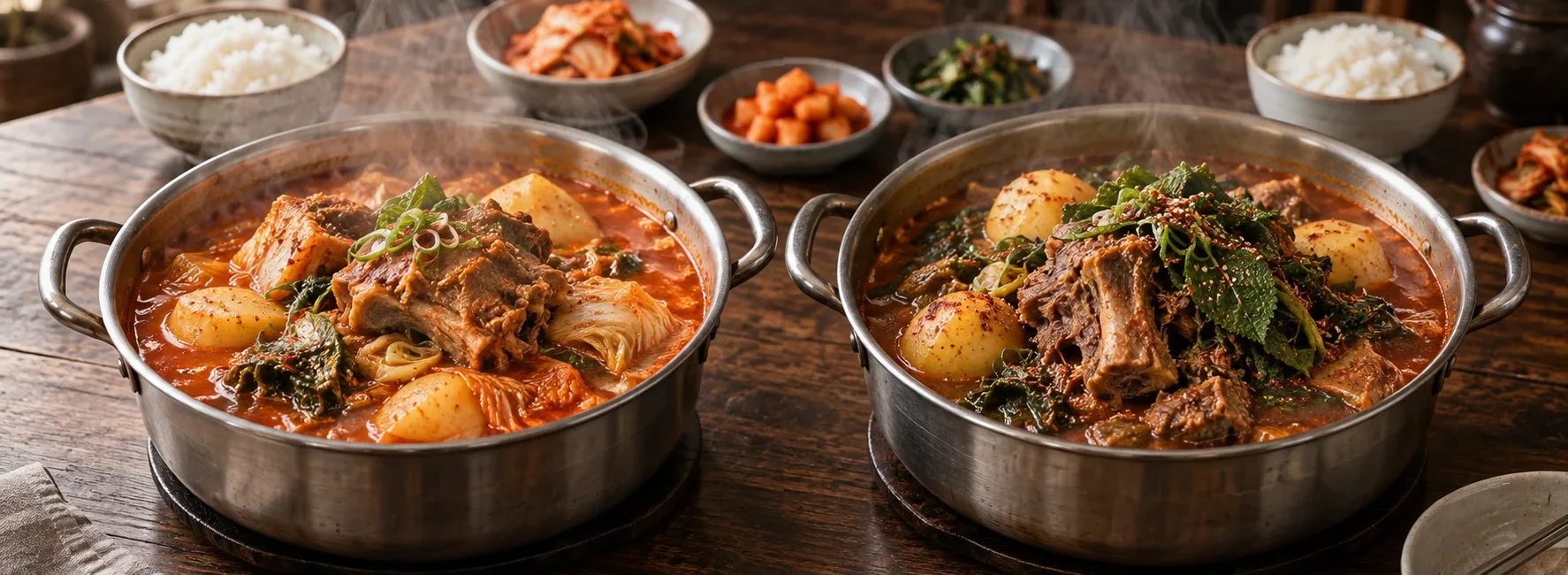
Gamjatang Recipe: 65-Minute Prepared Sauce vs Traditional Pork-Bone Broth
Smartor 편집팀
September 28, 2026

Gamjatang changes dramatically depending on where you spend the time, even when both pots start with pork neck or back bones. A pressure cooker, prepared gamjatang sauce, and packaged bone broth make a bold weeknight stew in 65 minutes. The traditional method soaks and blanches the bones, then simmers them gently with aromatics so pork gelatin, vegetable sweetness, doenjang, perilla seed, and fresh perilla leaves build in layers. Both recipes below make 4 servings with about 1.8 liters of finished broth. Convenience ingredients are not inherently inferior: speed and consistency are valuable, while the longer method gives you more control over aroma, fat, and body.
| Comparison | 65-minute quick version | 3-hour 30-minute traditional version |
|---|---|---|
| Yield | 4 servings; about 1.8 L broth | 4 servings; about 1.8 L broth |
| Prep / cook / total | 15 min / 50 min / 65 min | 1 hr 15 min / 2 hr 15 min / 3 hr 30 min |
| Active time | About 25 minutes | About 50 minutes |
| Difficulty | Moderate — manage pressure release and potatoes | Moderately advanced — soak, blanch, skim, and control simmer |
| Estimated U.S. Korean-market cost | About $22–28 | About $20–27 |
| Flavor | Packaged sauce and bone broth deliver a fast, distinct spicy-savory profile | Pork gelatin, aromatic sweetness, doenjang, perilla seed, and perilla leaf unfold in layers |
| Umami sources | Prepared gamjatang sauce, concentrated bone broth, doenjang | Long-simmered pork bones, onion, scallion, garlic, doenjang, fish sauce |
| Main failure risk | Venting too quickly or pressure-cooking the potatoes until they collapse | Leaving blood or bone dust behind, or boiling hard enough to make the broth greasy and harsh |
| Best for | Weeknights, pressure-cooker owners, predictable seasoning | Weekend meals, guests, and cooks who want to tune the broth |
Prep 15 minutes · Cook 50 minutes · Total 65 minutes · Active time about 25 minutes
Why it tastes this way: Pressure raises water’s boiling point and shortens the time needed to convert connective tissue into gelatin. Packaged bone broth supplies immediate richness, while prepared gamjatang sauce combines chile, garlic, doenjang-like savoriness, and seasoning in one measured addition. The result is fast and consistent, but it does not exactly reproduce the gradual pork aroma and adjustable fat level of the traditional pot. Adding potatoes only after pressure cooking prevents them from disintegrating.
Prep 1 hour 15 minutes (including 60-minute soak) · Cook 2 hours 15 minutes · Total 3 hours 30 minutes · Active time about 50 minutes
Why it tastes this way: Cold soaking and a short blanch remove blood, protein residue, and bone dust that can make the broth smell coarse. A gentle simmer limits violent emulsification of fat and impurities while collagen slowly becomes gelatin. Onion and scallion add sweetness; doenjang adds fermented savoriness; fish sauce contributes salt and umami; and perilla seed thickens the finish. Because those elements enter at different stages, you can tune each layer, though the process requires more time and heat control.
| Shortcut ingredient or step | Traditional replacement | Function and real difference |
|---|---|---|
| 80 g prepared gamjatang sauce | 35 g doenjang + 25 g gochugaru + 20 ml soup soy sauce + 15 ml fish sauce + 25 g garlic, added in stages | The prepared sauce standardizes heat, salt, and sweetness quickly. The separate seasonings offer control but do not copy the product’s sweetness or aroma exactly. |
| 500 ml unsalted packaged bone broth | Simmer 1.2 kg pork bones with aromatics for 1 hour 40 minutes, then measure the broth to 2 L | Packaged broth supplies immediate creamy body. Pork-bone stock has a more distinct pork aroma and gelatin texture. |
| 25 minutes high pressure + 10 minutes natural release | 60-minute cold soak + 8-minute blanch + 1 hour 40 minutes low simmer | Pressure speeds connective-tissue softening. The longer process makes it easier to remove residue and control clarity and fat at each stage. |
| Add raw cabbage directly | Blanch cabbage 2 minutes, squeeze, and season with doenjang, chile, soy sauce, and garlic | Direct addition is fast and fresh. Blanching reduces excess water and raw brassica aroma while helping seasoning cling to each leaf. |
| Add 20 g ground perilla during the final 5 minutes | Simmer 25 g ground perilla for 4 minutes, then add fresh perilla leaves for only the final minute | Both are nutty, but the staged version separates broth body from the fresh leaf’s volatile aroma. |
Prepared sauce and packaged broth are practical tools when time is limited, and they narrow the margin for seasoning error. Brands vary in salt and sweetness, so hold back additional salt until the end. The traditional method takes longer but lets you adjust pork aroma, fat, chile heat, and doenjang independently. The two approaches aim in the same direction; they do not taste identical.
USDA guidance sets 63°C (145°F) plus a 3-minute rest as the minimum for whole cuts of pork. Gamjatang cooks substantially beyond that point to tenderize meat around the bones. Insert the thermometer into the thickest meat without touching bone. Wash tongs, cutting boards, the sink, and surfaces that touched raw pork with hot soapy water, and use clean tools for cooked meat.
Do not leave the finished stew at room temperature for more than 2 hours. Divide bones and broth among shallow containers no more than 5 cm deep and refrigerate promptly at 4°C (40°F) or below. Refrigerate for 3–4 days or freeze for up to 2 months. Potatoes can become mealy after freezing; remove them from portions you plan to freeze or add fresh potatoes while reheating.
Reheat only the amount you will eat. Stir over medium heat for 8–10 minutes until every part reaches 74°C (165°F), adding 50–100 ml water if the chilled broth has gelled. In a 900 W microwave, heat 3 minutes, turn the bones and stir, then heat another 2–3 minutes and verify the temperature.
Yes. Neck bones usually carry more meat and slightly more fat. Use the same 1.2 kg. Keep the pressure time at 25 minutes; for the traditional version, begin checking tenderness after 1 hour 30 minutes. Skim an additional 30–60 ml fat if needed.
After blanching, simmer the bones with packaged broth, water, and seasoning over low heat for 80 minutes. Add potatoes and cabbage for 18 minutes, then add the final seasonings for 5 minutes. Total time increases to about 2 hours.
Either works, but they are not identical. Napa is softer and releases sweetness quickly. Dried radish greens are earthier and chewier; boil 300 g rehydrated greens separately for 20 minutes and strip any tough outer fibers before seasoning.
Start with 60 g. Taste after pressure cooking, then add up to 20 g more in 10 g increments. Dissolve each addition in 50 ml hot broth and boil 2 minutes. If the sauce brand is salty, reduce doenjang from 20 g to 10 g.
Yes. The broth will be lighter and less nutty. Do not mash potatoes to imitate the thickness; that can make the soup pasty. Reduce the finished broth for 5 extra minutes instead.
Yes, and the broth often tastes more integrated. Chill it promptly in shallow containers, lift off solidified fat the next day, and reheat to 74°C. Reserve some scallion and perilla leaves for the final minute of reheating.
For another comparison built around soaking and tenderizing bone-in meat, see quick-sauce vs traditional galbijjim. You may also like 45-minute vs brisket-stock yukgaejang, prepared-sauce vs pear-marinated jeyuk bokkeum, and prepared-seasoning vs clam-stock sundubu jjigae.
브라우저 메뉴에서 앱 설치 또는 홈 화면에 추가를 선택해 주세요.