

If you take medication for high blood pressure, the name of the drug alone does not determine whether your bottle is included in this recall. The action covers a specific lot of chlorthalidone 25 mg tablets with a matching manufacturer, National Drug Code, batch number, and expiration date. The safest response is to check the dispensing label, ask the pharmacy to trace the original stock, and avoid stopping the medication on your own.
Information linked to the FDA recall record identifies one lot of chlorthalidone 25 mg tablets manufactured by Inventia Healthcare Limited and packaged in 100-count bottles. The stated reason is failed dissolution specifications, and the FDA classified the action as a Class II recall. That classification means exposure may cause temporary or medically reversible health effects, while the probability of serious adverse consequences is considered remote. It does not mean every chlorthalidone product is affected, and it does not mean the issue should be ignored.
Important: This guide is not a substitute for individual medical advice. Chlorthalidone is a prescription medicine used to manage blood pressure and fluid retention. Abruptly stopping it can create a gap in treatment. If your bottle may match the recall, contact the dispensing pharmacy or prescriber before skipping or changing a dose. For chest pain, trouble breathing, fainting, stroke-like symptoms, or another emergency, call 911 rather than waiting for a recall check.
Key takeaways
- Product: Chlorthalidone Tablets, USP, 25 mg, Rx only, 100-count bottle, manufactured by Inventia Healthcare Limited.
- Identifiers: NDC 64980-599-01, batch RISA24002, expiration 04/2027. All of these details should match before treating a bottle as part of this specific recall.
- Scope: Public reporting tied to the FDA record says more than 13,000 bottles from one lot are involved. Your bottle is identified by its codes, not by the total number recalled.
- Reason: Failed dissolution specifications. This concerns whether the tablet releases its active ingredient as expected under standardized testing.
- Classification: FDA Class II, which covers situations that may cause temporary or medically reversible effects or in which serious effects are unlikely.
- Do not: Stop suddenly, double a dose, borrow someone else’s medicine, test a tablet in water, or flush the product without instructions.
- Do now: Photograph the label, call the dispensing pharmacy, request a lot trace, and arrange any replacement without interrupting treatment.
What happened
One specific lot of chlorthalidone was recalled
This action does not cover the entire drug ingredient or every 25 mg chlorthalidone tablet in the United States. The relevant identifiers are the drug name, strength, package size, manufacturer, NDC, batch number, and expiration date. The listed product is Chlorthalidone Tablets, USP, 25 mg in a 100-count prescription bottle, manufactured by Inventia Healthcare Limited. The NDC is 64980-599-01, the batch is RISA24002, and the expiration date is April 2027.
The company initiated the action on September 3, 2026, and the FDA classified it as Class II on September 17, according to the information associated with the recall record. “Voluntary” describes how a recall was initiated; it does not mean the quality issue is irrelevant. FDA explains that firms may initiate recalls themselves, act at the agency’s request, or respond to an FDA order. For a patient, the immediate questions are whether the dispensed medication came from the affected lot and how to obtain a safe replacement without losing blood-pressure control.
What failed dissolution specifications mean
A swallowed tablet does not deliver its active ingredient merely because it looks intact. It must break down and release the medicine at an appropriate rate so the body can absorb it as intended. Dissolution testing measures how much of the active ingredient is released from a dosage form under controlled conditions over a defined period. “Failed dissolution specifications” means the tested lot did not meet the established standard.
That phrase does not prove that every tablet has no effect. It also cannot be ruled out by looking at the pill’s color, shape, or odor. Dissolution is a laboratory quality issue that usually cannot be identified at home. Do not split tablets, soak them in water, or compare how quickly different pills dissolve. A kitchen test is not equivalent to standardized pharmaceutical testing and could damage medicine that a pharmacist still needs to identify.
Class II does not mean “no action needed”
FDA uses three main recall classes. Class I involves a reasonable probability of serious adverse health consequences or death. Class II covers temporary or medically reversible consequences, or cases in which serious harm is unlikely. Class III covers products unlikely to cause adverse health consequences. This recall’s Class II designation supports a measured response: verify promptly and protect continuity of care, without assuming every user faces an emergency.
High blood pressure often causes no immediate symptoms, which is why regular treatment matters. If a product may not perform as intended, home blood-pressure records and an uninterrupted medication supply become useful. At the same time, suddenly stopping a prescribed drug solely because of a headline can create its own risk. The practical sequence is to identify the bottle, contact the pharmacy, confirm replacement stock, and follow clinical instructions for any transition.
Who may be affected
People taking chlorthalidone 25 mg
If your prescription label says chlorthalidone 25 mg, your medicine is worth checking, but that detail alone does not place it in the recall. The NDC and batch must match. Chlorthalidone is a diuretic, sometimes called a “water pill,” used to treat high blood pressure and fluid retention. MedlinePlus explains that it helps the kidneys remove unneeded salt and water. It controls high blood pressure but does not cure it, and patients should not stop taking it without speaking with a clinician.
Older adults, people taking several medicines, and patients with kidney or liver disease, diabetes, gout, or other chronic conditions should mention those facts when discussing a replacement. A clinician may want to consider blood pressure, electrolytes, kidney function, other prescriptions, and recent symptoms. The recall class alone cannot describe an individual patient’s risk.
Patients who received a pharmacy vial
Many pharmacies dispense tablets from a manufacturer’s large stock bottle into a smaller amber vial. Your pharmacy label may list the drug, strength, prescription number, fill date, and pharmacy contact information without showing the original batch number. The absence of “RISA24002” on a consumer vial therefore does not prove that the medicine is unaffected. The pharmacy can use purchasing, inventory, and dispensing records to trace the manufacturer and lot used for your fill.
Before calling, have the patient name, date of birth, prescription number, fill date, drug name, and strength available. Ask specifically whether the fill came from Inventia Healthcare, NDC 64980-599-01, batch RISA24002, expiration 04/2027. Keep the bottle and its label until the pharmacy completes the check.
Family caregivers and care facilities
A caregiver who has moved tablets into a weekly organizer may not be able to identify the manufacturer by looking at the pills. Check the original bottle, the latest pharmacy receipt, and the prescription history in the official pharmacy app. If medication from multiple fills was combined, do not try to sort tablets based on online pill photos. Explain the situation to the pharmacist.
Nursing facilities, home-care programs, and patients receiving multi-dose pouch packaging should ask the facility nurse or dispensing pharmacy to trace the supply. A rumor that a whole facility is affected is less useful than the medication administration record and actual lot history. Any decision to hold or replace a scheduled dose should be made through the facility’s pharmacist and clinical team.
What to do now
Step 1: Preserve the information before discarding anything
- Photograph the front and back of the vial, the dispensing label, and the remaining tablets.
- Confirm that the medicine is chlorthalidone and the strength is 25 mg. A combination drug with a similar name may be a different product.
- If you have the manufacturer bottle, compare NDC 64980-599-01, batch RISA24002, and expiration 04/2027 one item at a time.
- If the pharmacy vial lacks the codes, write down the prescription number and fill date. Do not decide based only on a pill-identification photo.
- Note recent home blood-pressure readings, missed doses, dose times, and unusual symptoms so a clinician has useful context.
Step 2: Call the pharmacy that filled the prescription
Start with the location that dispensed the medicine. Even within a national chain, another store may not immediately see the lot history for that fill. Read the recall identifiers to the pharmacist and ask whether the prescription was dispensed from the affected stock. If it was, ask whether a replacement from an unaffected lot or manufacturer is available, whether the prescriber must issue a new prescription, how an insurance early-refill limit will be handled, and where the remaining tablets should be returned.
For mail-order or online pharmacies, use the phone number on the prescription label, the official app, or the company’s verified website. Do not trust a number in an unsolicited text or paid search advertisement. A legitimate recall replacement should not require your full Social Security number, banking password, one-time security code, gift card payment, cryptocurrency, or installation of remote-access software.
Step 3: Confirm a replacement plan before changing treatment
MedlinePlus advises patients to continue chlorthalidone even when they feel well and not to stop it without talking to a doctor. A confirmed recall does not erase the need for a safe transition. Ask the pharmacist or prescriber what to do with the next scheduled dose, whether another manufacturer’s chlorthalidone is available, and whether any prescription change is needed.
If you are nearly out of medicine or away from home, say so at the beginning of the call. A clinician may choose another product or strength if replacement stock is unavailable, but patients should not split a 50 mg tablet, borrow another person’s 25 mg tablets, or substitute a different diuretic on their own. When you receive a replacement, verify the drug name, strength, and directions at the counter. A different pill appearance may reflect a new manufacturer, but the pharmacist should confirm it.
Step 4: Monitor blood pressure and symptoms sensibly
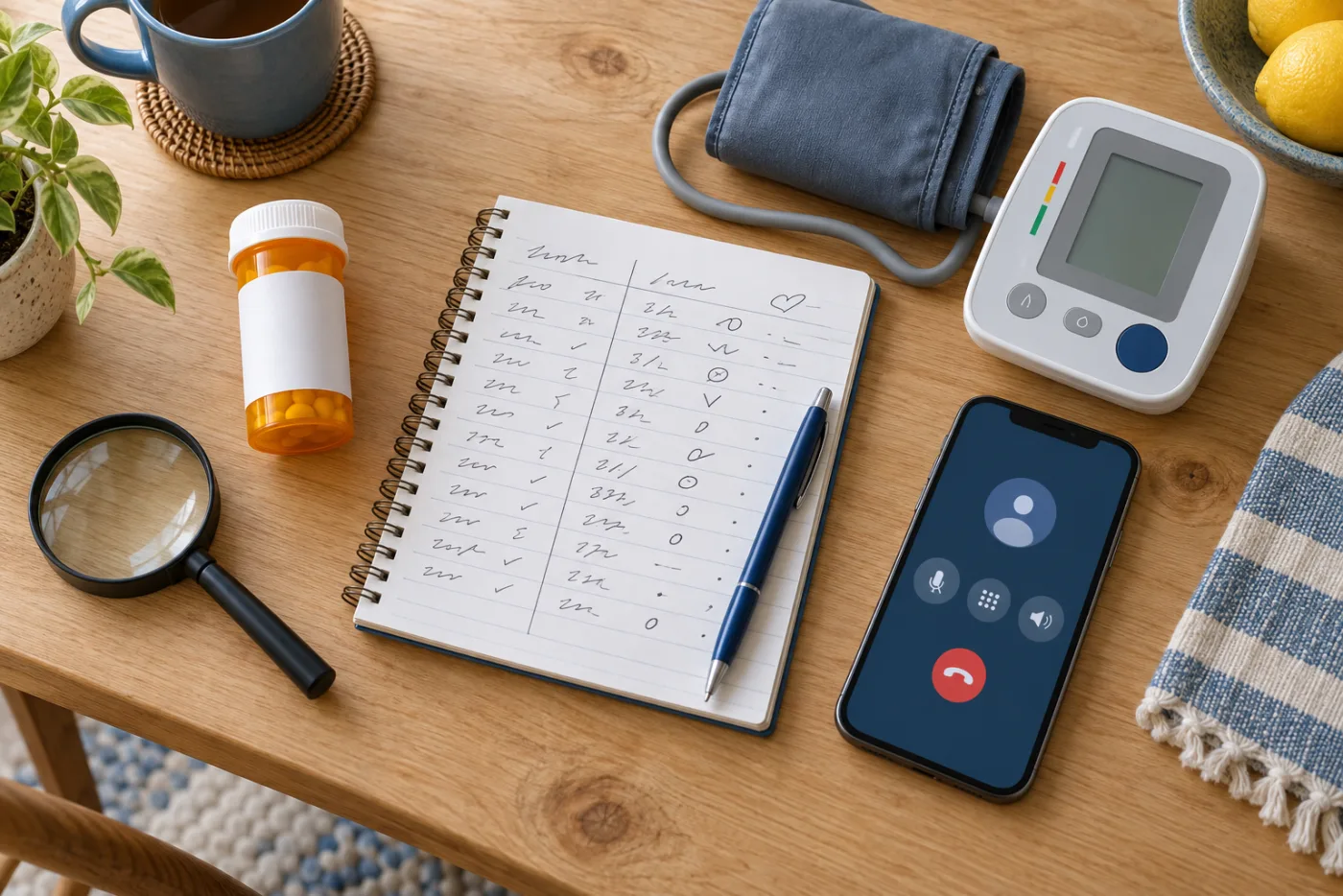
If you already monitor blood pressure at home, continue at consistent times and under similar conditions. Sit quietly for about five minutes first, avoid checking immediately after caffeine, exercise, or smoking, and use a cuff that fits the upper arm correctly. Do not take an extra tablet because of one elevated reading. Repeat the measurement after a short pause and follow the contact thresholds your clinician has provided.
Seek medical guidance for new or worsening dizziness, fainting, severe headache, repeated unusually high or low readings, or other concerning changes. Chest pain, trouble breathing, weakness or numbness on one side, difficulty speaking, or loss of consciousness requires emergency evaluation. Those symptoms are not proof that the recalled lot caused a problem, but they should not wait for a routine pharmacy call.
Step 5: Follow return or disposal instructions
Discarding the bottle before it is traced can make confirmation and replacement harder. Keep it closed, in the original container if possible, and away from children and pets until the pharmacy or recall instructions tell you what to do. Do not flush the tablets unless an official medicine-specific instruction explicitly directs it. For medication that is not part of this recall but is expired or no longer needed, see Smartor’s expired medicine disposal guide for take-back, mail-back, and safe household options.
How to verify the recall through official sources
- Search the FDA Enforcement Report: Use Event ID 99806 or the product name Chlorthalidone. Review the recall number, product quantity, distribution, and status when the record is updated.
- Compare every identifier: Chlorthalidone Tablets USP 25 mg, 100 tablets, Inventia Healthcare Limited, NDC 64980-599-01, batch RISA24002, expiration 04/2027.
- Use pharmacy records for repackaged vials: A consumer vial may not show the lot. The pharmacy’s purchasing and dispensing records are the proper way to trace it.
- Check the FDA definition: Read FDA’s Recalls Background and Definitions page for the official meaning of Class II. Compare that definition with any social-media claim that exaggerates the scope.
- Check medication instructions: NIH MedlinePlus provides current consumer information about chlorthalidone uses, dosing principles, side effects, storage, and the warning not to stop without consulting a clinician.
- Report a suspected problem: Discuss symptoms with a clinician and use FDA MedWatch or SmartHub for suspected adverse events or product-quality problems. Keep the bottle photos, prescription number, dose history, and symptom timeline.
Frequently asked questions
Is every chlorthalidone 25 mg prescription recalled?
No. The recall is limited to a product with matching manufacturer, NDC, batch, and expiration details. Another chlorthalidone 25 mg product may come from a different manufacturer or lot. Ask the dispensing pharmacy to trace your fill.
What if there is no batch number on my vial?
That is common when a pharmacy transfers tablets from a stock bottle into a patient vial. Give the pharmacy your prescription number and fill date. It can usually trace the original manufacturer and lot through inventory records. Do not rely on pill shape or color alone.
Does a Class II recall mean I need an emergency room?
Not solely because of the classification. Class II means temporary or medically reversible effects are possible, or serious effects are unlikely. Contact the pharmacy and clinician promptly. Use emergency services for chest pain, breathing difficulty, fainting, stroke-like symptoms, or another acute emergency.
Can I stop taking the pills today?
Do not stop or change the dose without instructions from a pharmacist or prescriber. Chlorthalidone helps manage blood pressure and fluid retention, and an unplanned gap may carry risk. Confirm the lot and arrange a replacement plan first.
Does a dissolution failure mean the tablets contain a poison?
No such conclusion follows from the stated reason. Dissolution specifications concern how the dosage form releases the active ingredient under standardized conditions. The public reason does not by itself describe contamination with a toxic substance. Use the official recall wording and avoid adding unsupported claims.
Can I test a tablet by putting it in water?
No. A glass-of-water experiment is not a validated dissolution test and cannot identify a manufacturing lot. It may damage medication and create a false sense of safety. Use the NDC, batch information, and pharmacy records.
I already took tablets from the bottle. Does that mean I was harmed?
Past use alone does not prove harm. Record the dates taken, recent blood-pressure readings, and any symptoms, then discuss them with the pharmacist or clinician. Do not compensate by doubling or skipping doses without guidance.
Will I have to pay again for a replacement?
That depends on the pharmacy, insurer, and recall process. Ask whether the replacement is being processed as a recall exchange, whether an early-refill override is available, and whether the prescriber must send a new order. Keep receipts and case numbers, and avoid unverified refund links.
What if the FDA record status changes later?
FDA records may move through ongoing, completed, or terminated stages as the firm and agency manage the recall. A status change does not automatically make tablets already identified as affected suitable to use. Continue following the pharmacy’s return and replacement instructions.
Official sources
- FDA Enforcement Report — Event ID 99806
- FDA — Recalls Background and Definitions
- FDA — Drug Recalls
- NIH MedlinePlus — Chlorthalidone Drug Information
- Good Housekeeping — FDA Class II Chlorthalidone Recall Details
The Smartor Editorial Team prepared this guide from FDA and NIH materials and the source information linked to the recall record, with emphasis on product identification and safe next steps. Recall status and procedures can change. Do not stop a prescription on your own; prioritize the latest FDA record and instructions from the dispensing pharmacy.