
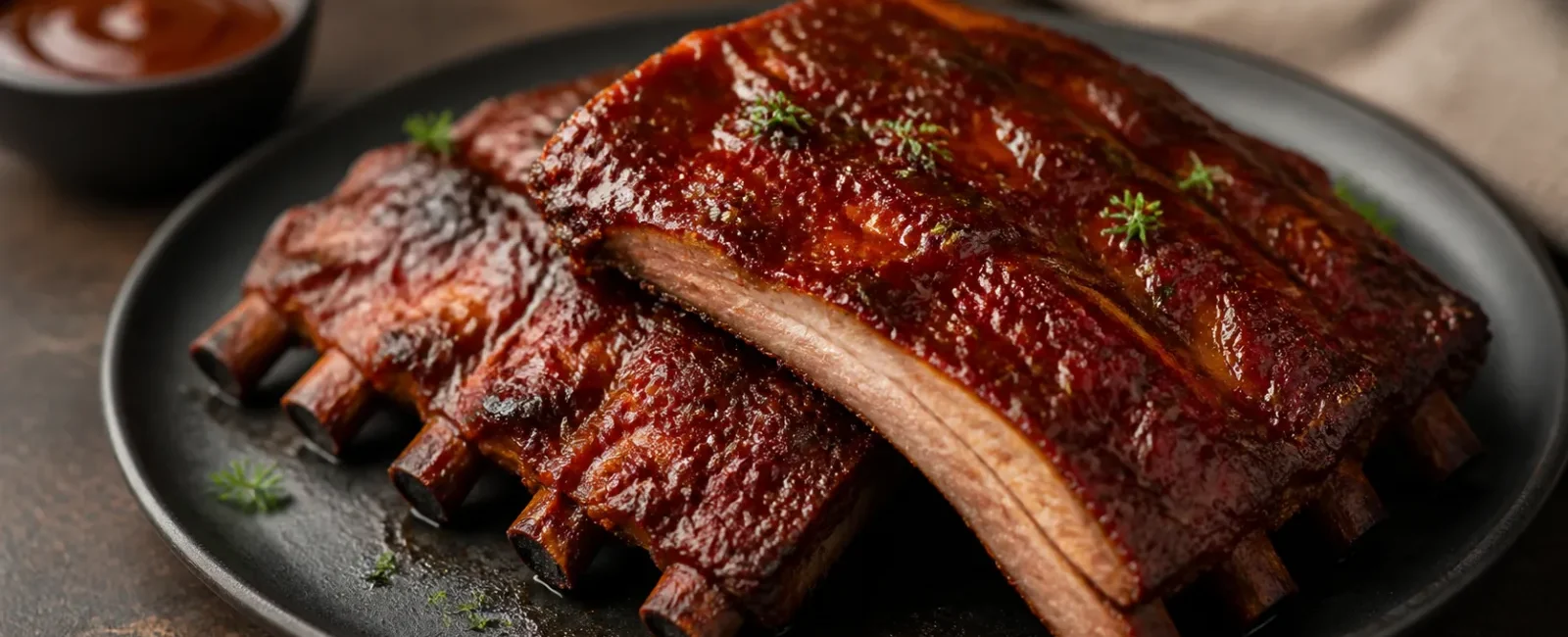
Air fryer ribs can develop dark caramelized edges and a juicy center without running the oven for hours. Cook a 2-pound (907 g) rack of baby back ribs at 360°F (182°C), then brush it with barbecue sauce and finish briefly at 400°F (204°C). Removing the membrane and cutting the rack into basket-size sections helps it cook evenly. Pork is safe after reaching at least 145°F (63°C) followed by a 3-minute rest, but collagen-rich ribs become much more tender around 190 to 200°F (88 to 93°C).
Air fryer ribs at a glance
- Prep time: 15 minutes
- Cook time: 28 to 32 minutes
- Total time: about 50 minutes, including resting
- Main temperature: 360°F (182°C); sauce finish at 400°F (204°C)
- Yield: 4 servings
- Safe internal temperature: At least 145°F (63°C), followed by a 3-minute rest
- Tender-texture target: 190 to 200°F (88 to 93°C) in the thickest meat between bones
Ingredients and exact amounts
- 1 rack pork baby back ribs, about 2 pounds (907 g)
- 1 tablespoon olive oil or avocado oil
- 1/2 cup (120 ml) barbecue sauce, divided
- 1 tablespoon packed brown sugar
- 2 teaspoons smoked paprika
- 1 1/2 teaspoons kosher salt
- 1 teaspoon garlic powder
- 1 teaspoon onion powder
- 1/2 teaspoon black pepper
- Optional: 1/4 teaspoon cayenne pepper
St. Louis-style spare ribs are thicker and fattier than baby backs, so they may not become tender in the same amount of time. The main timing below is for a baby back rack weighing about 2 pounds.
Remove the membrane and portion the rack
- Turn the rack bone-side up. Slide a butter knife under the thin, shiny membrane at one end and lift a corner.
- Grip the membrane with a paper towel and pull it away slowly. Leaving it on can produce a tough texture and prevent seasoning from reaching the bone side.
- Cut the rack into about three sections containing 3 to 4 ribs each, small enough to lie flat in the basket.
- Pat the surface dry and rub with oil. Combine the brown sugar, paprika, salt, garlic powder, onion powder, pepper and optional cayenne, then press the mixture evenly onto both sides.
How to cook ribs at 360°F
- Preheat: Preheat the air fryer to 360°F (182°C) for 3 minutes.
- First cook: Arrange the ribs bone-side down in one layer and cook at 360°F for 15 minutes. Work in batches rather than stacking them.
- Turn: Use tongs to turn the ribs meat-side down and cook for another 10 minutes.
- Check: Insert an instant-read thermometer into the thickest meat without touching bone. If it is below 180°F and still firm, continue at 360°F for 3 to 5 minutes.
- Sauce: Brush both sides with 1/4 cup barbecue sauce and return the sections meat-side up.
- Caramelize: Increase the temperature to 400°F (204°C) and cook for 3 to 5 minutes. Check at minute 3 because sugar in the sauce can burn quickly.
- Rest: Aim for 190 to 200°F for a tender texture and verify at least 145°F for safety. Rest for 5 minutes and serve with the remaining sauce.
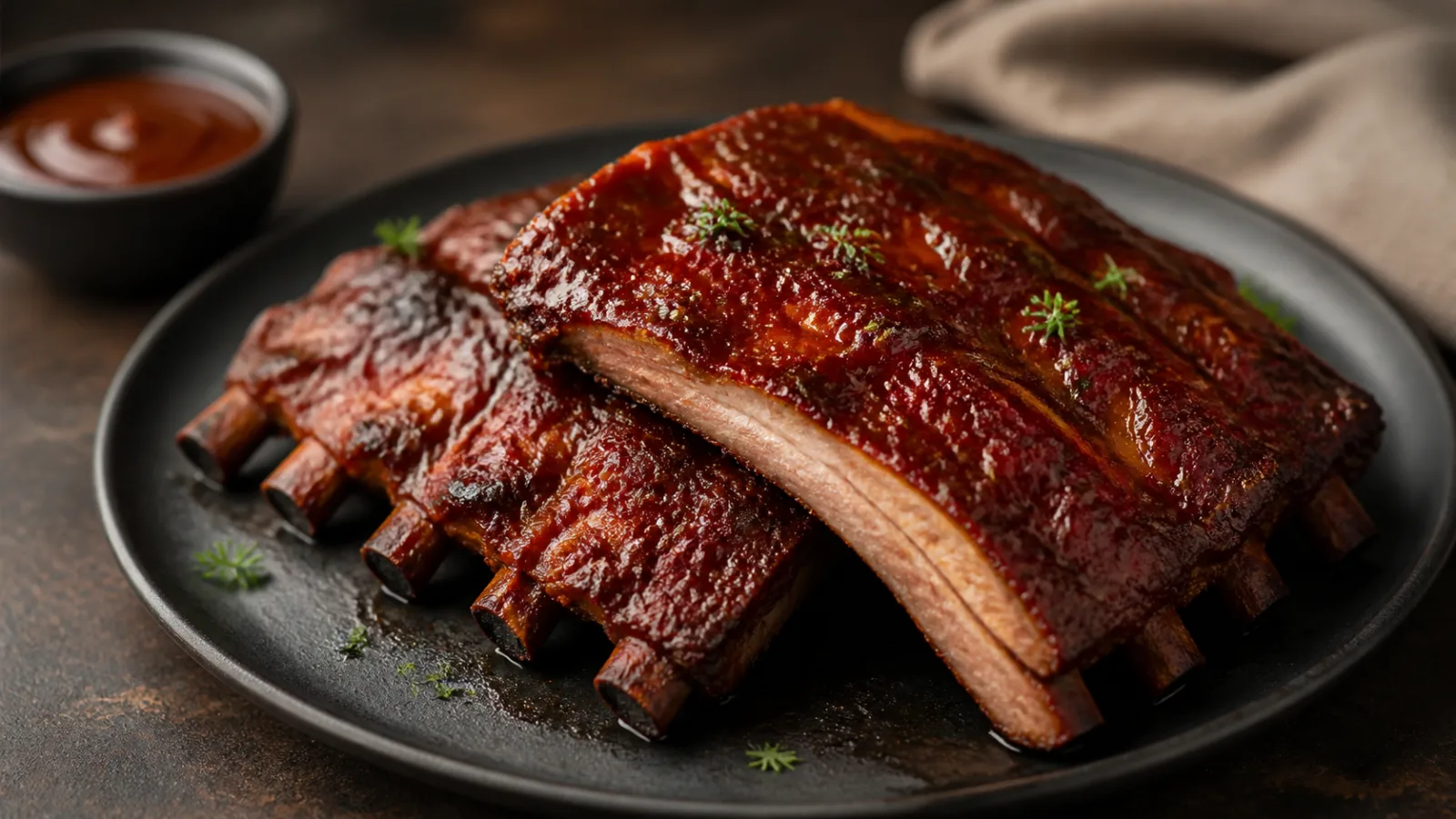
Rib type, weight, temperature and time chart
| Rib type and amount | Main temperature | Estimated time | Finish |
|---|---|---|---|
| Baby back ribs, 1.5 pounds (680 g) | 360°F (182°C) | 22 to 26 minutes | Sauce; 400°F for 3 to 4 minutes |
| Baby back ribs, 2 pounds (907 g) | 360°F (182°C) | 25 to 30 minutes | Sauce; 400°F for 3 to 5 minutes |
| St. Louis ribs, 2 pounds (907 g) | 350°F (177°C) | 35 to 45 minutes | Sauce; 400°F for 3 to 5 minutes |
| Refrigerated cooked ribs | 350°F (177°C) | 6 to 9 minutes | Verify 165°F in the center |
These ranges assume a preheated basket-style air fryer and ribs arranged without overlap. Thickness, starting temperature, basket size and airflow can shift the cook time by more than 5 minutes. Use the clock as a guide and verify both temperature and tenderness.
Why safe and tender temperatures differ
USDA guidance sets 145°F (63°C) with a 3-minute rest as the safe minimum for pork steaks, chops and roasts. Ribs may be safe at that point but still chewy because they contain substantial connective tissue. Taking ribs gradually to 190 to 200°F (88 to 93°C) converts more collagen to gelatin and softens the meat around the bones. A thermometer touching bone can give a misleading reading, so measure the thickest meat between bones. A section that bends easily in the tongs and begins to crack slightly at the surface is another useful tenderness cue.
How to prevent dry or burned ribs
- Add sauce at the end: Sugar-heavy barbecue sauce can burn before the meat becomes tender if applied at the beginning.
- Use one layer: Hot air must circulate around the sections for even browning.
- Check smaller pieces first: Thin end sections may reach 190°F earlier and should be removed separately.
- Place the thermometer correctly: Insert it from the side into thick meat between bones, avoiding large pockets of fat.
- Rest before cutting: Five minutes helps the juices settle and the glaze set.
Serving ideas and related air fryer recipes
Serve ribs with coleslaw, corn, potato salad or pickles to balance the rich barbecue glaze. For crisp pork in smaller bites, see our air fryer pork belly recipe. For a lighter option, use the timing guide in our air fryer salmon recipe. Air fryer chicken drumsticks work well for a family dinner, while air fryer chicken wings make an easy party menu.
Storage and reheating
Refrigerate leftover ribs in a shallow airtight container within 2 hours and use within 3 to 4 days. For longer storage, seal meal-size portions and freeze for 2 to 3 months. To reheat refrigerated ribs, brush the surface with 1 tablespoon of water or barbecue sauce and air-fry at 350°F (177°C) for 6 to 9 minutes. Turn once and confirm that leftovers reach 165°F (74°C) in the center. Thaw frozen ribs overnight in the refrigerator before using the same reheating method for the most even result.
Frequently asked questions
Can I remove air fryer ribs at 145°F?
Pork meets the safety guideline at 145°F followed by a 3-minute rest, but ribs can still be chewy because of their connective tissue. For tender ribs, aim for about 190 to 200°F and begin checking frequently once they pass 180°F so they do not dry out.
Do I need to wrap ribs in foil?
This method cooks small baby back sections without foil to encourage browning. Loosely wrapping very thick spare ribs for the first 20 to 25 minutes may help retain moisture, but check that the appliance manual permits foil and never block all airflow.
Must I remove the rib membrane?
The membrane is not harmful to eat, but it remains chewy and blocks seasoning from the bone side. Some racks are sold with it already removed, so first look for a thin, shiny sheet over the bones.
Can I cook ribs directly from frozen?
Thick frozen ribs are difficult to cook evenly before the exterior dries or burns. Thaw them completely in the refrigerator for better food safety, seasoning coverage and texture.
Can I make these ribs without barbecue sauce?
Yes. Use the dry rub alone and reduce the final 400°F stage to 2 or 3 minutes. Unsauced ribs can dry faster, so check them often after they reach 190°F.
What if the ribs overlap in the basket?
Overlapping blocks hot air and creates uneven cooking and browning. Load only as much as fits in one layer and cook the rest as a second batch.
Food-safety references
- FoodSafety.gov: Safe Minimum Internal Temperatures
- USDA FSIS: Fresh Pork From Farm to Table
- USDA FSIS: Leftovers and Food Safety
Actual temperature and airflow vary by air-fryer model. Treat the cook time as a range and check the thickest meat between bones for both temperature and tenderness.