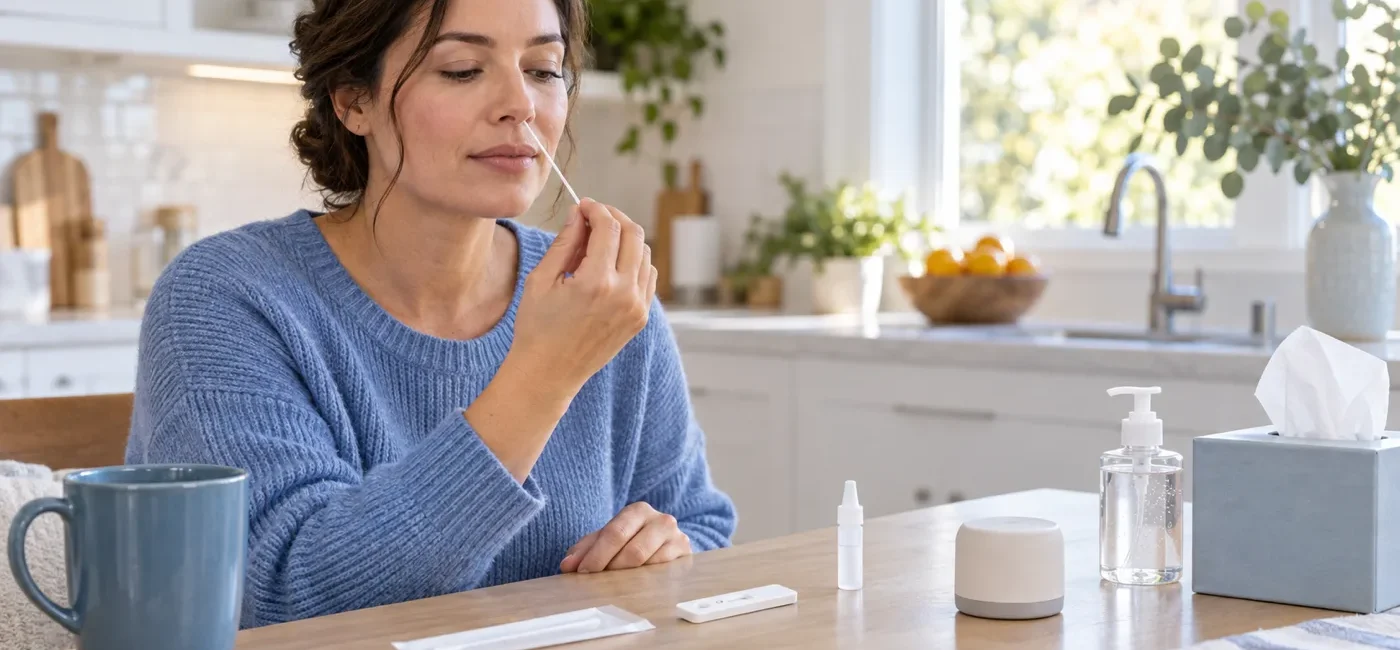
At-Home COVID-19 Test Guide: Repeat Testing and Expiration Checks
Smartor 편집팀
September 18, 2026

A negative line on an at-home COVID-19 test is useful information, but it is not always the final answer. Rapid antigen tests usually return results in 15 to 30 minutes, yet the Centers for Disease Control and Prevention says they are less likely than nucleic acid amplification tests, including PCR, to detect the virus. That gap matters most early in an infection and when a person has no symptoms. A single negative antigen result cannot rule out COVID-19.
This guide explains when to test, how to schedule repeat tests, how to check an extended expiration date, and when a person at higher risk should seek treatment. It applies to over-the-counter home tests sold in the United States. Age limits, specimen type, authorized symptom window, reading time, and serial-testing instructions vary by product. Always use the insert packaged with your exact test and confirm its status on the U.S. Food and Drug Administration’s official list.
This article provides general health information, not an individual diagnosis or treatment plan. Seek emergency care immediately for severe symptoms such as trouble breathing, persistent chest pain, new confusion, or difficulty waking. People who are pregnant, immunocompromised, older, living with chronic conditions, or taking prescription medicines should discuss their situation with a clinician or pharmacist.
Most home COVID-19 tests are antigen tests. They look for viral proteins in a sample collected from the nose or mouth and can be used without sending the specimen to a laboratory. Their speed is valuable, but a test can miss an infection if the amount of virus in the sample is below its detection threshold. That is more likely near the beginning of an infection or before symptoms appear.
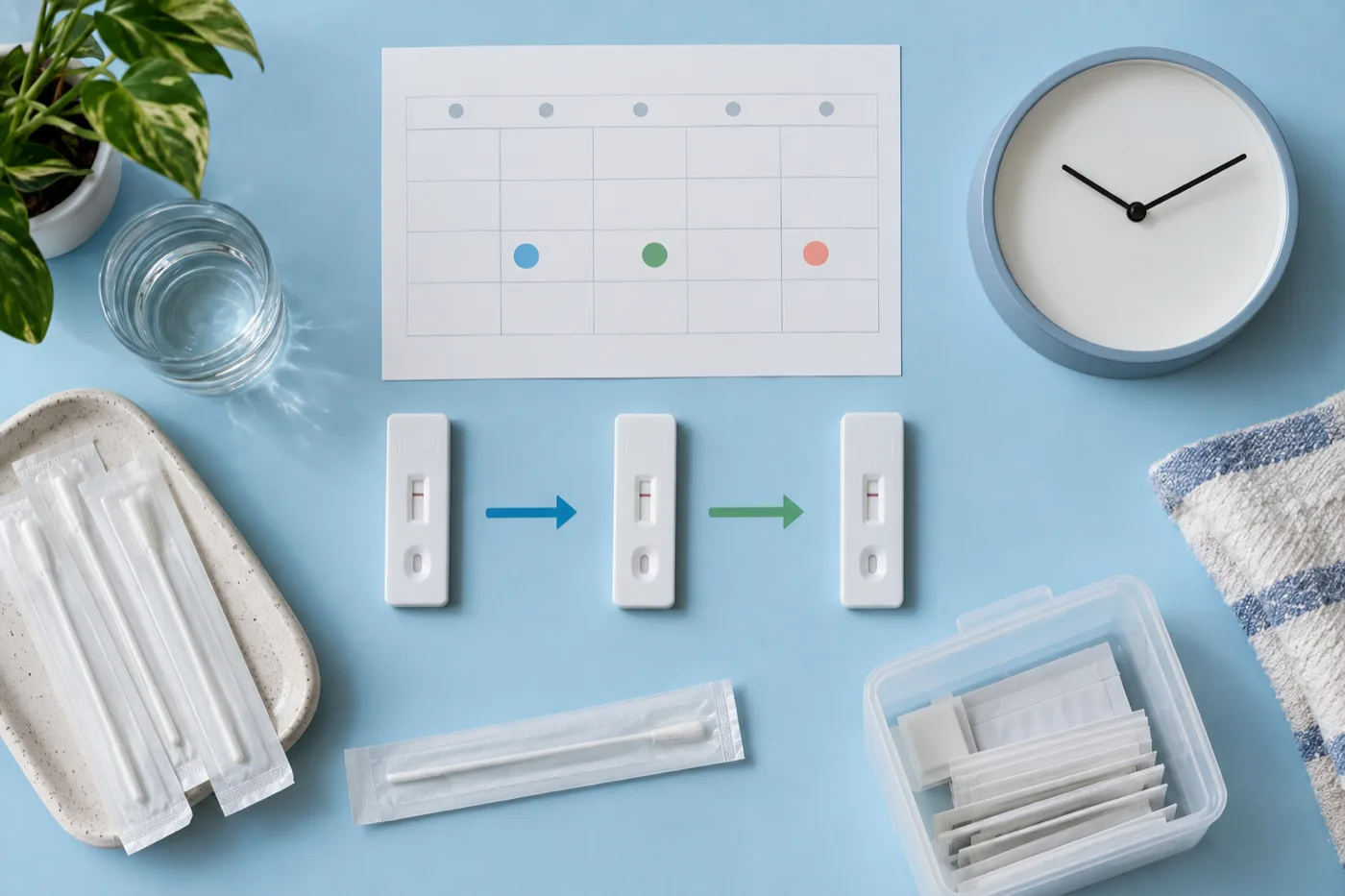
Current federal guidance addresses that weakness through serial testing. CDC relays the FDA recommendation of two negative antigen tests, 48 hours apart, for a person with symptoms and three negative antigen tests, also 48 hours apart, for a person without symptoms. The interval gives the amount of detectable virus time to change. Testing the next morning after a negative result is not the same schedule unless the instructions for a specific product direct otherwise.
NAATs include PCR and other molecular tests. CDC calls them the gold standard because they are more likely than antigen tests to detect the virus. A laboratory result can take longer, although some NAATs are performed at the point of care. When a result affects prompt treatment, a medical procedure, or contact with a vulnerable person, ask a clinician whether repeat antigen testing or a NAAT best fits the decision and timeline.
Fever, chills, cough, sore throat, congestion, headache, and fatigue are not unique to COVID-19. A first negative antigen test may have been taken too early, or another respiratory infection may be causing the illness. While sick, reduce close contact, improve indoor air, wash hands, and consider a well-fitting mask when contact cannot be avoided. If symptoms persist or worsen, a healthcare professional can help decide whether you need a NAAT or testing for another illness.
When the purpose of testing is to protect someone vulnerable, keep precautions in place after the first negative. Use separate space when practical, increase ventilation, avoid sharing personal items, and minimize close contact while completing the serial-testing schedule. If the high-risk person develops symptoms, do not postpone a treatment conversation while waiting for the last planned test.
CDC identifies older age, not being up to date on COVID-19 vaccination, and certain conditions—including chronic lung disease, heart disease, and weakened immunity—as factors associated with greater risk of severe illness. Treatment works on a short clock. A high-risk person should contact a clinician, pharmacy, local health department, or community health center as soon as symptoms begin, even if those symptoms are mild.
Some NAATs may remain positive for up to 90 days after an infection. If the first positive was within the last 30 days, CDC says a person with new symptoms should use an antigen test and repeat a negative result according to FDA recommendations; testing is generally not recommended to detect a new infection when there are no symptoms. During days 31 through 90, use an antigen test when a new infection is suspected, whether symptoms are present or not, and repeat negatives as directed. Reinfection can occur within 90 days, so discuss uncertain results with a healthcare professional.
For a person without symptoms, the recommended antigen series is three tests, each separated by 48 hours. A single test immediately before a gathering is only a snapshot. It cannot guarantee that a person is not infected or will not become detectable later. When a high-risk guest will be present, combine testing with ventilation, postponing attendance when ill, and masking in crowded indoor settings.
A test without the required control line or device-status indicator is invalid, not negative. Do not compare a faint mark with photos of another brand online. Use the interpretation diagram supplied with the exact product. An invalid kit cannot be reused. Start over with a new one, and contact the manufacturer or a healthcare provider if invalid results recur.
A positive result means the virus was detected and you have or recently had an infection. Take steps to reduce spread, follow CDC respiratory-virus precautions, and monitor symptoms. People at higher risk should ask immediately whether they qualify for treatment. CDC says COVID-19 treatment must begin within five to seven days after symptoms first develop. Some oral antivirals must start within five days; another antiviral option can begin within seven days. Drug interactions, kidney or liver function, age, and other health factors affect which option is appropriate.
Record the test name, date, time, result, and date symptoms began. A clear photo may help during a phone or telehealth conversation, but a photo does not guarantee a prescription and every provider may use a different verification process. CDC advises people at higher risk not to delay treatment discussions while waiting for a test result. If symptoms begin on a weekend, locate an available clinic or pharmacy rather than assuming the next business day will leave enough time.
The FDA’s At-Home OTC COVID-19 Diagnostic Tests page lists products by manufacturer. Entries describe authorized users, symptom windows, specimen type, technology, result time, shelf life, and—in some cases—an “Extended Expiration Date” document. Other entries direct users to rely on the date printed on the box.
For tests purchased through an online marketplace, inspect the physical package that arrives rather than relying on the listing photo. An authorized product is not usable if its directions are missing or components have been mixed. Never combine a swab, reagent, reader, or cassette from different kits unless the manufacturer’s official instructions expressly say to do so.
The “best” test depends on timing and purpose, not price alone. A NAAT is more likely to detect the virus, but it may stay positive long after a recent infection. An antigen result arrives quickly but may miss an early infection unless it is repeated. Consider when exposure may have happened, when symptoms started, whether there was a positive result in the last 90 days, and how much time remains for a treatment decision.
When several family members are sick, label the plan clearly. Record each person’s name, symptom-onset date, first test time, result, and next scheduled time in a paper log or phone note. Do not share swabs, reagents, or cassettes. After each test, dispose of components according to the instructions and local rules, wash hands, and clean the testing surface.
If the control indicator is valid and a test line appears within the manufacturer’s authorized reading window, the instructions may define it as positive regardless of intensity. Devices use different symbols and layouts, so follow the diagram for your exact test instead of comparing it with another brand online.
A single negative does not rule out infection. If you are sick, take steps to protect others, review your employer’s sick-leave and return policy, follow current CDC respiratory-virus guidance, and repeat the antigen test 48 hours later. Healthcare and long-term-care settings may have additional rules.
Not necessarily. FDA has extended the shelf life of some products. Match the exact manufacturer, product, and printed date or lot with the official extension table. If your kit cannot be matched, do not assume that another product’s extension applies.
Serial negatives provide more confidence than one negative, but no test offers a 100% guarantee. If symptoms continue, exposure was substantial, or an important medical decision depends on the answer, consider a NAAT or clinical evaluation.
You can, but the result may be hard to interpret because some NAATs remain positive for up to 90 days. Tell the provider the date of your previous positive test and whether you have new symptoms. CDC’s 0-to-30-day and 31-to-90-day guidance often points to an antigen test for suspected reinfection.
Yes, if you have factors that raise the risk of severe illness. Treatment is intended to reduce progression, and the window to begin is short. A clinician should review age, vaccination status, medical conditions, immune status, medications, and kidney or liver function.
Only when the product authorization allows it. Some tests permit self-collection above one age and adult collection for younger children. Check the box, insert, and FDA listing. Do not force collection from a child who cannot safely cooperate; ask a pediatric clinician about alternatives.
CDC says a NAAT, including PCR, is more likely to detect the virus. Antigen tests are faster and useful at home, but negative results need repetition. NAATs can remain positive after a recent infection. Accuracy for a real decision therefore depends on the test type, timing, collection quality, and clinical context.
브라우저 메뉴에서 앱 설치 또는 홈 화면에 추가를 선택해 주세요.
[…] Smartor 편집팀 September 18, 2026 Read this guide in English → […]