
Key takeaways
- CDC and FDA have linked a large 2026 multistate Cyclospora outbreak to iceberg lettuce processed by Taylor Farms de Mexico and sourced from central Mexico. The company removed the implicated lettuce from the U.S. market on July 17.
- CDC’s August 13 update reports 9,481 illnesses in 17 states, at least 398 hospitalizations, and two deaths in Michigan. Illness onsets ran from June 14 through August 3, and more cases may still be added because outbreak confirmation takes time.
- The recalled products’ best-by dates have passed, and the products should no longer be in stores or restaurants. The practical concern now is food saved at home, past restaurant or food-service exposure, and symptoms that began after eating lettuce during the affected period.
- The retail recall included Marketside Iceberg Salad in 12- and 24-ounce packages and Marketside Shredded Lettuce in 8- and 16-ounce packages sold at select Walmart stores, with dates from July 18 through August 3. Food-service distribution was much broader.
- If you develop watery diarrhea, loss of appetite, fatigue, cramps, bloating, weight loss, or nausea, tell your healthcare provider about possible iceberg-lettuce exposure. Routine stool testing may not automatically include Cyclospora, so ask whether specific testing is needed.
This guide answers those questions using CDC and FDA materials current through August 13. It does not treat every bag of lettuce as dangerous. The outbreak is tied to a defined supply chain, and the recalled products are past their best-by dates. At the same time, the number of reported illnesses is large, the incubation window can be long, and public-health reporting lags behind illness onset. Current shopping, old food stored at home, and past exposure therefore need to be evaluated separately.
What happened
CDC says epidemiologic and traceback evidence identified iceberg lettuce processed by Taylor Farms de Mexico as the source of this multistate Cyclospora outbreak. The lettuce was sourced from central Mexico and moved through retail, restaurant, and food-service channels in the United States. On July 17, 2026, Taylor Farms de Mexico voluntarily removed all iceberg lettuce sourced from central Mexico from the U.S. market, and Taylor Fresh Foods issued a detailed recall announcement.
CDC’s August 13 update lists 9,481 confirmed illnesses across 17 states. At least 398 people were hospitalized, and two deaths were reported in Michigan. Illness onsets ranged from June 14 to August 3. Maine and Massachusetts were newly added since the previous update. The outbreak count includes people who reported exposure to processed iceberg lettuce from Taylor Farms de Mexico at different locations, including some who had previously reported eating at Taco Bell.
Two geographic lists are easy to confuse. The 17 states in the CDC count are locations associated with confirmed illnesses. FDA’s distribution information is broader. Food-service distribution was confirmed in Alabama, Arkansas, Connecticut, Florida, Georgia, Iowa, Illinois, Indiana, Kansas, Kentucky, Louisiana, Maine, Maryland, Massachusetts, Michigan, Missouri, Mississippi, Nebraska, New Hampshire, New Jersey, New York, North Carolina, Ohio, Oklahoma, Pennsylvania, South Carolina, Tennessee, Texas, Virginia, Wisconsin, and West Virginia. Product may also have moved onward to California, Washington, D.C., Delaware, North Dakota, Puerto Rico, Rhode Island, South Dakota, Vermont, and Washington state.
The most recognizable retail products were sold under the Marketside name at select Walmart stores. FDA lists Iceberg Salad in 12- and 24-ounce packages and Shredded Lettuce in 8- and 16-ounce packages, with Best if Used By dates from July 18 through August 3, 2026. Those retail packages went to select stores in Alabama, Arkansas, Florida, Georgia, Indiana, Kansas, Kentucky, Louisiana, Missouri, Mississippi, Oklahoma, Tennessee, Texas, Virginia, and West Virginia.
The food-service list is more complicated. It includes chopped lettuce, shredded lettuce, salad mixes, and iceberg-romaine blends in multiple case sizes and supplier codes. Diners usually do not see those case labels. If you need to reconstruct a possible exposure, record the restaurant location, date, and menu item and ask the business whether its invoices show the recalled supplier. FDA says Taco Bell stopped using lettuce from Taylor Farms de Mexico as of July 17. That action is relevant to current service, but it does not erase a possible exposure before the change.
FDA says the recalled lettuce’s best-by dates have passed and that the products should no longer be available in stores or restaurants. The agency also remains confident that the lettuce tied to this specific outbreak is off the market. The investigation is still classified as ongoing, though. Recent illnesses can take up to roughly six weeks to be identified as part of an outbreak, and many people recover without medical care or specific testing. The official count should be read as a confirmed minimum, not a complete measure of every infection.
What Cyclospora is—and why the response is different
Cyclospora cayetanensis is a microscopic parasite that infects the small intestine. People can develop cyclosporiasis after consuming contaminated food or water. Unlike many bacterial illnesses, Cyclospora shed in stool needs time in the environment—typically days to weeks—to become infectious. Direct person-to-person spread is therefore considered unlikely, but contamination during growing, irrigation, handling, or processing can send affected produce through a large distribution network.
Symptoms usually begin about one week after infection, although the range can be from two days to two weeks or longer. Frequent watery diarrhea is the hallmark. Loss of appetite, weight loss, stomach cramps or pain, bloating, increased gas, nausea, and fatigue are also common. Some people experience vomiting, body aches, headache, or a low fever. Others have no symptoms. Without treatment, illness can last from a few days to a month or more, and symptoms can improve and then return.
Washing produce is important, but it cannot guarantee removal of Cyclospora. FDA recommends rinsing fresh produce thoroughly under clean running water, while warning that normal washing and commercial pre-washing may not eliminate the parasite. Do not use soap or bleach on food. Cooking produce to at least 158°F (70°C) can kill the parasite, but that does not mean consumers should try to rescue a recalled product by cooking it. A product confirmed in the recall should be discarded or returned.
Who may be affected
The clearest exposure group is people who bought or ate iceberg lettuce from the affected supply chain from late June through mid-July. That can include shoppers who purchased the listed Marketside packages, people who ate lettuce in restaurants, and those served food through caterers, schools, healthcare facilities, workplace cafeterias, or other food-service operations. Eating lettuce during that period does not prove infection; the date, location, product, or supplier connection still matters.
Food stored at home deserves priority. Check an old package pushed to the back of the refrigerator, frozen shredded lettuce, or restaurant leftovers saved from the affected window. If the packaging is gone, the supplier cannot be identified, and both the timing and distribution area line up, discarding the food is the safer option. Smell, taste, and appearance cannot reveal Cyclospora contamination.
Anyone can develop cyclosporiasis, but the consequences are not equal for everyone. FDA notes that people with weakened immune systems—such as those taking immunosuppressive drugs or living with HIV—along with older adults and children may experience more severe illness, dehydration, or a longer course. People who are pregnant or who have chronic conditions that make dehydration more dangerous should seek individualized advice earlier when compatible symptoms appear.
Restaurants, groceries, delis, and caterers have a broader job than households. Businesses should check invoices, receiving dates, case labels, supplier notices, and return records. If implicated inventory was present, they should clean and sanitize refrigerators, display cases, preparation areas, utensils, containers, and food-contact surfaces, while evaluating possible cross-contamination. Workers with vomiting or diarrhea should not handle food.
What to do now
1. Separate current shopping from past exposure
Not every head or bag of iceberg lettuce currently sold in the United States is part of this recall. FDA says the recalled dates have passed and the implicated product is off the market. For new purchases, check current FDA alerts, inspect the package, keep produce cold, and follow ordinary produce-safety practices. Separately investigate a package bought during the recall window, food saved in the freezer, or persistent diarrhea that began after a meal from late June through early August.
2. Match the product and the purchase record
For a Marketside product, compare the exact name, package weight, Best if Used By date, and purchase state with FDA’s notice. For a restaurant or catered meal, gather the location, visit date, menu item, and payment record. A retailer app, delivery history, loyalty account, or card transaction can help when a paper receipt is gone. Do not discard everything from a named brand based on a partial match, and do not assume another brand is automatically safe; food-service cases were sold under multiple codes.
3. Do not taste a suspect product
Do not take a bite to decide whether food is safe. Place a suspect item in a sealed bag or container away from other food. If it matches the official recall, package it so another person or animal cannot retrieve it from the trash, or follow the seller’s return instructions. If the store needs the package for a refund, keep it sealed, physically separate from food, and call before bringing it back.
4. Wash and sanitize surfaces it touched
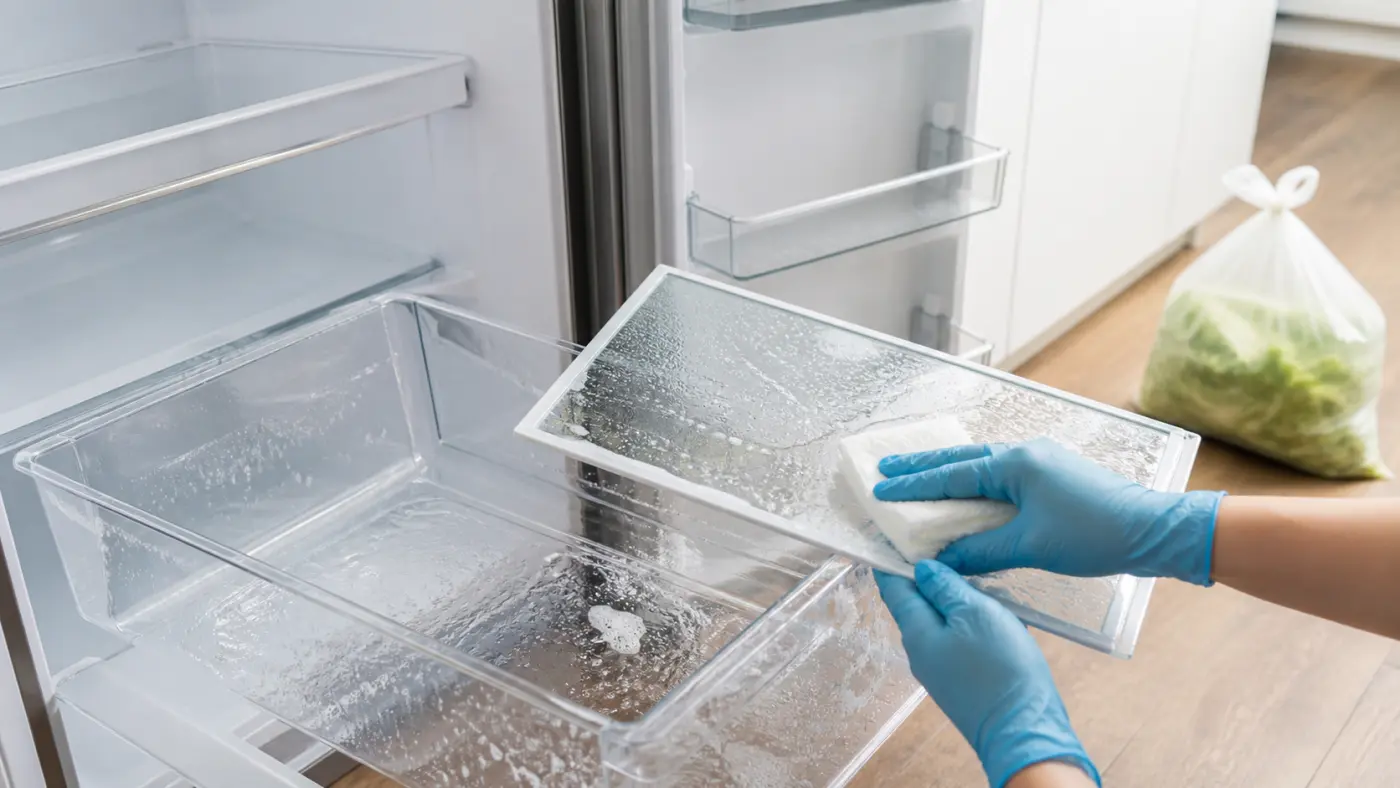
Check refrigerator drawers and shelves, storage containers, cutting boards, knives, tongs, counters, and handles. First remove food residue and wash with warm, soapy water. Then use a sanitizer approved for food-contact surfaces, following the label’s concentration and contact-time instructions. Never wash lettuce itself with dish soap, household cleaner, or bleach. When cleanup is finished, wash your hands with soap and water for at least 20 seconds.
5. Write down the exposure and symptom timeline
Record what was eaten, when and where it was served, who shared the meal, and when symptoms began. Save label photographs and receipts. Cyclospora has a broad incubation window, and symptoms can relapse, so memory alone may not provide the detail a clinician or health department needs. If a state or local health official contacts you about a diagnosed illness, answering the food-history questions can help investigators solve the outbreak.
6. Hydrate and contact a healthcare provider for symptoms
Call a provider if watery diarrhea persists or occurs with fatigue, loss of appetite, weight loss, or abdominal pain. People who are immunocompromised, very young, older, pregnant, or vulnerable to dehydration should use a lower threshold for personalized advice. Reduced urination, a very dry mouth, dizziness when standing, profound weakness, or confusion can signal significant dehydration. Call 911 or local emergency services for acute danger signs such as loss of consciousness or trouble breathing rather than waiting for general online advice.
7. Ask specifically about Cyclospora testing
CDC warns that routine stool testing may not automatically screen for this parasite. Tell the clinician that you may have eaten iceberg lettuce linked to a Cyclospora outbreak, and ask whether a specific test or a gastrointestinal panel that includes Cyclospora is appropriate. Diagnosis and treatment decisions belong with a healthcare professional. Do not self-start antibiotics or anti-diarrheal medicine, and make sure the clinician knows your allergies and current medications.
How to verify the official information
- CDC outbreak notice: Confirm the current case, hospitalization, and death counts, illness-onset dates, symptoms, and testing advice. Check whether the “Updated” date is later than August 13, 2026.
- FDA investigation page: Use the “Current Update,” “Stores Affected,” and “Recommendations” sections to verify product scope, food-service and retail distribution, investigation status, and inspection findings.
- FDA company recall announcement: Compare the exact Marketside retail packages and the detailed food-service product table. A match on only the brand, weight, or date is not enough.
- Retailer or restaurant: When the date and location fit the official notice, ask the specific location to check supplier records and explain its return process. A store notice can help with a refund, but it does not replace CDC and FDA information.
- State or local health department: Use local guidance when you are sick or need to report an illness. State totals may include probable cases, while federal outbreak totals may use confirmed cases, so the numbers can differ.
When reviewing updates, look at the source and date before the headline. This investigation grew from a smaller July alert to the large August 13 count. An older story may display fewer cases or a narrower distribution area. Product photographs circulating on social media should always be matched against the live official table rather than used as the sole basis for a decision.
Frequently asked questions
Should everyone in the United States avoid iceberg lettuce now?
No. CDC and FDA describe a specific source and recall period, and FDA says the implicated product is no longer on the market. Handle current products using normal produce-safety practices and check live alerts. If an agency adds a new product, supplier, or date, that newer official guidance takes priority.
I bought Marketside lettuce, ate it, and feel fine. What should I do?
First determine whether the exact product, size, date, and state match the notice. Record when it was eaten and monitor for symptoms. CDC does not direct every symptom-free person with a possible exposure to receive routine testing. Ask your clinician for individualized advice if you are immunocompromised, older, pregnant, or managing a condition that changes your risk.
Can thorough washing make the lettuce safe?
Washing is a basic risk-reduction step but cannot guarantee Cyclospora removal. Do not wash and eat a recalled product; discard or return it. For ordinary fresh produce, rinse under clean running water and never use soap or bleach on food.
Does freezing kill Cyclospora?
Do not treat a home freezer as a reliable safety step. If lettuce or a lettuce-containing leftover from the affected period remains frozen and its source cannot be confirmed, the safer choice is not to eat it. A confirmed recalled product should be discarded or returned.
Which symptoms matter most?
Frequent watery diarrhea is the main warning sign. Loss of appetite, weight loss, fatigue, cramps, bloating, gas, and nausea may accompany it, and symptoms can improve and recur. Contact a provider for persistent illness or dehydration, and ask explicitly whether stool testing includes Cyclospora.
Can I catch it directly from a sick family member?
Direct person-to-person transmission is considered unlikely because the parasite needs time outside the body to become infectious. Basic hygiene still matters: someone with diarrhea should not prepare food, and everyone should wash hands carefully with soap and water after using the bathroom and before cooking.
How can I check a restaurant meal without a receipt?
Use a card transaction, delivery app, map history, calendar, or message thread to reconstruct the location and date. Ask the business whether supplier records show the recalled lettuce. If you have symptoms, do not let an inconclusive restaurant answer end the medical evaluation; tell your clinician about the possible exposure.
Why do different reports show different case totals?
The reports may have different update dates or use different definitions. A state can include probable and confirmed cases, while CDC and FDA may count confirmed outbreak cases. Recent illnesses also take time to link to the outbreak. Compare the agency, case definition, and update date together.
Official sources
- U.S. CDC — Cyclospora Outbreak Linked to Iceberg Lettuce (updated August 13, 2026)
- U.S. CDC — Investigation Update: Cyclospora Outbreak, July 2026
- U.S. FDA — Investigation of Multistate Outbreak of Cyclospora Illnesses: Iceberg Lettuce
- U.S. FDA — Taylor Fresh Foods Iceberg Lettuce Recall Announcement
Last checked August 16, 2026, in the U.S. Eastern time zone. Outbreak findings and case counts can change after publication; verify the update dates on the CDC and FDA source pages.