
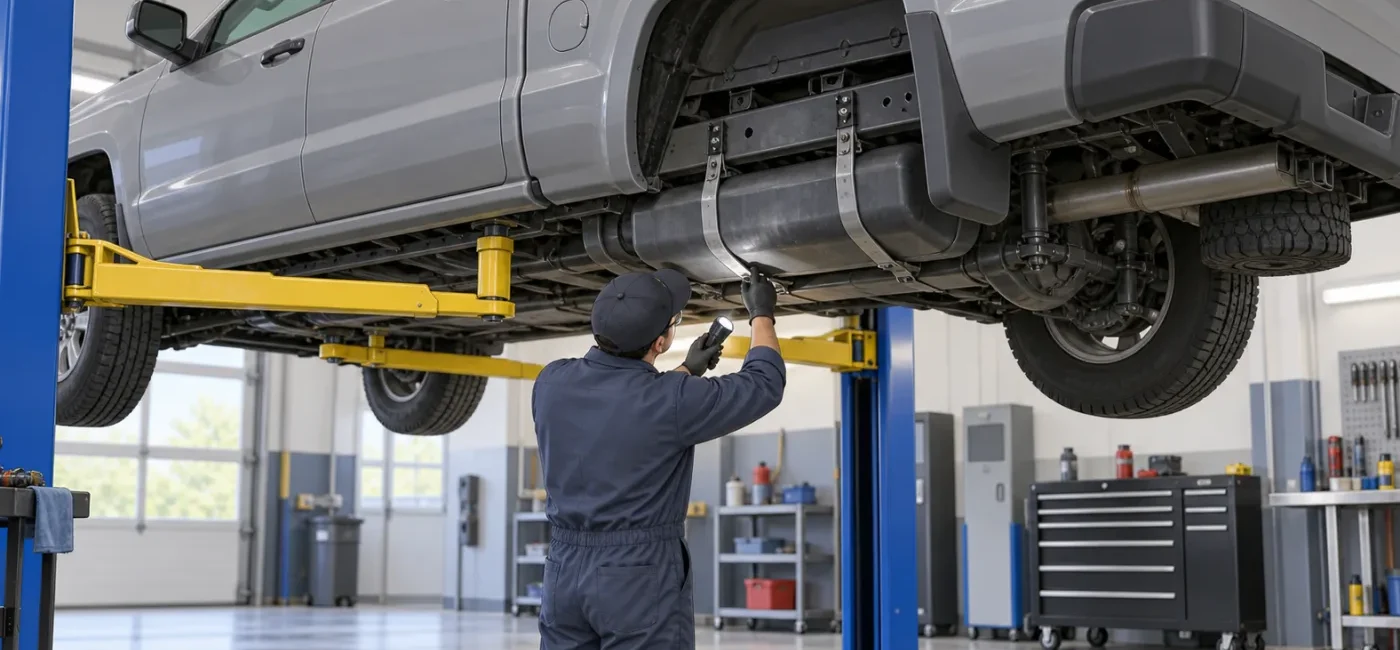
Some 2023–2027 Ford F-150 pickups are being recalled because the fuel tank may not be properly secured. A loose tank could leak fuel, contribute to an engine stall, or detach while the truck is moving. The federal campaign number is NHTSA 26V578, Ford’s recall number is 26S69, and the potentially affected population is 223,472 vehicles. A matching model year does not prove that a particular truck is included; owners need to check the 17-character VIN.
Do not delay if you notice a gasoline odor, fresh liquid under the truck, a dragging or striking sound from underneath, an unexpected fuel-gauge drop, or an engine stall. Keep cigarettes, flames, and possible ignition sources away. Stop in a safe place and ask Ford, a Ford or Lincoln dealer, or roadside assistance how the vehicle should be moved. The filed recall report does not contain a blanket “Do Not Drive” or “Park Outside” advisory, but that is not permission to continue driving a truck with suspected fuel leakage or tank movement.
This article provides general recall information for U.S. consumers. It is not a vehicle diagnosis or legal advice. Follow the VIN-specific recall result, manufacturer instructions, and the servicing dealer’s inspection findings for your truck.
Key takeaways
- Vehicles listed: The recall population covers certain 2023–2027 Ford F-150 pickups, with 223,472 vehicles potentially involved.
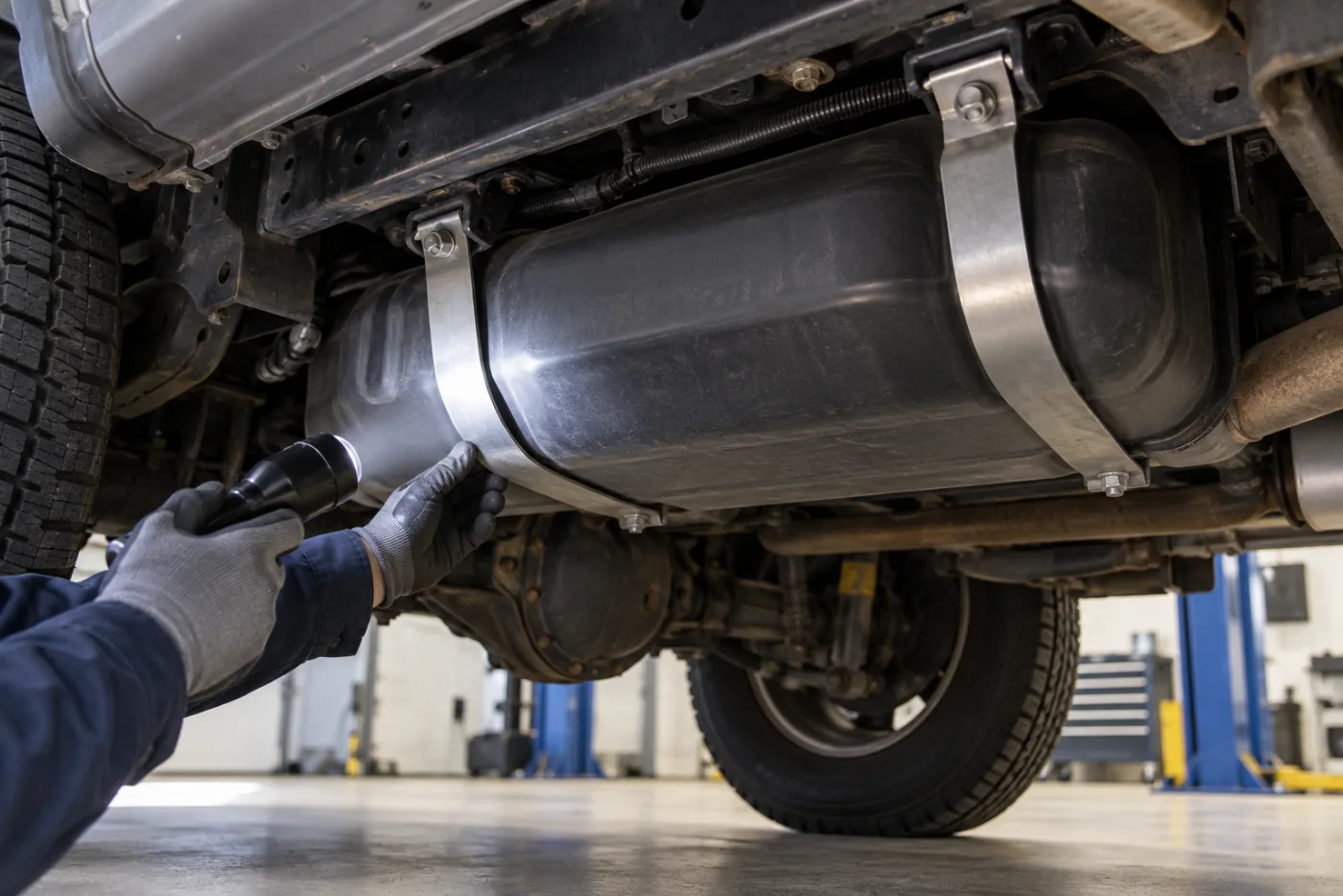
- The defect: A front fuel-tank strap T-slot may not have been correctly inserted into the frame rail during assembly.
- The risk: A loose tank can leak fuel, fuel loss can cause an engine stall, and a detached tank can become a road hazard. A fuel leak also increases fire risk.
- The remedy: Ford or Lincoln dealers will inspect the fuel-tank straps and replace them if necessary, at no charge under the recall.
- How to check: Enter the VIN on the official NHTSA and Ford recall sites. Do not rely on the model year alone.
- Timing: VINs were scheduled to become searchable September 14, 2026. Owner letters are expected to be mailed from September 21 through September 28.
What happened
Ford’s Part 573 report filed with the National Highway Traffic Safety Administration says that the front metal straps supporting the fuel tank may have been assembled incorrectly on certain F-150s. The specific assembly concern involves the strap T-slots and the truck’s frame rail. If a T-slot was not fully inserted, the strap may fail to support the tank as intended.
The filing identifies 2023–2027 F-150 pickups and gives a related production range of January 4, 2023, through August 27, 2026. Ford reviewed assembly records from periods when camera systems used to verify fuel-tank strap installation were not continuously in use at F-150 assembly plants. The production range does not mean every truck built during those dates is recalled. Ford also states that these vehicles were not built in VIN order, making VIN-specific confirmation essential.
NHTSA’s report lists 223,472 potentially involved vehicles and an estimated defect rate of 1%. That estimate should not be read as a reason to skip the recall. An owner cannot reliably determine from a driveway glance whether a truck is part of the estimated defective subset. If the VIN is included, the vehicle should receive the official inspection even when no symptom is visible.
As of August 27, Ford said it was aware of 16 related warranty claims worldwide, received between June 25, 2018, and August 5, 2026. Ford reported no known crashes or injuries tied to the condition at the time of the filing. The potential outcomes are nevertheless serious: a fuel leak can raise the risk of fire, fuel loss can stall the engine, and a tank that separates from a moving pickup can endanger surrounding traffic.
Save both recall numbers
26V578 is the NHTSA campaign number used in federal recall records. 26S69 is Ford’s manufacturer recall number. Providing the VIN and both numbers when scheduling service can prevent confusion with other F-150 recalls. Some NHTSA links display the federal identifier in the expanded form 26V578000.
Who may be affected
The primary audience is anyone in the United States who owns or leases a 2023–2027 F-150. Used-truck buyers, commercial fleets, contractors, and families with multiple pickups should also check. Recall letters can be delayed, sent to an old address, or routed to a previous owner, so waiting for paper mail is less reliable than performing a VIN lookup now.
People shopping for a new or nearly new F-150 should ask about recall status before accepting delivery. The report says Ford’s observed field cases indicated that the condition would tend to appear early in a vehicle’s life. Its population included vehicles that were unsold or had less than three months in service as of August 27, 2026. A buyer should request written confirmation that any open recall has been completed rather than accepting a verbal assurance.
Do not assume another Ford model is covered merely because it shares some components or styling with the F-150. The vehicle line named in this particular 26V578 filing is the F-150. Your vehicle may still have a different open recall, which is why a full VIN search is more useful than searching only for this campaign number.
Vehicles registered outside the United States may be covered by a separate campaign, timetable, or national safety authority. Owners of imported trucks or vehicles with a complicated registration history should contact Ford in the country where the vehicle is currently registered and explain the vehicle’s origin.
What to do now
1. Locate the complete VIN
The 17-character VIN is normally visible through the windshield on the driver-side dashboard, on the driver-door label, and on registration or insurance documents. Compare the number twice before submitting it. Avoid posting a full VIN in public comments or photos. If a website rejects the number, verify that a 1 or 0 was not confused with another character.
2. Check both official databases
Enter the same VIN at the NHTSA recall lookup and the Ford recall page. Newly announced campaigns can take time to synchronize across systems, so check the other source, contact a dealer, or try again if one result is unclear. Ford’s filing lists September 14, 2026, as the date affected VINs were planned to become searchable.
3. Save the result
Capture the campaign number, lookup date, status, and only the last six VIN characters needed for your records. Terms such as “open,” “remedy available,” “parts not yet available,” and “completed” do not mean the same thing. Preserve the exact language shown. A clear result today also does not guarantee that no future campaign will be added, so consider enrolling in NHTSA recall alerts or registering the vehicle in Ford’s owner portal.
4. Schedule the free inspection
Call a Ford or Lincoln dealer with the VIN, current mileage, campaign 26S69, and any symptoms. The filed remedy is to inspect the fuel-tank straps and replace them if necessary. Ford’s report says there will be no charge for this service. Ask whether the campaign is active in the dealer system, whether any parts are needed, the expected service time, and whether Ford advises driving the truck to the appointment.
5. Treat warning signs as an immediate safety issue
A strong gasoline smell, a fresh wet area under the truck, scraping or banging from underneath, a rapid fuel-level change, or an engine stall calls for more than a routine future appointment. Move away from traffic only if that can be done safely, turn off the engine, keep ignition sources away, and contact roadside assistance or the dealer. Do not touch a suspected leak or crawl underneath the vehicle.
6. Do not attempt a makeshift repair
Do not hammer the strap into place or add wire, adhesives, brackets, or improvised fasteners. The fuel-tank area presents fire, lifting, and vehicle-damage hazards. A makeshift repair can also interfere with the official inspection. Never work beneath a truck supported only by a jack.
7. Keep the completed repair order
After service, confirm that the repair order shows the campaign number, inspection or replacement performed, date, mileage, and dealer. Online recall status can take time to update, so retain the paper or digital record and check the VIN again later. This documentation can also help during resale or a lease return.
8. Ask about prior out-of-pocket repairs
If you paid to address a similar strap or fuel-tank problem before the recall, gather the diagnostic report, parts list, invoice, payment record, and vehicle mileage. Ask Ford customer service or the dealer whether the expense qualifies under Ford’s reimbursement plan. Eligibility is not automatic; it can depend on repair timing, diagnosis, and parts used.
A three-minute check before driving
- Notice whether a strong gasoline smell is present around the parked truck.
- From a safe distance, look for a new wet spot or a loose component beneath it.
- After starting, note unusual warning lights or an unexpected fuel-gauge reading.
- At very low speed, listen for new dragging, impact, or metallic sounds from underneath.
- If anything seems abnormal, stop testing and ask for roadside or dealer guidance.
This quick check does not replace the dealer’s recall inspection. A truck can be subject to the recall without a visible leak, and an included VIN still needs official service. The reverse is also important: a gasoline odor or leak should not be ignored merely because the VIN search shows no open 26V578 recall. Other fuel-system defects can produce similar symptoms and require prompt diagnosis.
How to verify the information
NHTSA: Search the VIN on NHTSA’s official recall page. The agency-hosted Part 573 report supplies the affected population, production dates, defect description, safety risks, remedy, and notification schedule. The campaign number is 26V578.
Ford: Use Ford Owner Support’s recall tool and contact Ford at 1-866-436-7332 or a Ford or Lincoln dealer. That phone number appears in the NHTSA filing and current coverage, but consumers should confirm current contact information on Ford’s official website before calling.
Mailed notices: The filing schedules dealer notification for September 14, 2026, and owner letters for September 21–28, 2026. Not receiving a letter is not proof that a truck is excluded. Owners who moved recently or bought used should update vehicle registration and Ford owner-account contact information.
Dealer systems: The report says Ford customer service and dealers can determine vehicle applicability through Ford’s OASIS database. If a public lookup is unclear or rejects the VIN, call the dealer and provide both 26S69 and the complete VIN.
Frequently asked questions
Are all 2023–2027 F-150 pickups recalled?
No. Those model years define the vehicle range in the filing, but individual VINs are selected from Ford’s production and service records. Use the official VIN tools or a dealer lookup to determine whether one truck is included.
Does an affected VIN mean I must never drive the truck?
The Part 573 report does not list a blanket “Do Not Drive” or “Park Outside” advisory. If the truck smells of gasoline, leaks, makes dragging noises, appears to have tank movement, or stalls, do not continue driving it. Ask Ford, the servicing dealer, or roadside assistance how to transport it safely. Even without symptoms, arrange the recall service promptly.
Will the recall repair cost anything?
The filed remedy says the dealer will inspect the fuel-tank straps and replace them when necessary at no charge. If the dealer recommends unrelated maintenance, request a written estimate that separates free recall work from optional paid work.
If Ford estimates only 1% have the defect, can I skip inspection?
No. The 1% figure is Ford’s estimate within the recall population, not a finding about your truck. Owners cannot reliably identify the defective subset without the prescribed process. An included VIN should receive the official inspection.
Can I schedule service before the letter arrives?
Ask the dealer as soon as the VIN shows an open campaign. Scheduling depends on campaign activation, staffing, and any needed parts. Dealer notification was planned for September 14, while owner mailings were scheduled to start September 21.
What should I verify before buying a used F-150?
Obtain the VIN before signing, search it on both official sites, and request the completed recall repair order from the seller. Match the VIN on the document to the truck and confirm the date and campaign number. A verbal statement that “all recalls are done” is not enough.
The truck smells like fuel, but no recall appears. Is it safe?
Do not assume that it is. A leak or gasoline odor can come from another defect. Avoid ignition sources, stop driving, and contact roadside assistance or a qualified repair facility for safe handling and diagnosis.
What exactly will be replaced?
The official remedy is an inspection of the fuel-tank straps and replacement when necessary. The report says the remedy straps are the same type of component but will be properly secured to the frame rail. The dealer’s inspection determines the work required for an individual vehicle.
Checklist for the service call
- The complete 17-character VIN and current mileage
- NHTSA campaign 26V578 and Ford campaign 26S69
- Dates and details of any fuel odor, leak, noise, gauge change, or stall
- A saved copy of the VIN lookup result
- Receipts and diagnostics from any related earlier repair
- Dealer guidance on whether the truck should be driven in
- Parts availability and estimated service time
- A plan to obtain and retain the completed repair order
The practical response to this recall is simple: verify the VIN, schedule the official inspection, and act immediately on signs of leakage or tank movement. Do not rely solely on a model-year list or wait for mail. A truck with no visible problem may still require the free recall inspection, while a truck with fuel-system symptoms needs prompt attention even if the recall tool has not flagged it.
[…] Smartor 편집팀 September 14, 2026 Read this recall guide in English → […]