I-81 Frederick County Crash: Travel Checks and Vehicle Fire Safety
Smartor 편집팀
September 12, 2026

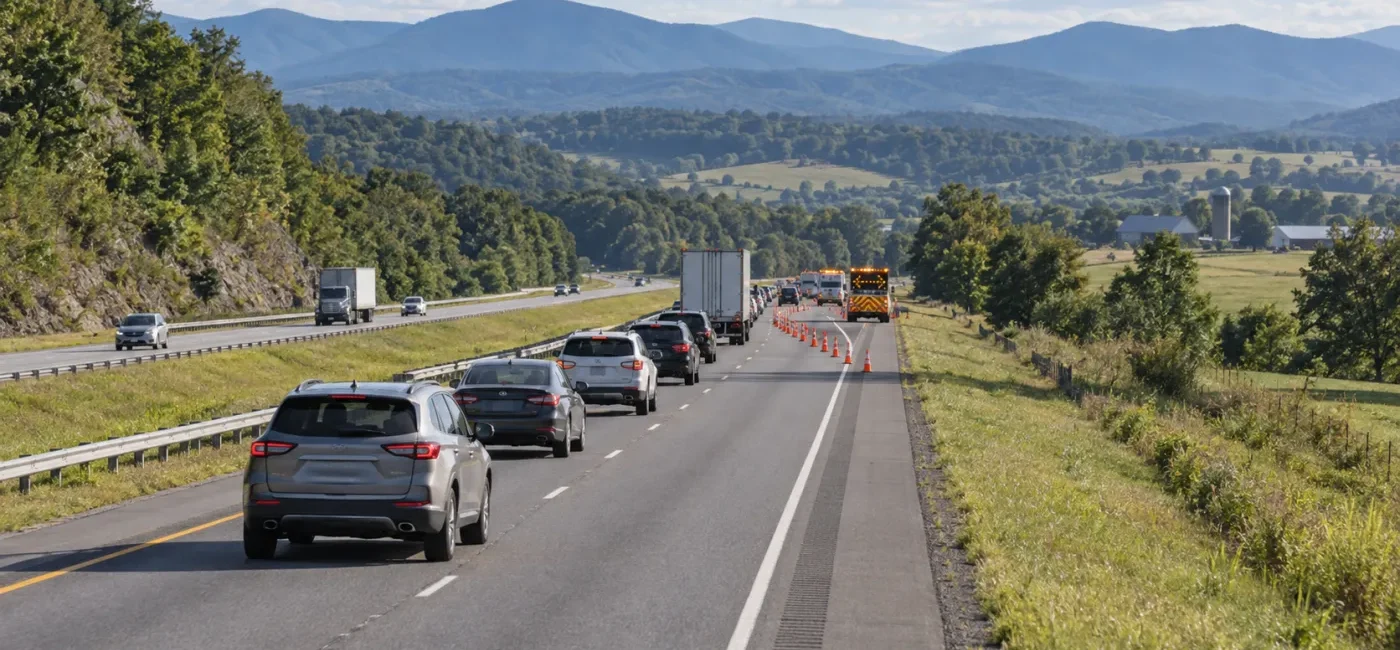
A multi-vehicle collision on Interstate 81 in Frederick County, Virginia, led to a fire involving a truck carrying oxygen cylinders and killed two people. If your route takes you through this part of I-81, do not rely on a dramatic video, an old closure notice, or a social media repost to decide whether the highway is open. Traffic restrictions can change quickly, and lanes may reopen even while an investigation continues. The useful response is to check official traffic information immediately before departure, slow down early if you encounter the back of a queue, and know how to get away safely if a vehicle fire occurs.
This guide separates the verified facts of the crash from the steps drivers can take now. It draws on reporting that cites Virginia State Police, Virginia’s official 511 traffic service, and federal guidance on vehicle fires and traffic-incident safety. It does not speculate about the final cause of the crash or legal responsibility while the investigation remains open.
WJLA reported, based on information from Virginia State Police, that the chain of events began Thursday night on I-81 in Frederick County. A passenger car entering the southbound lanes from a ramp did not yield. A semi struck the car, continued through the median and hit a northbound truck that was transporting oxygen cylinders. The collision caused a fire, and the cylinders exploded. Images from the area showed a large plume of dark smoke, and authorities said the blast also damaged a Frederick County Sheriff’s Office vehicle.
The semi driver died at the scene. The driver of the truck carrying the cylinders was taken to a hospital and later died. The passenger-car driver was not hurt and, according to the initial report, was expected to face charges. WHSV also reported that two people died and that a portion of I-81 was shut down after the explosive collision. Because the investigation is ongoing, early details may be clarified or amended by authorities. A charge that is expected is not the same as a final court finding, and no driver should treat online speculation as an official conclusion.
The event had the potential to affect both directions because a vehicle crossed the median before the second collision. A crash involving fire, pressurized cylinders, debris and multiple heavy vehicles can require firefighting, rescue work, investigation, towing and inspection of the road surface. Those tasks may take longer than clearing an ordinary disabled vehicle. Still, the extent of the original closure should not be confused with current conditions. Lanes can reopen in stages, and a later repair or investigative operation can create a new restriction. Check live official information for the trip you are actually taking.
Drivers traveling through northern Virginia and the Shenandoah Valley on I-81 have the most direct reason to check conditions. The corridor carries local commuters as well as substantial long-distance truck traffic. That includes trips through the Frederick County and Winchester area and travel continuing toward West Virginia, Maryland and Pennsylvania, or south through Virginia.
Nighttime drivers and motorists following large trucks should be especially alert. Darkness makes distance and closing speed harder to judge, and a stopped queue can appear with little warning. Even after the original scene has been cleared, sudden braking, lane changes, vehicles slowing to look, and response equipment entering or leaving the roadway can create a secondary-crash risk. The Federal Highway Administration notes that traffic incidents disrupt normal flow, increase the likelihood of secondary crashes, and endanger both responders and road users.
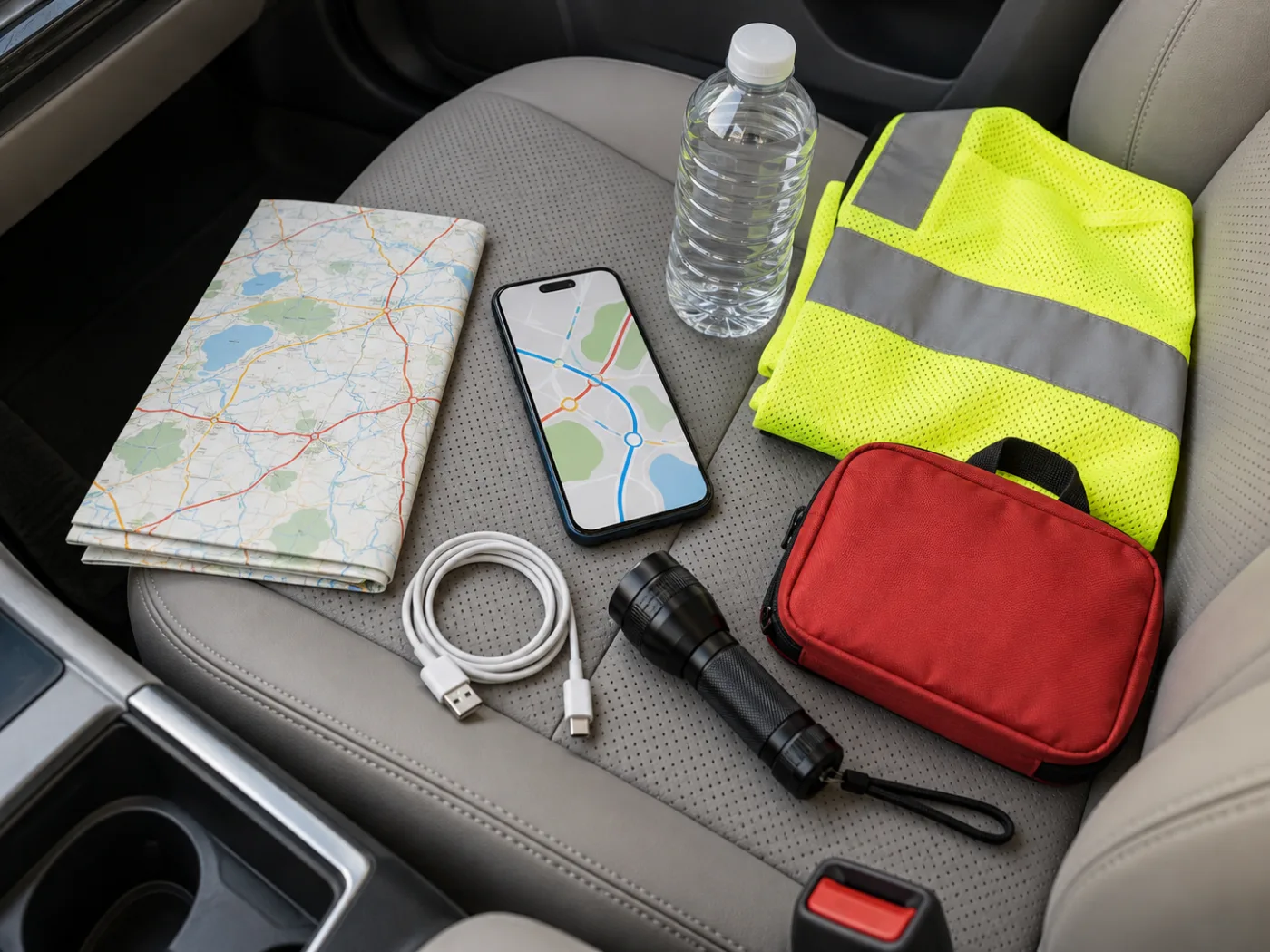
Families, older drivers and anyone traveling on a fixed schedule should avoid making a rushed detour decision while moving. If a route must be changed, a rest area or another legal parking location is the place to review it. Trying to manipulate a navigation app while driving creates a separate hazard. For a flight, medical appointment, delivery window or other time-sensitive trip, build in extra time and let a passenger monitor updates when possible.
Commercial drivers and vehicles carrying hazardous materials or pressurized cylinders must follow their company’s operating procedures and all cargo-specific rules. Other motorists cannot know what a damaged truck is carrying merely by looking at it. If smoke, leaking material or fire is visible, do not stop nearby to record the scene and do not leave your vehicle unless responders direct you to evacuate. Preserve the space established by police, firefighters and traffic-control crews.
Open Virginia 511 and zoom in on I-81 around Frederick County and Winchester. Look for active incidents, construction, lane closures, delay information and available traffic cameras. Do not interpret an older headline saying “closed” as proof that the same closure remains in effect. The opposite mistake is also possible: the original scene may be gone while a new maintenance or investigative restriction appears later.
Confirm whether you are traveling northbound or southbound. Conditions can differ by direction at the same location. A general navigation app is useful for comparing route times, but official lane closures and emergency traffic controls should be checked through 511. Refresh the information before leaving instead of relying on a screenshot saved much earlier.
Taking the next exit is not automatically faster or safer. Nearby local roads may be narrow, poorly lit at night or unable to absorb a sudden wave of cars and trucks. Follow an official detour shown on Virginia 511, a highway message sign, or instructions from police. If there is no official route, stop at a safe legal location before reviewing the entire alternative, available fuel, and any height or weight limitations.
Commercial vehicles should not follow a passenger-car navigation app onto an unfamiliar small road. Low clearances, sharp turns, weight restrictions and limited turning space may make the route unsuitable. Passenger vehicles should also avoid speeding through residential streets or treating the shoulder as an extra lane.
Hazard lights may help alert traffic behind you, but they do not replace early, controlled braking and adequate following distance. Do not approach so quickly that an emergency stop becomes necessary. If a large truck is behind you, giving an early and clear indication that traffic is slowing is particularly important. Repeated lane changes and abrupt slowing to look at the scene increase the chance of another collision.
When emergency vehicles approach, follow police instructions and preserve their access path. Never enter an area separated by cones, flares, emergency lighting, hoses or debris. Even if one lane appears open, stop immediately if a responder or traffic-control worker signals you to do so.
A vehicle fire may involve fuel, a battery, tires or cargo that nearby drivers cannot identify. If the road is closed, remain outside the controlled area. Do not pull onto the shoulder or get out to take photos. Smoke can sharply reduce visibility and may be hazardous to breathe. Closing windows and selecting recirculated air may help temporarily, but an evacuation instruction from police or firefighters always takes priority.
The U.S. Fire Administration advises drivers to pull over as quickly as safely possible, stop, turn off the engine and get every occupant out. Never return to a burning vehicle and do not try to fight the fire yourself. If fire is suspected under the hood or in the trunk, do not open it; opening the compartment can introduce air and allow the fire to grow.
Move everyone at least 100 feet—about 30 meters—from the vehicle and well away from moving traffic, then call 911. Do not cross active lanes or a median to create distance if doing so adds another danger. Do not return for a bag, phone or other property. Tell the dispatcher the highway number, direction of travel, nearest exit or mile marker, vehicle type, and whether you see smoke or flames.
Road conditions: Use Virginia 511 for active incidents, work zones and lane restrictions. Check before departure and again only from a safe stop. If the site is temporarily slow, use other official VDOT channels or the 511 phone service as a backup, and always obey on-scene officers and highway message signs.
Crash investigation: Look for subsequent information from Virginia State Police regarding identities, charges and the official sequence of events. The initial report’s statement that charges were expected does not establish which charge was ultimately filed or how a court may resolve it. Avoid repeating a rumor as a finding while investigators are still working.
Vehicle-fire response: The U.S. Fire Administration’s vehicle-fire page provides the core evacuation sequence and distance guidance. Even before flames are visible, a burning odor, smoke, recurring electrical fault or suspected fuel leak warrants a safe stop and professional assistance.
Timing matters: A news report answers what happened at the crash. Virginia 511 answers what is affecting traffic now. Keeping those functions separate prevents two common errors: assuming an old closure is still active, or assuming that no new restriction can follow after the original road has reopened.
Closure status can change, so this article does not freeze a live condition into a permanent sentence. Check Virginia 511 immediately before departure and verify northbound and southbound separately. A news article using the word “closed” may be describing the hours right after the crash.
According to WJLA’s report citing Virginia State Police, it began at a southbound entrance ramp. The semi then crossed the median and collided with a northbound truck, creating the potential for effects in both directions at the time.
Authorities said the northbound truck was carrying oxygen cylinders and that a fire and explosions followed the collision. The precise ignition point and complete technical sequence should not be guessed before investigators issue their findings.
No. The shoulder provides critical access for emergency vehicles and space for disabled vehicles. Using it as a travel lane can delay responders and create another collision unless police or traffic officials explicitly direct traffic onto it.
The U.S. Fire Administration advises occupants to evacuate, never return to the burning vehicle, and not attempt to fight the fire themselves. Do not open the hood or trunk when fire is suspected inside. Distance and a 911 call come first.
Provide the highway number, northbound or southbound direction, nearest exit or mile marker, nearby signs, number and types of vehicles, and whether smoke or flames are visible. Give clearly observed information instead of guessing.
Instructions from officers and highway message signs take priority. For official closures and incident controls, use Virginia 511. Use a consumer navigation app as a secondary tool for comparing travel times and broader route options.
This article provides traffic and safety information. It does not replace a final crash report or directions from responders at the scene. In an emergency, call 911 and follow instructions from police, fire and transportation officials.
브라우저 메뉴에서 앱 설치 또는 홈 화면에 추가를 선택해 주세요.
[…] Smartor 편집팀 September 12, 2026 Read this article in English → […]