Martina Mango Recall: Product Check, Return and Salmonella Safety Guide
Smartor 편집팀
August 29, 2026

If you recently bought mangoes in Connecticut, New York, New Jersey or Pennsylvania, check the produce sticker before eating them. Panorama Produce is voluntarily recalling 302 boxes of size 9 Martina-brand mangoes because of possible Salmonella contamination. The mangoes were distributed from August 10 through August 21, 2026, to select Walmart stores in those four states. No illnesses had been reported in connection with the recalled product when the FDA posted the company announcement on August 29, but consumers should not eat affected fruit.
The most useful household identifiers are a light-blue Agrofepac sticker, “Produce of Mexico,” and PLU 4584. If you still have a case or purchase documentation, also compare the Martina brand and UPC 07503061948050. A recalled mango should be discarded or returned to the place of purchase. This guide walks through identification, disposal, kitchen cleanup, symptom monitoring and official verification.
Panorama Produce announced the recall on August 28, and the FDA published the company announcement on August 29. The FDA posts company recall announcements as a public service; publication is not an endorsement of the product or company. According to the announcement, FDA sampling detected Salmonella in mangoes from the same farm. The sampled fruit was not distributed into U.S. commerce, but because the recalled fruit came from that source, the company initiated the recall as a preventive action.
“No illnesses reported” does not mean the product is safe to eat. A recall can begin before illnesses are identified, based on sampling, supply-chain evidence or production records. Salmonella cannot be reliably detected by looking at, smelling or tasting a mango. Do not cut into the fruit or take a small bite to test it.
The number 302 refers to boxes, not to the exact number of individual mangoes in consumers’ homes. “Size 9” is a case-level trade specification. For a household check, use the sticker details together with the place and approximate date of purchase. If the identifying sticker is gone, the receipt, store app history, packaging photos or a call to the selling store may help.
The first group that should check is anyone who bought mangoes at a Walmart in CT, NY, NJ or PA during or after the listed distribution window. Fruit may remain in a refrigerator, fruit bowl or freezer. It may also have been cut for smoothies, mixed into fruit cups, shared with a neighbor or used in a dessert after the original sticker was discarded.
Anyone can get a Salmonella infection. The CDC says risk of infection or serious illness is greater for children younger than 5, especially infants younger than 1; adults 50 and older with underlying medical problems; adults 65 and older; and people with weakened immune systems. A household with someone in a higher-risk group should be especially strict about avoiding taste tests and cleaning possible cross-contact surfaces.
Restaurants, schools, child-care centers, shared kitchens and small food businesses should go beyond checking loose fruit. Review cases, invoices, inventory records and prepared menu items. If the original sticker is no longer present, trace the ingredient through receiving and preparation records. Stop serving any implicated product and follow the supplier’s and local health authority’s instructions.
The individual produce sticker is the strongest clue for most shoppers. Do not rely on color alone. Match Agrofepac, Produce of Mexico and PLU 4584 together. If a case is available, look for Martina branding and UPC 07503061948050. A PLU helps a checkout system identify a produce item, but it should not be treated as a complete farm or lot trace by itself. Use all available recall identifiers.
If the sticker is missing or the fruit was cut and frozen, check the purchase location, date, receipt, store app history and any packaging photo. When the location and timing match but the fruit cannot be conclusively identified, keep it isolated and do not eat it while you ask the retailer. The selling store can clarify whether it received the recalled shipment and explain its return process.
The announcement does not say that every mango from every brand is recalled. Avoid unnecessary waste by comparing the official details. At the same time, appearance and smell are not substitutes for traceability. If you cannot identify fruit bought in the listed area and period, waiting for retailer confirmation is safer than assuming it is unaffected.
Do not try to rescue a recalled mango by washing or peeling it. Cutting can carry microorganisms from the skin to the flesh, knife, hands and cutting board. Even if the peel is already gone, affected fruit should not be eaten. Discard or return it as directed. Freezing or blending the mango does not cancel the recall.
If you already ate some, that does not mean you will necessarily become ill. Stop eating the remaining fruit, save the identifying information and tell anyone who shared it. Do not start antibiotics or anti-diarrheal medicine on your own as a precaution. A clinician should advise you based on symptoms and your health history.
If whole mangoes sat in a fruit bowl or refrigerator, remove nearby food and clean the contact area. Wash knives, cutting boards, dishes and storage containers thoroughly with hot water and dish detergent, then let them dry. A cloth that absorbed mango juice should be laundered and should not be used on other dishes or hands first.
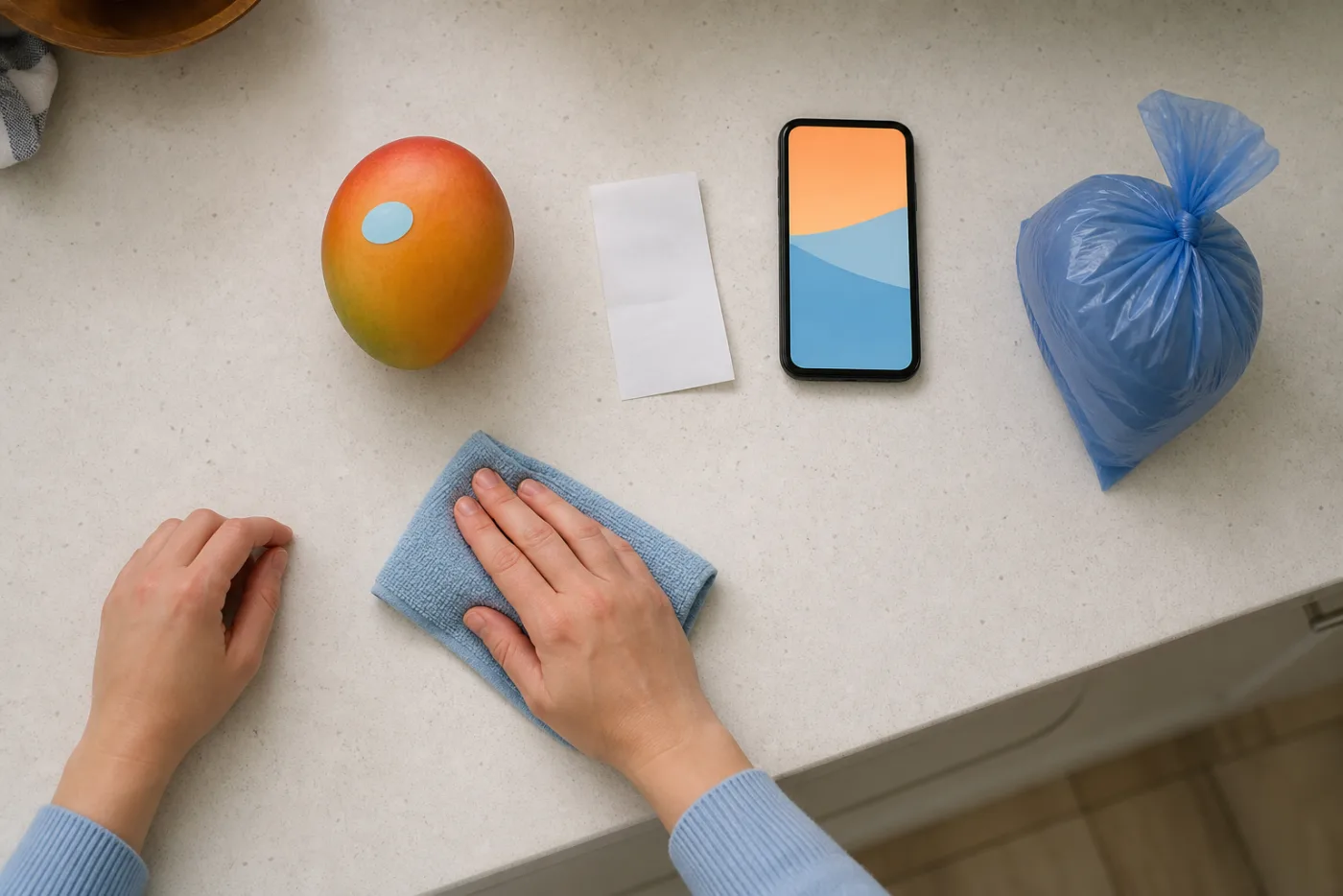
If cut mango was stored in a container, wash the container too. Ready-to-eat foods that were directly splashed with mango juice, or prepared with the same unwashed knife or board, should not be eaten. Refrigeration slows the growth of many microorganisms but does not make recalled food safe.
When using a disinfecting product, follow its label for dilution, contact time, ventilation and whether it is appropriate for food-contact surfaces. Never mix household cleaning products. Mixing chemicals can release dangerous gases. Keep the product photo and receipt until any retailer or medical question is resolved.
Salmonella infection can cause fever, diarrhea, nausea, vomiting and abdominal pain. Diarrhea may be bloody. The FDA-posted announcement notes that in rare circumstances the organism can enter the bloodstream and lead to more severe illnesses, including arterial infections, endocarditis and arthritis. Symptoms and timing vary, so do not use a single symptom-free deadline as proof that a particular exposure was harmless.
When contacting a healthcare provider, say that you may have eaten a recalled mango. Provide the date eaten, sticker or UPC information, purchase store, symptom start time and whether anyone else who ate it is ill. Young children, older adults, people with weakened immune systems and people with underlying conditions may need earlier advice even when initial symptoms appear mild.
Get prompt medical help for concerning signs such as inability to keep fluids down, markedly reduced urination, severe dry mouth, dizziness, unusual weakness, persistent high fever, bloody diarrhea or severe abdominal pain. Call 911 or the appropriate local emergency service for life-threatening symptoms. This article cannot diagnose an infection or prescribe treatment.
A reposted social image may omit a code or remain online after the scope changes. Use the original FDA URL, and check the title and date every time. If the recall is expanded, the newest official notice takes priority over an old screenshot or summary.
Compare all sticker clues and purchase location, then photograph them. If it matches, bag the fruit for disposal or return and wash the bowl and your hands. For mangoes that clearly do not match, continue normal produce hygiene: wash under running water before cutting and use clean tools.
Freezing does not reverse the recall. If the original fruit cannot be identified but the store, date and region match, do not use it in a smoothie while seeking confirmation. Clean the storage container and any freezer area contacted by leaked juice.
Write down who ate it and when, then give parents or attendees the exact recall details and FDA link. Do not diagnose anyone. People with symptoms should mention the possible exposure when contacting a healthcare provider.
The announcement supplies specific distribution details and identifiers. Compare the light-blue Agrofepac sticker, Produce of Mexico, PLU 4584, Martina case and UPC 07503061948050 with the FDA original. Do not expand or narrow the scope based only on a brand name.
The recall announcement tells consumers to discard the mangoes or return them to the place of purchase. The retailer may set the practical refund process and decide what documentation it needs. Take clear photos of the fruit and sticker and ask the store. Do not eat the product while waiting.
No. Washing and peeling are not the remedy for a recalled product. A knife can transfer contamination from the outer surface to the flesh and kitchen. Discard or return affected fruit.
Exposure does not mean everyone will become ill. Stop eating the product and watch for symptoms. A healthcare provider should decide whether testing or treatment is appropriate based on symptoms, risk factors and medical history.
Salmonella can spread when germs from feces reach another person’s mouth, often through inadequate handwashing. Wash with soap after using the bathroom or changing diapers and before preparing food. If someone is ill, follow clinician or health-department guidance about preparing food for others.
The current announcement names CT, NY, NJ and PA. If the product identifiers match or the distribution path is unclear, do not eat it while you check the FDA notice, retailer and company. Recall scopes can change, so revisit the official page.
No. Do not sell, donate, share or cook with recalled fruit. Disposal or return prevents the product from reaching someone who may not receive the warning.
This article provides general consumer-safety information and is not a medical diagnosis or treatment plan. Follow the latest FDA and retailer instructions for the product, and consult a healthcare professional about personal symptoms or risk.
브라우저 메뉴에서 앱 설치 또는 홈 화면에 추가를 선택해 주세요.
[…] Read this mango recall guide in English → […]