
Naegleria fowleri Water Safety: Reduce the Risk of Water Entering the Nose
Smartor 편집팀
September 17, 2026

The most useful fact to know about Naegleria fowleri is not its alarming nickname, but its unusually narrow route of infection. The ameba can cause primary amebic meningoencephalitis, or PAM, when contaminated water goes up the nose and the organism reaches the brain. Swallowing the water does not cause PAM, and the infection does not spread from person to person. Cases are extraordinarily rare, but the disease progresses quickly, so preventing water from entering the nose and recognizing emergency symptoms matter.
On September 15, 2026, the North Carolina Department of Health and Human Services released findings from an investigation into a pediatric PAM case reported in central North Carolina. Investigators interviewed the patient’s family, assessed several possible warm-freshwater exposure sites, and conducted testing with local public-health staff and experts from the U.S. Centers for Disease Control and Prevention.
The investigation did not conclusively determine the site of exposure. Its findings identified a water feature at a community-based organization in Durham as the most likely source. The teen reportedly had contact with the feature during the likely exposure period, including splashing water on the face. Durham County health officials closed the water feature on August 28, and subsequent CDC testing detected Naegleria fowleri. The feature remains closed to the public.
This finding does not mean every fountain or splash pad is dangerous. It does show why families should distinguish a decorative water feature from a venue designed and maintained for human water play. The relevant questions are whether people are supposed to enter the water, whether it is filtered and disinfected, whether required checks are current, and whether play can send water forcefully into the nose. Water that looks clear is not proof of microbiological safety, just as one isolated event is not a reason to treat every regulated pool as unsafe.
CDC reports 167 U.S. PAM cases from 1962 through 2024, with fewer than 10 infections typically diagnosed in a year. Only four of those 167 reported patients survived. The rarity is important context, but so is the severity. The practical response is to interrupt the route of exposure and act quickly if compatible symptoms follow a relevant water exposure.
Naegleria fowleri is a free-living ameba, meaning it naturally lives in the environment rather than requiring a human host. It can occur in soil and warm freshwater and grows best at higher temperatures. NCDHHS notes that it can thrive at temperatures up to about 115°F. Prolonged hot weather, warmer water, and lower water levels can create conditions in which the organism is more likely to be present.
The nose is the critical route. If contaminated water travels deep into the nasal passages, the ameba can move along the olfactory nerves toward the brain and cause PAM. Activities that can create forceful nasal exposure include jumping, diving, water-skiing, rough water play, placing the face directly over a strong jet, and rinsing the sinuses with unsafe water. Skin contact and simply swallowing water are different exposures and do not cause PAM.
Salt water is not the usual environment for this organism, and the risk in properly operated, adequately disinfected pools is very low. However, a chlorine-like smell or clear-looking water cannot verify that a venue is being maintained correctly. Posted operating information, inspection status, closure notices, and guidance from the responsible health department are more meaningful.
People who swim, dive, tube, raft, or water-ski in warm freshwater should understand how to reduce nasal exposure. Visitors to hot springs should avoid submerging their heads. Parents should supervise children at splash pads and interactive fountains because children often put their faces near jets or deliberately splash water toward the nose. A decorative fountain may not be designed or treated for contact recreation at all.
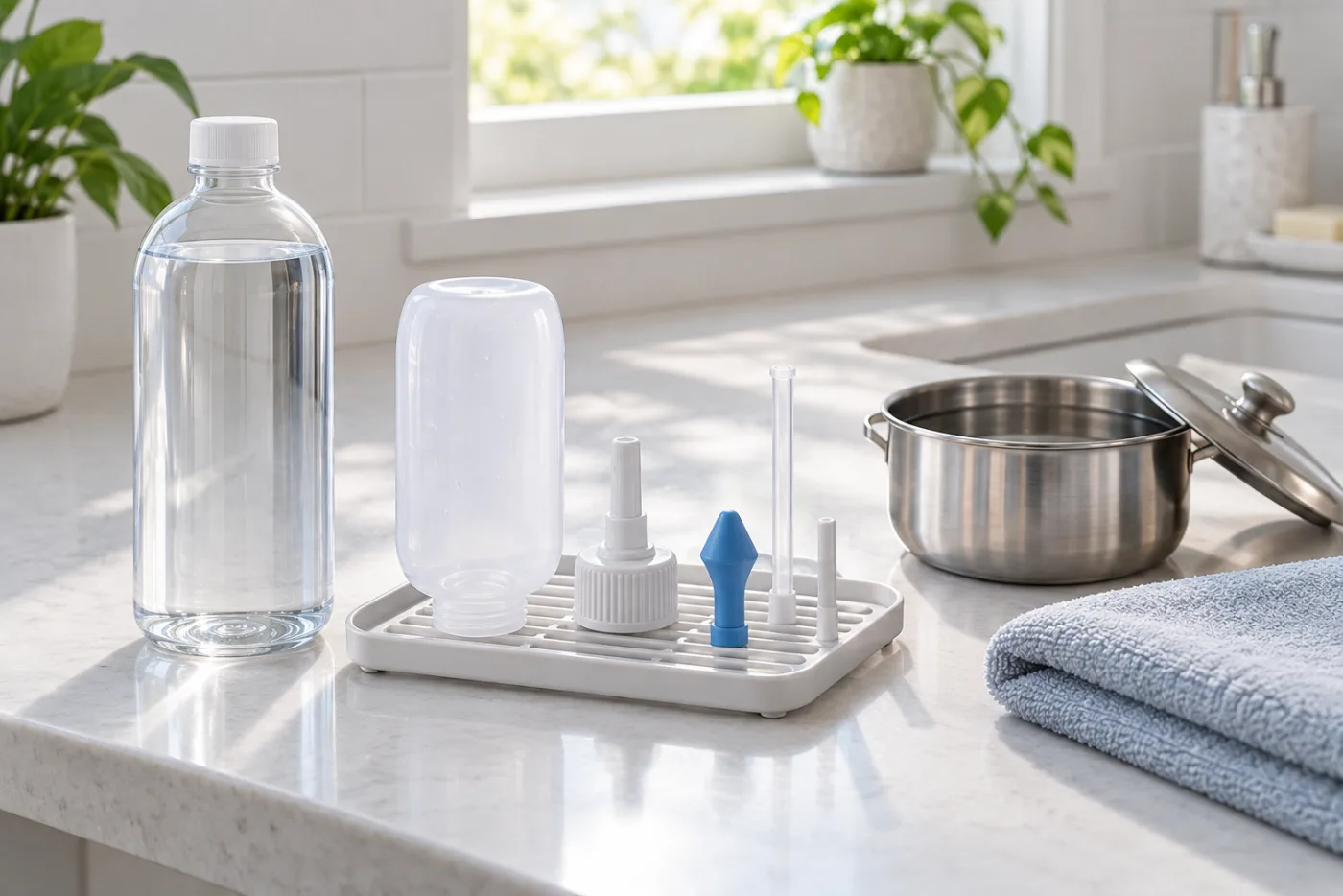
Anyone using a neti pot, squeeze bottle, powered nasal irrigator, or another sinus-rinsing device also has a separate exposure to manage. Tap water may meet drinking-water standards without being sterile enough for nasal irrigation. The same precaution applies to nasal cleansing performed for religious practices. The device itself should be cleaned and fully dried according to its instructions because residual water and contaminated surfaces can undermine careful water selection.
PAM is not limited to people with weakened immune systems; it has occurred in otherwise healthy people. At the same time, entering warm freshwater does not mean a person is likely to become infected. The infection is extremely rare and requires a specific route into the nose. Keeping both facts in view prevents panic while preserving the precautions that actually help.
Lakes, rivers, ponds, and hot springs are natural freshwater environments. Splash pads, interactive fountains, and water parks are engineered facilities, but they are not all treated or regulated in the same way. A decorative fountain may never have been intended for wading or play. Check signs and ask the operator whether contact is permitted, whether water recirculates, how it is disinfected, and whether routine testing is current. Do not enter a feature with a closure sign, a health warning, visibly inactive circulation equipment, or cloudy water.
When using warm freshwater, avoid jumping and diving when conditions are especially hot and water levels are low. Keep your head above water when practical. Hold your nose shut or use a properly fitted nose clip during activities likely to force water upward. Keep children from placing their faces directly over strong splash-pad jets. A nose clip can reduce exposure, but it is not a guarantee and works best alongside safer choices about the activity itself.
The ameba can live in soil and sediment at the bottom of lakes and rivers. Avoid digging, stirring, or churning up mud in shallow, warm areas, especially after prolonged heat or when water levels are unusually low. Children can still enjoy shoreline activities, but adults should discourage games that combine disturbed sediment with forceful splashing into the face.
Natural hot springs and thermal waters provide the warm conditions this organism prefers. Do not submerge your head or play games that push water into the nose. Even when swimming is permitted, read the venue’s health notices and maintenance information. Follow any closure or use restriction from local public-health authorities until an official reopening is announced.
The simplest options are containers specifically labeled “distilled” or “sterile.” CDC guidance also permits appropriately boiled and cooled tap water; follow the agency’s current instructions because boiling time and handling matter. Ordinary bottled drinking water, refrigerator-filtered water, and water from a household pitcher are not automatically suitable unless the product specifically meets the standard for nasal rinsing.
Store prepared water in a clean container and do not leave it at room temperature indefinitely. Avoid touching the bottle opening with your hands or with a device tip that has contacted a sink or nostril. After each use, clean and dry the irrigation device according to the manufacturer’s directions. Do not share a nasal-rinsing device between people.
If water went forcefully up the nose, note the date, location, type of water, activity, and any posted warnings. This does not mean every asymptomatic person needs an emergency visit. The record becomes useful if symptoms appear, if the facility later announces a closure, or if a clinician needs to assess a rare exposure quickly.
According to CDC, initial symptoms usually begin about five days after exposure but can start from one to 12 days afterward. Early signs include headache, fever, nausea, and vomiting. These symptoms can resemble more common viral illnesses or bacterial meningitis. PAM can then progress rapidly to stiff neck, confusion, reduced attention to people and surroundings, loss of balance, seizures, hallucinations, and coma.
After a relevant warm-freshwater, recreational-water, or nasal-rinsing exposure, do not wait at home if sudden fever, severe headache, vomiting, or neck stiffness develops. Seek emergency medical care and clearly state when, where, and how water entered the nose. Call 911 for a seizure, loss of consciousness, severe confusion, or another immediately life-threatening condition.
Symptoms cannot confirm PAM at home. Consumer water tests and online symptom checkers cannot diagnose or rule it out. Specialized laboratory testing is available at only a limited number of U.S. laboratories, including CDC. Clinicians must also assess more common causes of meningitis-like illness and can coordinate with public-health officials when the exposure history warrants it.
Operators should clearly label whether a feature is approved for bathing or play or is decorative only. Recirculating venues should monitor disinfectant level, pH, filtration, make-up water, and equipment function according to applicable rules, with records that can be reviewed. A disinfectant failure, stopped circulation, abnormal result, or health-department order should trigger immediate closure and restricted access until the venue is officially cleared.
Parents can scan for posted inspection information, closure notices, and rules before children enter. Teach children not to sit on jets, put their noses against nozzles, or intentionally inhale spray. Do not assume clear water is safe, but do not equate a properly maintained public pool with an untreated decorative feature. The operational difference matters.
At home, empty, clean, and dry kiddie pools, water tables, and fountain toys as directed instead of leaving warm water stagnant. Keep children from submerging their faces in garden ponds or decorative fountains. Appearance and odor alone cannot show whether microorganisms are present.
CDC and NCDHHS say swallowing water containing the ameba does not cause PAM. The key route is through the nose. Water that is unsafe to drink may still cause other illnesses, so follow drinking-water advisories separately.
A well-fitted clip is one way to reduce water entry into the nose, not a guarantee. Combine it with keeping the head above water, avoiding jumps and dives in very warm low water, leaving shallow sediment undisturbed, and respecting closures.
Smell is not a reliable measurement of free disinfectant. The odor people associate with pools can come from chloramines formed when chlorine reacts with sweat and contaminants. Operators need actual measurements and records; visitors should look for inspection and closure information.
PAM from ordinary showering or face washing is exceptionally rare. Routine use of properly treated tap water is different from intentionally forcing water high into the nasal passages with a rinsing device. Follow any special local advisory, and avoid deliberately inhaling shower or bath water through the nose.
Naegleria fowleri is associated mainly with warm freshwater and soil, not ordinary seawater. A freshwater pool, stream, or decorative feature near a beach is a separate environment, however, so pay attention to posted local information.
No. CDC says infections have very rarely occurred at recreational venues such as inadequately maintained splash pads and a surf park. Correct disinfection and filtration make a major difference. Avoid a venue that is closed, is not intended for contact, or cannot provide basic maintenance information.
No. Salt changes the solution’s comfort and concentration; it does not sterilize the water. Start with distilled, sterile, or properly boiled and cooled water, then follow the device instructions and CDC’s current guidance.
There is no recommendation to screen every person who has entered warm freshwater while symptom-free. PAM is extremely rare and testing is specialized. Record a concerning exposure, monitor your health, follow any case-specific instructions from public-health officials, and seek immediate care if compatible symptoms develop.
Do not delay when sudden severe headache, fever, vomiting, or stiff neck follows a possible nasal exposure to warm freshwater within the prior one to 12 days. PAM progresses quickly and early symptoms overlap with other serious conditions, so urgent professional evaluation is the safe course.
General consumer water kits are not designed to rule PAM risk in or out. Environmental detection and interpretation require specialized methods. For a public venue, use official testing and closure notices. At home, focus on safe nasal-rinsing water and preventing forceful nasal exposure.
Naegleria fowleri infection is extraordinarily rare, but it is severe and fast-moving. The useful response is not fear of all water. It is reducing the chance that warm freshwater or inadequately treated recreational water enters the nose, using appropriate water for nasal rinsing, checking official venue notices, and seeking emergency care promptly when compatible symptoms follow a relevant exposure.
브라우저 메뉴에서 앱 설치 또는 홈 화면에 추가를 선택해 주세요.
[…] Read this article in English → […]