NASA Says SSPICY Satellite Cannot Be Recovered After Communications Loss
Smartor 편집팀
November 4, 2026

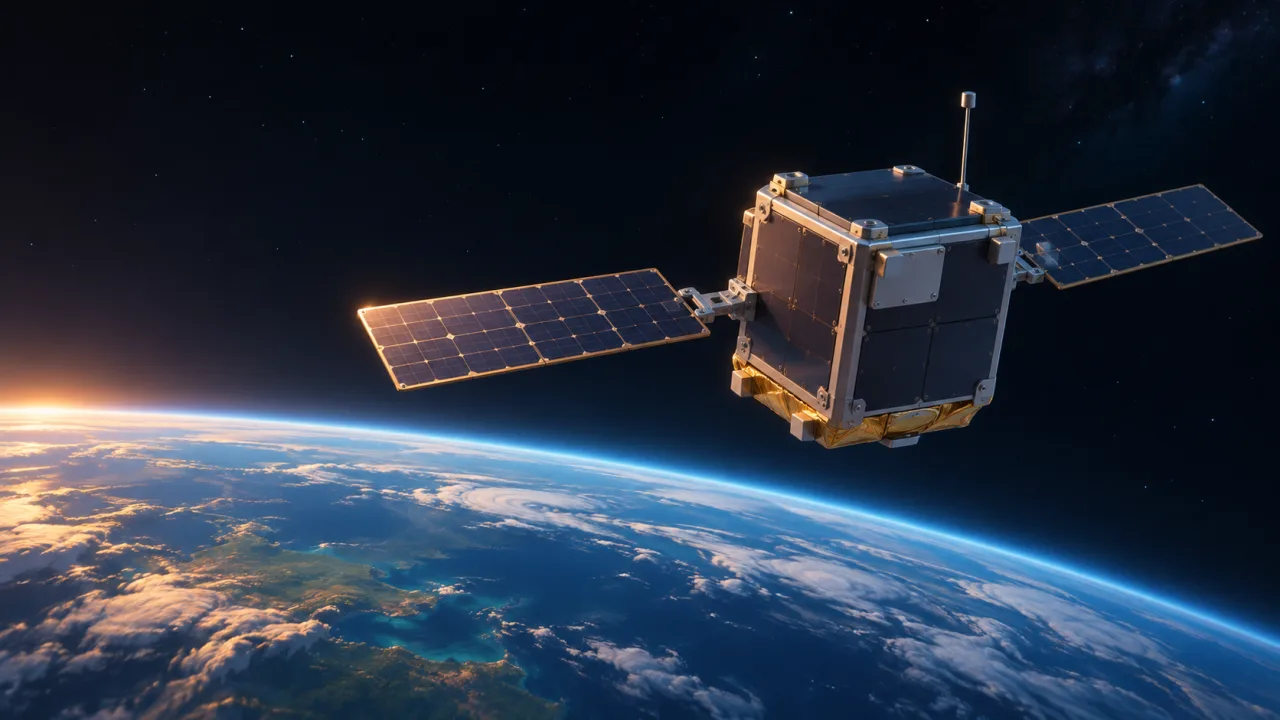
Featured image: AI-generated explanatory image. A conceptual small satellite in low Earth orbit, not a photograph of the actual SSPICY spacecraft or mission.
NASA said on November 3 that its SSPICY technology demonstration satellite has lost contact with its owner and operator, Starfish Space, and that the two organizations have concluded the spacecraft cannot be recovered. The NASA-supported mission was intended to test technologies for inspecting inoperable space objects in low Earth orbit.
SSPICY launched on October 1 from Vandenberg Space Force Base in California. Starfish established initial contact with its Otter spacecraft but lost communications during commissioning, the early phase when systems are activated and instruments calibrated. Two-way communication has not been restored.
Troubleshooting and analysis by NASA and Starfish identified an issue with the spacecraft’s fault protection system. That onboard software detects and responds to problems, but the issue is keeping the radio erroneously turned off, NASA said.

The original mission called for approaching up to four inoperable space objects of U.S. origin, including satellites and rocket bodies, to collect information such as spin rate, orientation and surface condition. An earlier NASA mission description said close-range inspections were expected to begin in early 2027. The demonstration was not designed to touch or dock with the objects.
SSPICY was designed to test electric propulsion, autonomous guidance, navigation and control, and an articulating robotic boom for directing thrusters as an integrated system. NASA described it as the first launch and deployment of Starfish’s Otter spacecraft and the first integration of the company’s navigation and propulsion technologies into a single spacecraft system.
In its latest announcement, NASA said Starfish intends to keep gathering technology performance information and low Earth orbit debris inspection data for the agency during future Otter missions. NASA’s Small Spacecraft and Distributed Systems program manages the agency’s support for SSPICY.
브라우저 메뉴에서 앱 설치 또는 홈 화면에 추가를 선택해 주세요.