

Russell Westbrook’s retirement closes one of the NBA’s most relentless careers. His speed, rebounding and full-court pressure expanded expectations for a point guard while also producing years of debate about efficiency and postseason fit.
The triple-double standard
Westbrook pushed the career triple-double record into new territory and averaged a triple-double across multiple seasons. His ability to start offense by securing a rebound changed how teams thought about pace, transition attacks and guard rebounding.
The MVP peak in Oklahoma City
After Kevin Durant left, Westbrook carried an extraordinary workload and delivered repeated late-game moments during his MVP campaign. For Oklahoma City supporters, his decision to remain became as important as the numbers.
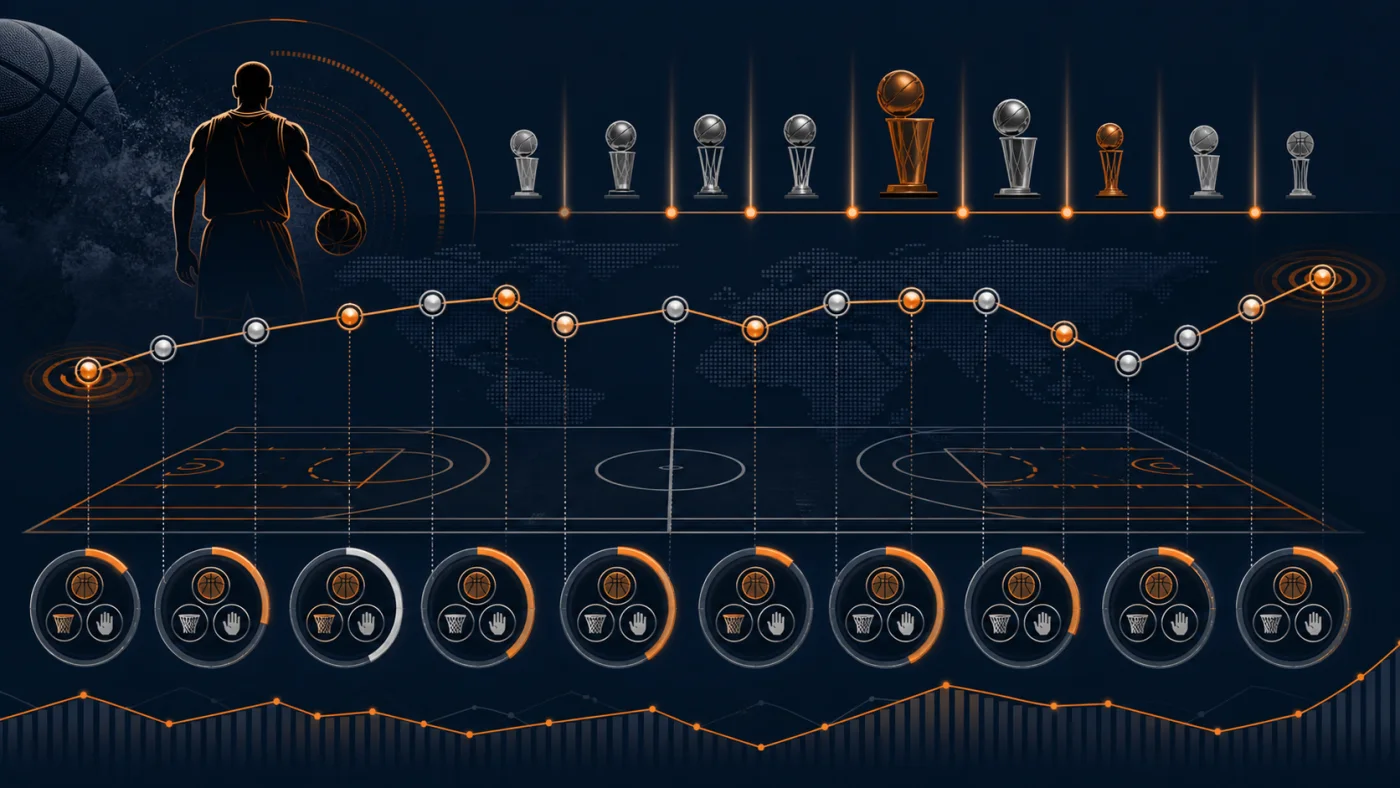
The difficult second half
Roles shifted in Houston, Washington and Los Angeles. Shooting limitations and turnovers became more damaging in the playoffs, yet stretches such as Washington’s late-season surge showed how his playmaking and urgency could still transform a team.
Why his legacy creates debate
- Historic production and unmatched game-to-game intensity
- Postseason questions involving spacing and decision-making
- The challenge of reducing his role after a superstar peak
- A competitive reputation praised by many teammates and fans
A Hall of Fame résumé
The MVP award, all-time triple-double record, All-NBA selections and longevity create an overwhelming Hall of Fame case. His career was not a lesson in perfect efficiency; it was an expansion of what seemed physically possible from the position.