
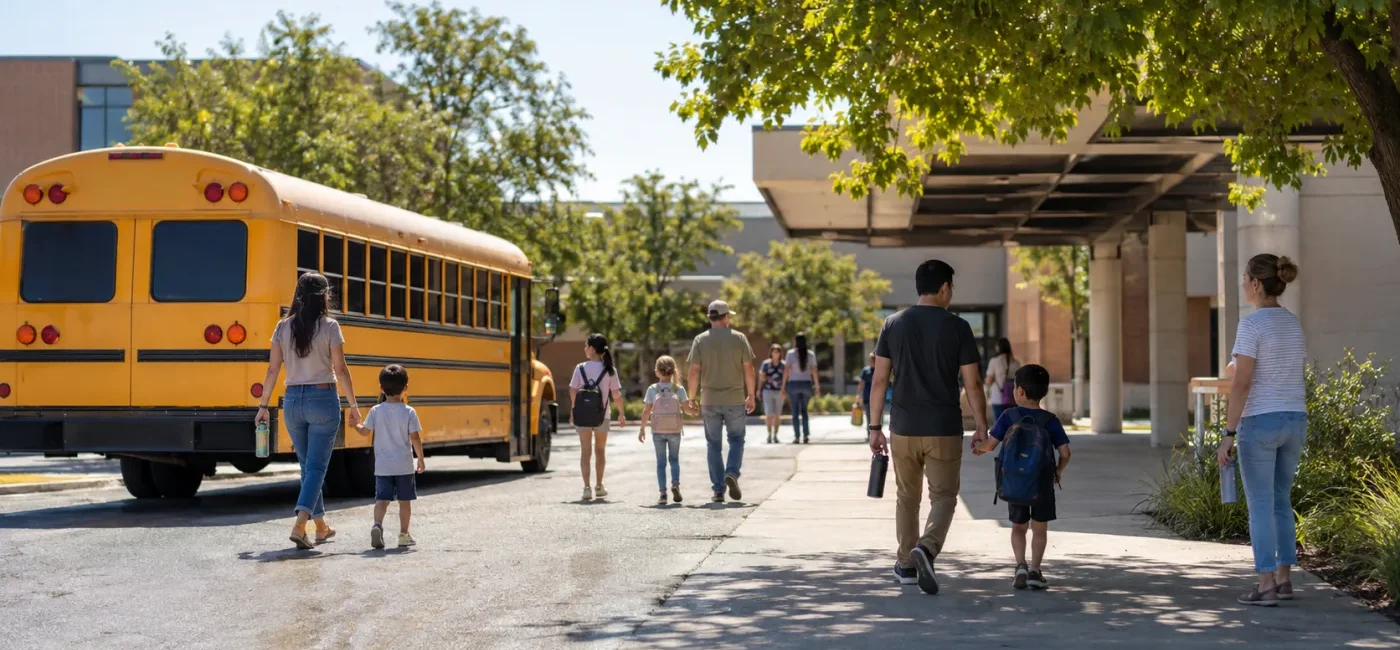
When extreme heat forces a school to dismiss early or cancel afternoon programs, the key question is not simply whether the building is “closed.” Families need to confirm the actual dismissal time, bus schedule, authorized pickup person, child-care plan, meal service, athletics, and access to medication for each student. A districtwide announcement may still produce different arrangements at individual schools because buildings, transportation routes, and programs do not all operate the same way.
That became a practical concern across parts of the Midwest in early September 2026. Detroit Public Schools Community District dismissed students and school-based staff three hours early on September 1 and 2 and canceled afternoon Career Technical Education classes, according to WDIV. Individual schools were left to decide whether athletics and other after-school activities would continue. Troy City Schools in Ohio also dismissed students two hours early during the same heat spell. Its superintendent told WHIO that only one of nine district buildings was air-conditioned at the time. Those decisions show why a heat schedule change is not a one-line notice: it can alter transportation, supervision, health care, meals, and the safest place for a child to spend the hottest part of the day.
Key takeaways
- Use the school’s official channel first. Confirm the date and school name through the district website, school app, text alert, automated call, or student portal. Do not finalize a plan from a news headline or social-media screenshot alone.
- Distinguish early dismissal from a full closure. With early dismissal, morning classes may continue while buses, meals, child care, athletics, and afternoon programs shift. A closure may affect the whole building, but staff and remote-learning rules still vary by district.
- Put the handoff plan in writing. Decide who will pick up the child, whether the child will ride the bus, whether independent release is permitted, and whether emergency contacts are current. Use the school’s approved process for any change.
- Choose a genuinely cool destination. If home is too warm, verify the hours of a library, community center, relative’s home, or cooling center. The CDC says people can call 2-1-1 or contact a local health department or emergency management agency to locate cooling options.
- Know the signs of overheating. Heavy sweating, dizziness, headache, muscle cramps, nausea, and weakness can signal heat illness. Confusion, loss of consciousness, fainting, or seizures require emergency help; call 911 and begin cooling.
- Never use a parked vehicle as a waiting room. Do not leave a child or pet alone in a vehicle, even briefly. Shade and an open window do not make the situation safe.
What happened
Late-summer heat creates a specific challenge at the beginning of the school year. Older buildings may have uneven or no air conditioning, and a structure that does not cool overnight can become substantially hotter by afternoon. Exposure also happens in buses, gyms, playgrounds, pickup lines, cafeterias, and unshaded bus stops. A district may therefore shorten the day instead of closing completely, move selected activities indoors, or allow schools to make building-specific decisions about after-school programs.
There is no single nationwide temperature at which every U.S. school must close. District leaders may consider the local forecast, humidity, HeatRisk, building conditions, transportation, medical support, and the intensity of planned activities. Two neighboring districts can make different decisions even when a weather app shows the same outdoor temperature. Families should not infer a closure from the thermometer alone; the decision that governs a student’s schedule comes from that student’s district or school.
The CDC says hot days can affect anyone and highlights added concerns for children and teens with asthma, heart conditions, or other chronic illnesses. The EPA explains that children can lose fluids more quickly than adults and may not have the judgment to reduce activity or rehydrate after playing in the heat. Infants and younger children may not describe symptoms clearly, so adults should also notice reduced activity, fewer tears, a dry mouth, irritability, unusually dark or reduced urine, and lethargy.
Early dismissal does not remove the heat hazard; it can relocate it. A student may travel during the hottest hours, wait at an unshaded bus stop, or arrive at a home without adequate cooling. Treat the schedule notice as a prompt to decide where the child will be, who will supervise, and how the child will stay cool for the rest of the afternoon.
Who may be affected
Elementary students who normally meet an adult
A parent, caregiver, or other authorized adult may need to reach the school or bus stop much earlier than usual. An unregistered pickup person can delay release while staff verify identity. Check the authorized pickup list, emergency contacts, change deadline, and identification requirements in the school app. If siblings attend different schools, do not assume their revised dismissal times are identical.
Students who use school buses or public transit
Bus arrival times and route order can change during an early release. Use the district’s transportation alert or approved bus-tracking service so a child is not waiting outside unnecessarily. Older students who use city buses or rail should check transfers and service alerts. If a stop has no shade, send water and light clothing and identify a nearby air-conditioned place the student can enter if the wait becomes prolonged.
After-school care, athletics, and career-program participants
A shortened class day does not always settle every afternoon program. In Detroit’s case, afternoon Career Technical Education classes were canceled, while individual schools decided whether athletics and extracurricular activities would proceed. Ask specific questions: Is practice still happening? Will child care remain open until its normal time? Is the shuttle to another campus operating? Do not assume a student can wait in the usual room unless the program confirms it.
Students with asthma, diabetes, heart disease, or other health needs
Heat can worsen chronic conditions and complicate the handling of some medicines and medical devices. The CDC advises people not to stop or change medicines without talking to a clinician and recommends creating a heat action plan. Confirm how rescue inhalers, epinephrine, insulin, or other school-held medication will accompany a student during early release. For refrigerated medication, follow the manufacturer, pharmacist, or clinician’s storage instructions rather than improvising with direct contact against an ice pack.
Families without reliable air conditioning
Sending a child home early is not, by itself, a cooling plan. Identify a verified air-conditioned public facility and a safe way to reach it. The CDC notes that fans may be used when indoor temperatures are below 90°F, but a fan in hotter indoor conditions can increase body temperature. Cooling centers may have different rules for minors, caregivers, pets, identification, and hours, so confirm details before leaving.
What to do now
1. Verify four details in the original notice
Look for the notice date, affected school, exact dismissal time, and programs covered. An old alert can remain prominent in search results, so check the publication and update time. Determine whether the change is districtwide or limited to buildings with cooling problems, whether it applies for one or several days, and whether lunch will be served. Call the school office or transportation department about anything the notice leaves unclear.
2. Confirm a primary and backup pickup person
Write one clear message in the family group chat: who is picking up, at which school, at what time, and with what identification. Choose an approved backup in case work or traffic delays the primary caregiver. Tell the child not to change locations independently if the plan shifts; the student should follow staff instructions. Ignore unexpected links that ask for pickup credentials and use only the school’s official app, website, or main phone number.
3. Choose a cool destination and safe route
Check whether home will remain adequately cool. If it will not, select an open library, community center, cooling center, or relative’s home. Avoid a long walk through unshaded areas during peak afternoon heat. If driving, ventilate and cool the vehicle before loading children. Never leave one child inside while walking into another school or running a quick errand.
4. Offer water regularly without forcing excessive amounts
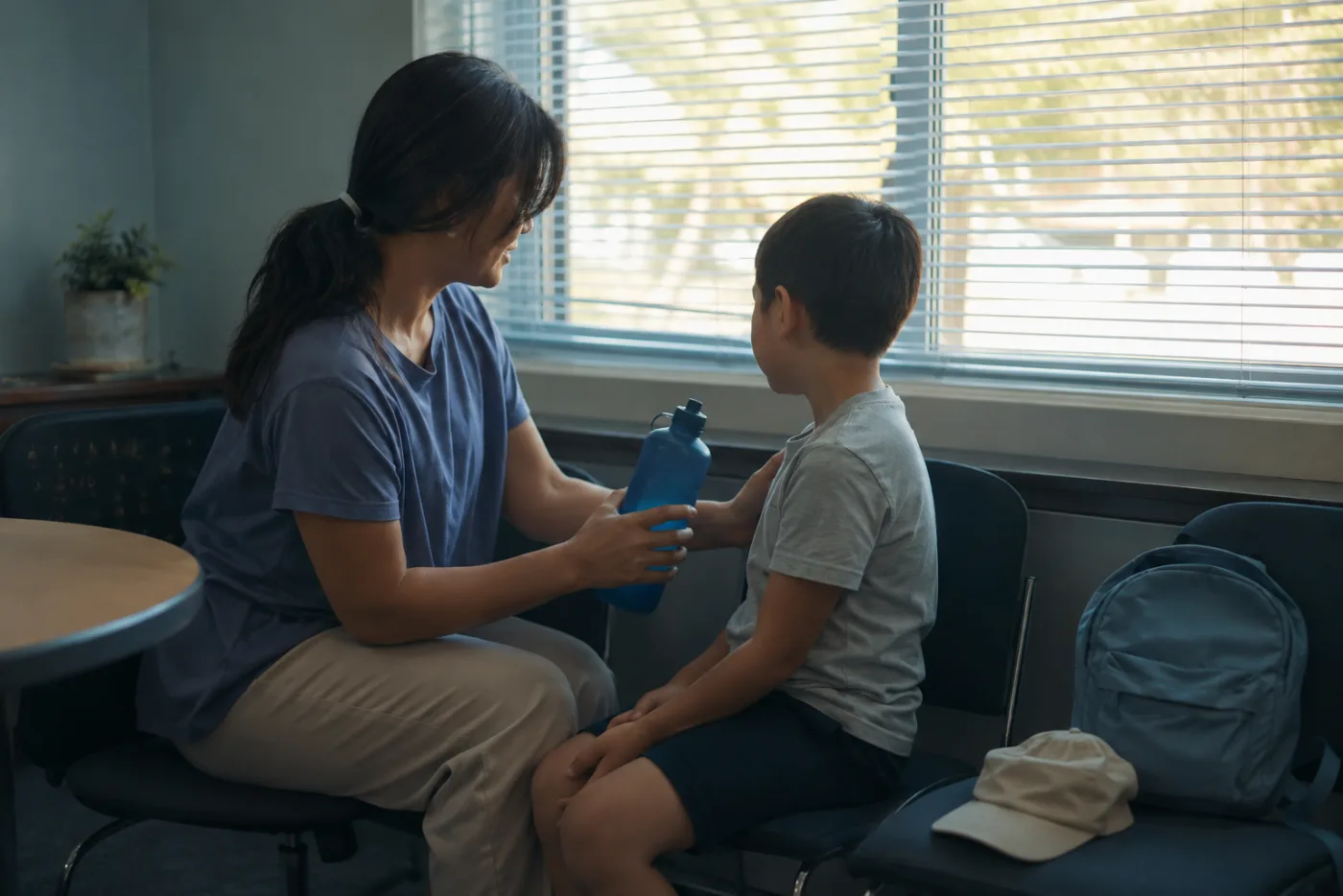
The CDC recommends carrying and refilling a water bottle and drinking fluids throughout a hot day, regardless of activity level. Encourage regular, manageable drinks in a cool place instead of pushing a large amount at once. Limit beverages high in sugar, sodium, or caffeine. A child with a medical fluid restriction needs an individualized clinician’s plan, and caregivers should ask a pediatric clinician before giving an infant water or electrolyte drinks outside the infant’s normal feeding guidance.
5. Make sure everyone knows when heat illness is an emergency
Heavy sweating, dizziness, headache, cramps, nausea, and weakness may be signs of overheating. Stop activity, move the child to a cool place, loosen extra clothing, and offer small amounts of water if the child is alert and able to swallow. Seek medical advice if symptoms do not improve or worsen. Confusion, unusual behavior, loss of consciousness, fainting, or seizures may signal heat stroke. Call 911 and cool the person with wet cloths, cool water, or cold packs while help is coming. Do not force fluids into someone whose consciousness is impaired.
6. Check medication and meal arrangements
Ask whether dismissal happens before or after lunch and whether grab-and-go meals or afternoon snacks will be available. Families that rely on school meals can contact district nutrition services, local 2-1-1, or official community-assistance programs for verified alternatives. For school-held medication, confirm the nurse’s office hours, early-release handoff procedure, and next-day return rules. Follow the existing medication authorization rather than changing doses or transport arrangements on your own.
7. Treat athletics and outdoor programs as separate decisions
Early dismissal does not automatically cancel a practice or game. Read the coach or program director’s official update for the location, time, indoor move, delay, or cancellation. Even if an event proceeds, a child who feels unwell should stop. Confirm access to shade, water, and recovery breaks, and end activity immediately if heat-illness symptoms develop.
8. Recheck the next day’s plan at night and in the morning
Heat notices can be extended or canceled as forecasts and building conditions change. Read the dates in the original message instead of assuming that yesterday’s schedule will repeat. Check once at night and again immediately before departure, and keep school alerts enabled. Explain to children that the current day’s school instructions—not the previous day’s experience—determine the plan.
How to verify official information
- Start at the district website. Look for Alerts, News, Closings, Emergency, or Transportation. Confirm the school name, effective date, and update time.
- Audit your contact settings. Make sure the district has the correct phone number and caregiver permissions and that at least one of its automated calls, texts, emails, or app notifications reaches you.
- Check weather risk for the actual address. Search the address at weather.gov and read the location, start time, and expiration of any Heat Advisory or Extreme Heat Warning. The CDC HeatRisk Dashboard provides ZIP-code forecasts and health actions.
- Confirm program details with the responsible office. Contact transportation for buses, nutrition services for meals, the coach or athletics office for sports, and the school nurse for medication. Silence in a general announcement does not guarantee the regular program will operate.
- Open the source instead of relying on a screenshot. Community chats can circulate quickly, but an image may hide the school name, date, or correction. Follow the link and check the district’s latest revision.
Frequently asked questions
Does a Heat Advisory automatically close every school?
No. A National Weather Service alert communicates weather risk, while the district or school makes its operating decision based on buildings, transportation, staffing, and local conditions. Nearby districts may use different schedules.
What if the notice does not list an exact bus time?
Use the official transportation department or school office. Simply subtracting two or three hours from the normal arrival can be wrong because route order may change when multiple schools dismiss early. Arrange for an approved adult so the student does not wait outside alone.
Is a fan enough if the home has no air conditioning?
Check the indoor temperature. The CDC says fans can be used below 90°F, but relying on a fan above 90°F can raise body temperature. Call 2-1-1 or check with the local health or emergency management department for an open cooling location.
Should a child drink a sports drink instead of water?
Water is the usual starting point for routine hot-weather hydration. Needs can differ during prolonged intense activity or with certain medical conditions, so follow a pediatric clinician’s individualized guidance instead of a generic recommendation. Ask a clinician before giving an infant extra water or electrolyte drinks outside normal feeding guidance.
What should I do if a child has a headache and nausea in the heat?
Stop the activity, move the child to a cool place, loosen extra clothing, and offer small drinks if the child is fully alert and can swallow. Contact a clinician if symptoms persist or worsen. Call 911 for confusion, fainting, seizures, loss of consciousness, or other severe changes and begin active cooling.
Will after-school care remain open after early dismissal?
It depends on the program. Building temperatures, staffing, and transportation may force it to close, move, or continue normally. Do not assume it is operating until the program confirms the day’s schedule.
Who handles questions about school medication or meals?
Contact the school nurse for medication, district nutrition services for meals, and transportation for buses. Use the district’s departmental directory if the school’s main line is busy. For an urgent health problem, do not wait for the school to respond—contact a clinician or 911 as appropriate.
Should I assume the same early dismissal will happen tomorrow?
No. Treat only the dates in the official notice as confirmed. Forecasts and building conditions can change, so check the district’s current message at night and again before school.
Official sources
- U.S. Centers for Disease Control and Prevention: About Heat and Your Health
- National Weather Service: Heat Safety Tips and Resources
- U.S. Environmental Protection Agency: Protecting Children and Maternal Health from Extreme Heat
- WDIV Local 4: Detroit schools announce a three-hour early release
- WHIO-TV: Troy City Schools sends students home early during extreme heat
The Smartor Editorial Team turns verified public-health, weather, and local reporting into practical steps. School operations and heat risk can change quickly; rely on the newest notice from your school and local authorities.
[…] Smartor 편집팀 September 3, 2026 Read this school heat guide in English → […]