How to Dispose of Unused Medicine: Take-Back, Trash and Sharps Guide
Smartor 편집팀
September 3, 2026

A medicine cabinet can quietly fill up with an unfinished antibiotic, an old pain prescription, half-used creams, expired cold medicine, and bottles no one clearly remembers. Do not solve that problem by emptying everything into the trash or toilet. In the United States, the preferred option for most expired, unwanted, or unused medicines is an authorized drug take-back location or a prepaid mail-back envelope. At-home disposal is the fallback when a take-back option is not readily available, and the correct method depends on the product.
The important distinction is not simply “expired versus unexpired.” Tablets, liquids, medicated patches, inhalers, and needles create different risks. Keeping unneeded medicine within easy reach can lead to accidental poisoning, medication mix-ups, misuse, pet exposure, or disclosure of personal information. Flushing every product, puncturing an inhaler, or placing a loose needle in recycling merely transfers the danger to water systems, waste workers, and other people.
This guide provides general U.S. medication-safety and disposal information. It is not individualized medical, pharmacy, or legal advice. The product label, Medication Guide, prescription instructions, and current directions from your pharmacist or prescriber take priority. State and local disposal rules—and the accepted-item policy at a particular collection site—may be more specific.
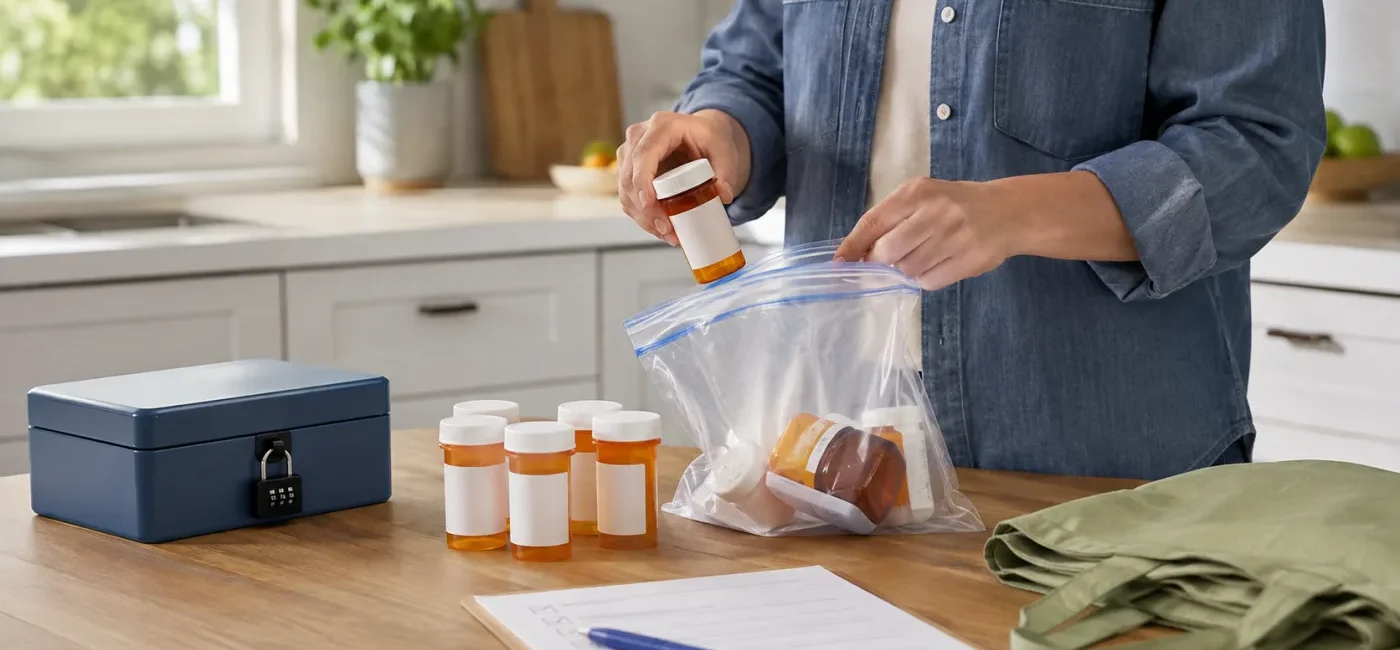
Work on a well-lit, level surface away from food, children, and pets. Keep caps closed and examine one container at a time rather than pouring pills onto a counter. Check whether a product label calls for gloves or other precautions. If several people in the household use medicines, have one responsible adult conduct the sort and confirm uncertain items before anything leaves the home.
Do not give a prescription to another person, save an antibiotic for a future illness, or combine unidentified tablets in one bottle. Similar symptoms do not mean the diagnosis, dose, interaction risks, or allergy risks are the same. If medicine remains because treatment was stopped early, a dose was missed, or a side effect occurred, contact the prescriber or pharmacist instead of treating disposal as the only question.
Record the medicine name, who it belongs to, expiration date, approximate amount, and any special disposal direction. There is usually no reason to place full prescription numbers, birth dates, or addresses in a shared chat or unsecured note. Physically separate the “keep using” medicines from the disposal group so an essential daily prescription is not removed by mistake.
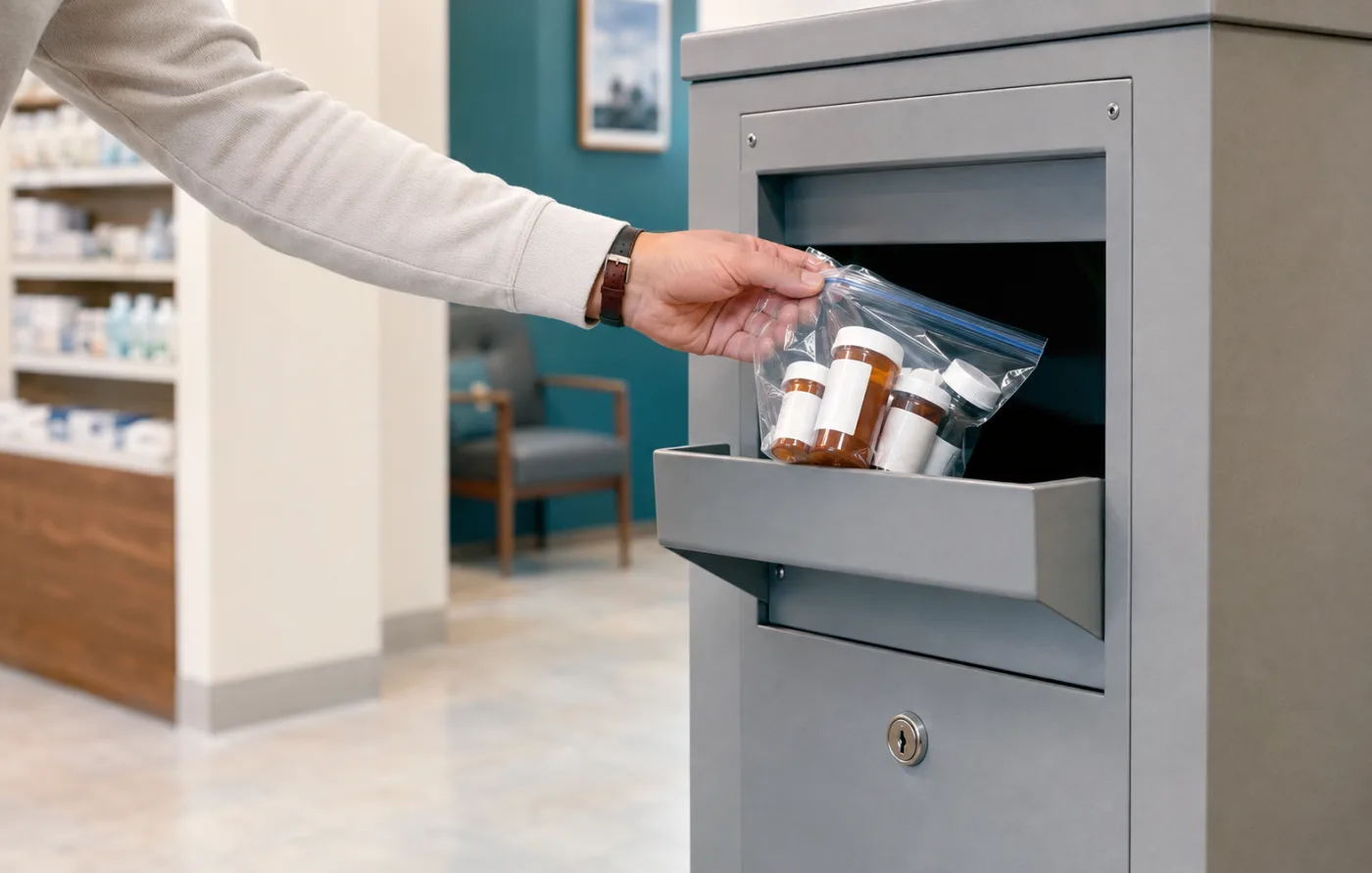
The FDA identifies drug take-back as the best way to dispose of most expired, unwanted, or unused medicines. Permanent collection boxes may be available at participating pharmacies, hospitals, law-enforcement facilities, or other community sites. The DEA’s authorized collector search can identify nearby options by ZIP code. National Prescription Drug Take Back Day is useful, but many communities have year-round collection, so you may not need to store a risky medicine until the next event.
Accepted items vary by program. Sharps and aerosols are especially likely to require a separate program, so call or read the operator’s official instructions before leaving home. Keep caps tight during transport. Place containers upright in a small box or sealed bag, out of the reach of children and pets. Load the medicines shortly before the trip rather than leaving them in a hot or unlocked vehicle.
A prepaid drug mail-back envelope can be another secure option. Follow the instructions supplied with that specific envelope. The FDA’s basic sequence is to place eligible unused or expired medicine inside, seal the envelope, and mail it through the U.S. Postal Service. Do not substitute an ordinary letter envelope or improvised box, and do not add needles, inhalers, illegal substances, or other excluded materials.
If take-back or mail-back is not readily available and the medicine is not on the FDA Flush List, nearly all medicines can generally follow the FDA household-trash procedure. This includes pills, liquids, drops, patches, and creams. A product-specific label direction still comes first, and local waste rules may impose additional requirements.
For a liquid, use enough undesirable absorbent material and a reliable seal to prevent leakage. Used patches may retain active medicine, so check the instructions for that exact product. Do not assume folding a patch is always sufficient. Products such as fentanyl patches have specific FDA directions because substantial medicine can remain after use; their Medication Guide and the current Flush List must control the decision.
Consumers often encounter two statements that sound contradictory: “Do not flush medicine” and “Dispose of certain dangerous medicine immediately by flushing.” The current rule is narrower than either slogan. Flush only when take-back is not readily available and the exact medicine appears on the FDA Flush List, then follow the label and FDA instructions. Convenience alone is not a reason to flush a medicine that is absent from the list.
The list addresses certain products that can cause severe harm, including death, if another person takes even one inappropriate dose. The list can change, and names and dosage forms matter. Check the official page on the day of disposal instead of relying on memory or assuming that a medicine with a similar brand name or drug class qualifies.
Fentanyl patches illustrate why product-specific directions matter: the FDA notes that a large amount of potent opioid medicine can remain in a used patch. That does not mean every medicated patch follows the same rule. Consult the package instructions, Medication Guide, and current FDA list; call a pharmacist when the product is unclear. If take-back is readily available, that remains the first choice.
Place insulin needles, injection needles, lancets, and other used sharps into an FDA-cleared sharps disposal container immediately after use. These containers are designed with puncture-resistant plastic, leak-resistant sides and bottom, and a tight-fitting, puncture-resistant lid. Never mix loose sharps into a bag of tablets or place them in a standard medicine kiosk unless that program explicitly accepts them.
If an FDA-cleared container is not available, the FDA says a heavy-duty household plastic container, such as a laundry-detergent container, may be used as an alternative. Final disposal rules vary locally. Keep the container upright and out of reach, do not overfill it, and close it at the fill line or according to the manufacturer’s instructions. Milk jugs, glass containers, thin beverage bottles, and paper boxes can puncture, break, or leak and are poor substitutes.
Inhalers and aerosol products may remain pressurized. Puncturing them or placing them in a fire or incinerator can be dangerous. The FDA advises consumers to read the product’s handling instructions and contact the local trash or recycling facility about applicable rules. A metal canister is not automatically safe for curbside recycling.
Creams, gels, eye drops, nasal sprays, lozenges, and suppositories may also carry product-specific directions. If a package is damaged or leaking, read the warning information and contact a pharmacist before cleaning it with bare hands. For chemotherapy drugs, hormones, or any medicine labeled with special handling precautions, ask the dispensing pharmacy or medical office whether an ordinary household disposal method is appropriate.
Imagine a household finds a current blood-pressure prescription, expired cold medicine, leftover prescription pain medicine, empty labeled bottles, used lancets, and an old inhaler while preparing to move.
A move produces many labels containing addresses and account details. Smartor’s USPS change-of-address and mail-forwarding checklist can help organize the privacy and account side of the same household project.
If a child or adult may have taken the wrong medicine, do not wait for symptoms and do not induce vomiting unless a professional directs you. In the United States, call Poison Help at 1-800-222-1222. Call 911 immediately if the person collapses, has a seizure, has trouble breathing, or cannot be awakened. Keep the container and label available for the specialist. For a pet exposure, contact a veterinarian or animal poison service promptly.
After an accidental needlestick, wash the area with soap and water and contact a health care professional immediately. Assessment of a possible infection exposure can be time-sensitive. Do not rely on guessing whose needle it was or simply watching the injury at home.
If an outage or extreme heat may have pushed a medicine outside its labeled storage range, do not decide by appearance alone. Ask the pharmacist or manufacturer. For the food side of the same emergency, see Smartor’s food-safety-after-a-power-outage checklist, but do not apply food time-and-temperature limits to medicine.
An expiration date alone does not prove that a product suddenly became toxic. However, a consumer may not be able to judge potency, stability, or the effect of past storage. If the medicine is still needed, do not stop or substitute it on your own; ask a pharmacist or prescriber about replacement. If it is no longer needed, use take-back.
Policies vary. Some sites accept original containers, while others direct consumers to remove or obscure personal information or consolidate eligible pills. Read the instructions on the kiosk or contact its operator. Never include loose needles or an excluded item.
Many programs accept prescription and over-the-counter drugs, but policies for dietary supplements and vitamins can differ. Verify before visiting. If an item is not accepted, follow its label and local waste rules.
No. Do not self-prescribe the remainder or share it. The cause of an illness, appropriate drug, dose, and treatment length can differ. If doses remain because of a side effect, a missed dose, or an early stop, tell the prescriber or pharmacist.
Make the name, address, prescription number, barcode, and other readable or scannable information unusable—by removing the label or permanently obscuring it. A single light line that leaves the text legible is not enough. First confirm whether the collection program wants the original label intact.
Confirm the listing, operating hours, and accepted materials with the site. Calling before loading the medicines prevents an unnecessary trip and reduces the chance that the products will be left in a vehicle.
브라우저 메뉴에서 앱 설치 또는 홈 화면에 추가를 선택해 주세요.
[…] Read this medicine disposal guide in English → […]