Home Fire Escape Plan: Two Exits, Smoke Alarms, and a Family Drill Checklist
Smartor 편집팀
September 12, 2026

A fire at home can turn familiar spaces into confusing ones. Smoke may hide the hallway, an alarm may wake some people but not others, and family members may move in different directions while looking for one another. A useful fire escape plan therefore needs more than “get outside.” It should answer five specific questions: Who helps whom? Which two routes can each person use? Where does everyone meet? Who calls 911? What prevents anyone from going back inside?
The U.S. Fire Administration recommends choosing an outdoor meeting place and practicing a home fire drill with everyone who lives in the home. It also advises installing smoke alarms inside every bedroom, outside each separate sleeping area, and on every level, including the basement. This guide turns those principles into a practical plan for houses, townhomes, apartments, and condos. It covers room-by-room exits, alarm checks, children, older adults, disabilities, pets, nighttime drills, and common mistakes.
This article provides general safety information for U.S. residents. Building design, local fire codes, lease requirements, and individual mobility or medical needs vary. If you suspect an actual fire, smoke, or a dangerous gas condition, do not stay inside to investigate or collect property. Move to safety, call 911 from outside, and follow instructions from emergency personnel.
A checklist on the refrigerator helps, but a plan must also work in darkness, with bedroom doors closed, and when the main hallway is unavailable. The plan should be simple enough to remember and specific enough to match the home and everyone’s actual abilities.
Use one sheet of paper for each floor. Draw a basic overhead outline; it does not need to be attractive or perfectly scaled. Include bedrooms, common rooms, stairs, exterior doors, and windows. Mark the primary route from every room with a solid line and the alternate with a dotted line. Add smoke alarms, fire extinguishers, and the outdoor meeting place.
Writing “window” as a second exit does not automatically make it safe. Do not create a plan that requires jumping from an upper floor or using escape equipment that has not been evaluated for the building. Ask the local fire department’s nonemergency line or the building manager about upper-floor bedrooms, security bars, basement window wells, balconies, and high-rise procedures. Some window guards require an emergency-release feature that meets local rules.
If an alarm sounds or smoke is present, do not swing a door open without checking conditions. If the door or handle is hot, or smoke is entering around it, use the alternate route. If it feels cool and no smoke is visible, stay low and open it cautiously. If escape routes are not usable, keep the door closed, seal gaps as practical, call 911, and signal your location from a window. During an actual emergency, instructions from the 911 dispatcher and firefighters take priority.
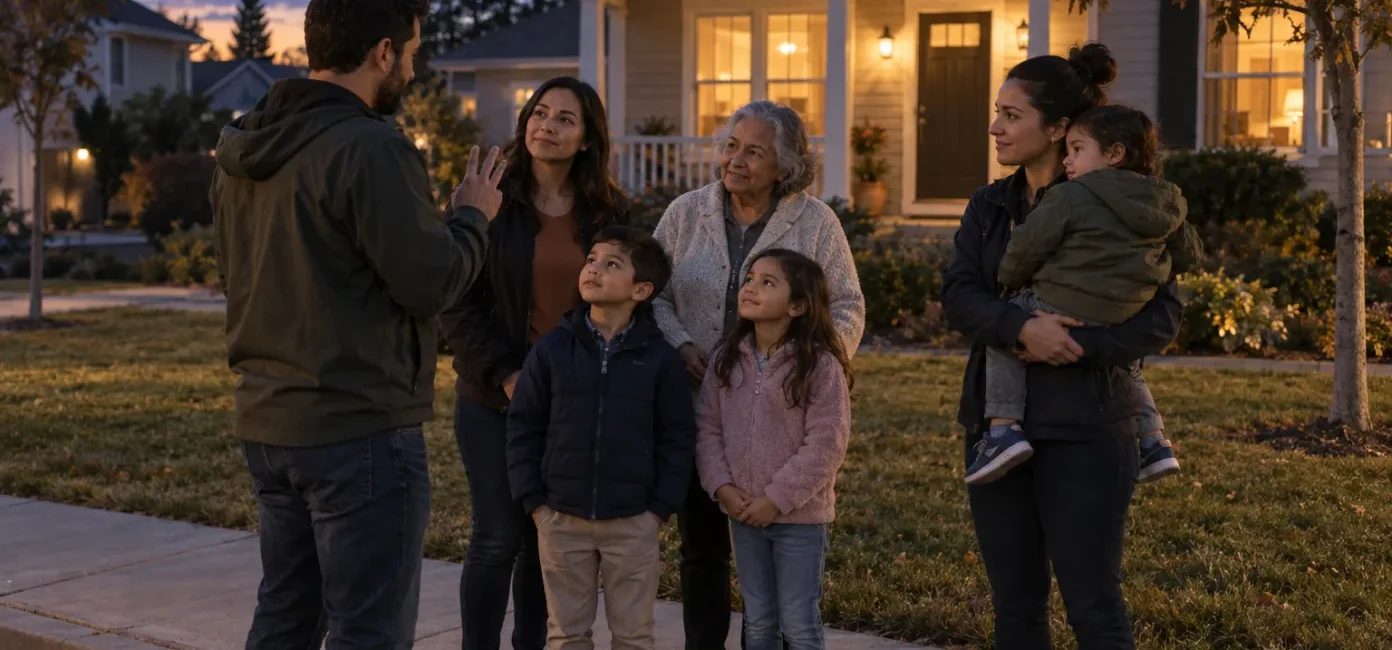
“Meet in front” is too vague. One person may wait on the porch, another across the street, and another in the parking lot. That confusion can make the family think someone is still inside. Pick one fixed, visible place away from smoke, falling debris, traffic, utility lines, hydrants, and fire apparatus. “The sidewalk next to the blue mailbox across from our home” is much clearer than “out front.”
At the meeting point, one adult should call each person’s name and account for everyone. If someone is missing, no one goes back in. Tell arriving firefighters the person’s likely location, whether mobility assistance is needed, and where any pets may be hiding.
An escape route matters only if people recognize danger early enough to use it. The U.S. Fire Administration advises placing smoke alarms inside every bedroom, outside each separate sleeping area, and on every level of the home, including the basement. Interconnected alarms are recommended so that when one activates, all of them sound. Follow the manufacturer’s instructions for mounting location and height. Do not remove an alarm because cooking or shower steam causes repeated nuisance alarms.
Nine-volt battery alarms, sealed long-life models, and hardwired alarms may have different battery-maintenance instructions. Read the label and manual instead of relying on one rule for every device. Leaving a battery out because an alarm chirps or activates during cooking is effectively the same as having no working alarm. Correct the cause, replace the unit if necessary, and notify the property manager in writing if it is rental housing.
A carbon monoxide alarm has a different purpose from a smoke alarm. Homes with fuel-burning equipment, fireplaces, or attached garages should also review CO-alarm placement under local requirements and the manufacturer’s directions. Before the heating season, pair this plan with the fall heating startup and carbon monoxide safety checklist.
“Someone will help Grandma” is not an operational plan. Name a primary helper and a backup, and make sure both know the same route. In a multigenerational home or one with changing roommates and caregivers, update the assignments whenever the household changes.
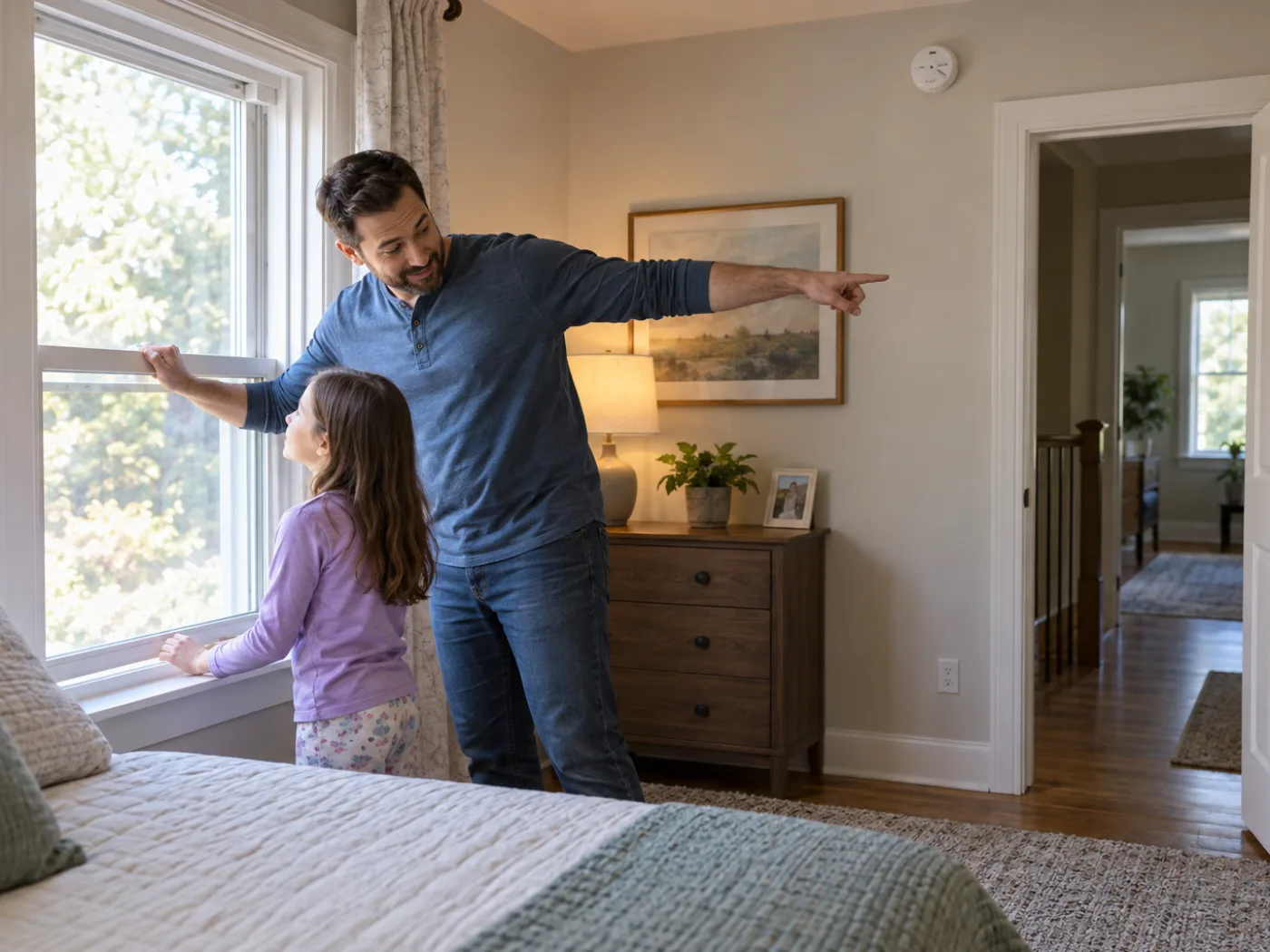
There is no single safe transfer technique for every person or home. Do not improvise lifting or stair-carrying methods during an alarm. Discuss the individual situation ahead of time with clinicians, rehabilitation professionals, the property manager, and the local fire department.
Record the number and type of pets, carrier and leash locations, and common hiding places. Take a pet with you if it is immediately accessible on the way out, but do not delay escape, search a smoke-filled room, or go back inside. Keep any pet-alert decal current. At the meeting point, tell firefighters what animals may be inside and where they were last seen.
Begin with an announced drill, not a surprise. Explain the objective, identify the alarm sound, and walk from each sleeping area to the meeting place. Later, practice with bedroom doors closed, in a nighttime setup, with the main exit declared unavailable, and with the primary helper absent.
Do not turn a drill into a race. Children should not run down stairs, family members should not actually climb from a high window, and no one should burn material to imitate smoke. The goal is to build calm habits and find defects in the plan. Repeat the drill after a move, bedroom change, mobility change, new lock, or major furniture rearrangement.
Apartment residents need to know both the routes out of the unit and the building’s alarms, stairs, fire doors, assembly area, and emergency communication system. Elevators generally should not be used during a fire, but the building’s approved emergency plan and instructions from the fire department control.
Document malfunctioning alarms, exit lights, locks, or fire doors with photos and dates, then send a written repair request to the landlord or management company. Landlord duties and complaint agencies vary by city and state, so use the official city or county building and fire department resources. Do not remove an alarm or repair hardwired equipment yourself.
The assigned adult takes the infant by the preplanned alternate exit while the second adult follows a separate safe route. Everyone meets at the mailbox. From outside, they call 911 and report the address and smoke in the upstairs hall. No one returns for a wallet, laptop, medication, or pet. They tell firefighters which room the pet often uses.
Do not throw water on a grease fire. If the fire cannot be handled immediately and safely, or if it begins to spread, leave, close the door, and call 911 from outside. If the alarm had been disabled after earlier nuisance activations, restore working protection immediately and have the placement, ventilation issue, and device type evaluated rather than leaving the battery out.
The household does not assume that carrying the person down the stairs will work. Before any emergency, they ask management and the local fire department about evacuation assistance, areas of refuge if applicable, and communication procedures. During an actual incident, they close the unit door if routes are unsafe, call 911 with the floor and unit, clearly state the mobility need, and follow emergency instructions.
Preparation after a loss is easier when possessions and documents were organized before the emergency. The home inventory guide explains how to record rooms, receipts, and photos. The emergency financial records kit covers protected copies of identification, policies, and account contacts. These are planning tasks for ordinary days—never reasons to go back inside a burning building.
Practice regularly, include both daylight and nighttime conditions, and repeat after a move, bedroom change, new roommate, different caregiver arrangement, or change in mobility. Follow any additional schedule recommended by the local fire department. A recurring calendar reminder makes the plan easier to maintain.
Evacuation comes first. Consider an extinguisher only if you have been trained, the fire is small and contained, you are not exposed to smoke, and a clear exit remains directly behind you. If any condition is uncertain, leave and call 911. An extinguisher never replaces an escape plan.
A closed door may slow the spread of smoke, heat, and fire. Working alarms must still be audible inside the room, and there should be an alarm in the bedroom. Test the actual setup for each family member’s hearing needs.
Do not remove it or leave its battery out. Check the manufacturer’s placement instructions, ventilation, and the type of alarm. Ask a qualified professional or property manager to evaluate hardwired or rental equipment.
Suitability depends on the window, wall, landing area, user, and building. Ask the local fire department about the second-exit plan before buying. If you choose equipment, verify its certification, limits, storage, and manufacturer’s practice instructions. Do not conduct a hazardous high-window descent as a drill.
Check the door before opening it. If the corridor is dangerous or the exit is unavailable, keep the door closed, limit smoke entry as practical, and tell 911 your precise location. Follow building announcements and fire-department instructions; do not improvise by using an elevator.
No. Once outside, stay outside. Tell firefighters the animal’s type, number, last known location, and common hiding places. Keeping carriers and leashes accessible may help you take a pet that is immediately reachable during evacuation.
From a safe location, state the street address and apartment number, what you saw or smelled, the floor or room involved, and whether anyone may be trapped or need mobility assistance. Answer the dispatcher’s questions until told to disconnect, then repeat essential information to arriving firefighters.
브라우저 메뉴에서 앱 설치 또는 홈 화면에 추가를 선택해 주세요.
[…] Smartor 편집팀 September 12, 2026 Read this guide in English → […]