First-Freeze Home Preparation Guide: Pipes, Heat, and Outage Checklist
Smartor 편집팀
September 28, 2026

한국어판: 한국어로 이 가이드 읽기 →
A first-freeze forecast is not a signal to renovate the entire house. It is a prompt to find the places where water can freeze, heat can escape, or a heating outage can become dangerous. Risk varies by climate, construction, plumbing route, wind exposure, and how long the home will be unattended. A pipe in an exterior wall, garage ceiling, or crawl space can be vulnerable even when plumbing near the center of the house remains warm.
This guide gives homeowners and renters a practical order of operations before the first freeze. The goal is not a perfect winterization project. It is to finish the high-value tasks first: disconnect outdoor hoses, identify exposed plumbing, test heat and alarms, check drainage from the ground, and assemble outage supplies where everyone can find them.
Note: This is general U.S. home-maintenance and safety information, not property-specific construction, plumbing, electrical, insurance, legal, or medical advice. If you smell gas, see smoke or sparks, hear a carbon monoxide alarm, find active flooding, or encounter a downed wire, stop the inspection, move to safety, and contact 911 or the utility’s emergency number as appropriate. In a rental, responsibilities vary by lease and local law; report defects to the owner or manager before altering building systems.
One temperature number does not describe the whole risk. Duration, wind, insulation, pipe location, indoor heat, and occupancy all matter. Review the National Weather Service forecast for your exact area, including the overnight low and any freeze alert. If any of the following applies, prioritize plumbing and heating checks:
Renters do not need to open walls or dismantle heating equipment. Photograph visible leaks, drafts, thermostat problems, blocked vents, or a faulty outdoor faucet; include the date and notify the owner or manager in writing. Homeowners should know which valve controls the main water supply and which systems depend on it. Smartor’s home utility shutoff guide explains how to document water, gas, and electrical controls without improvising during an emergency.
When time is short, complete actions that do not depend on a shopping trip. This sequence moves from outdoor water to indoor plumbing, heat, alarms, and outage supplies.
Pause the checklist if you find a wet ceiling, swollen wall, burning odor, soot, a breaker that repeatedly trips, or water around a furnace, boiler, or water heater. Document what is safe to document and contact the property manager or a qualified professional.
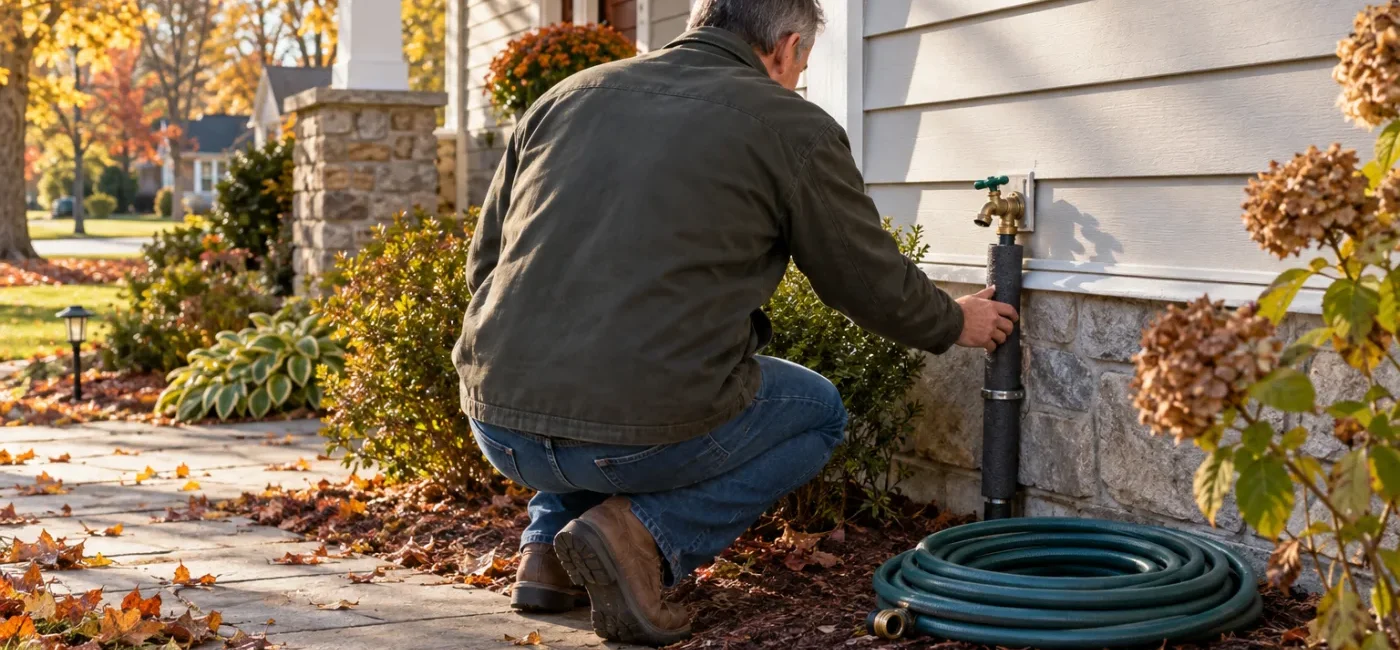
A connected hose can trap water at the faucet and prevent proper drainage. Even a frost-resistant sillcock can lose some protection when a hose or timer remains attached or when the fixture was installed incorrectly. Remove every attachment, lower both ends of the hose to drain it, inspect for cracks, and store it dry.
Some homes have an interior shutoff for each outdoor line. On certain systems, the correct procedure is to close that valve and open the exterior faucet to drain the remaining water. Other systems are different. If the valve is corroded, will not move, or has an unknown function, do not apply excessive force. Disturbing an old valve can create a leak at the stem or fitting.
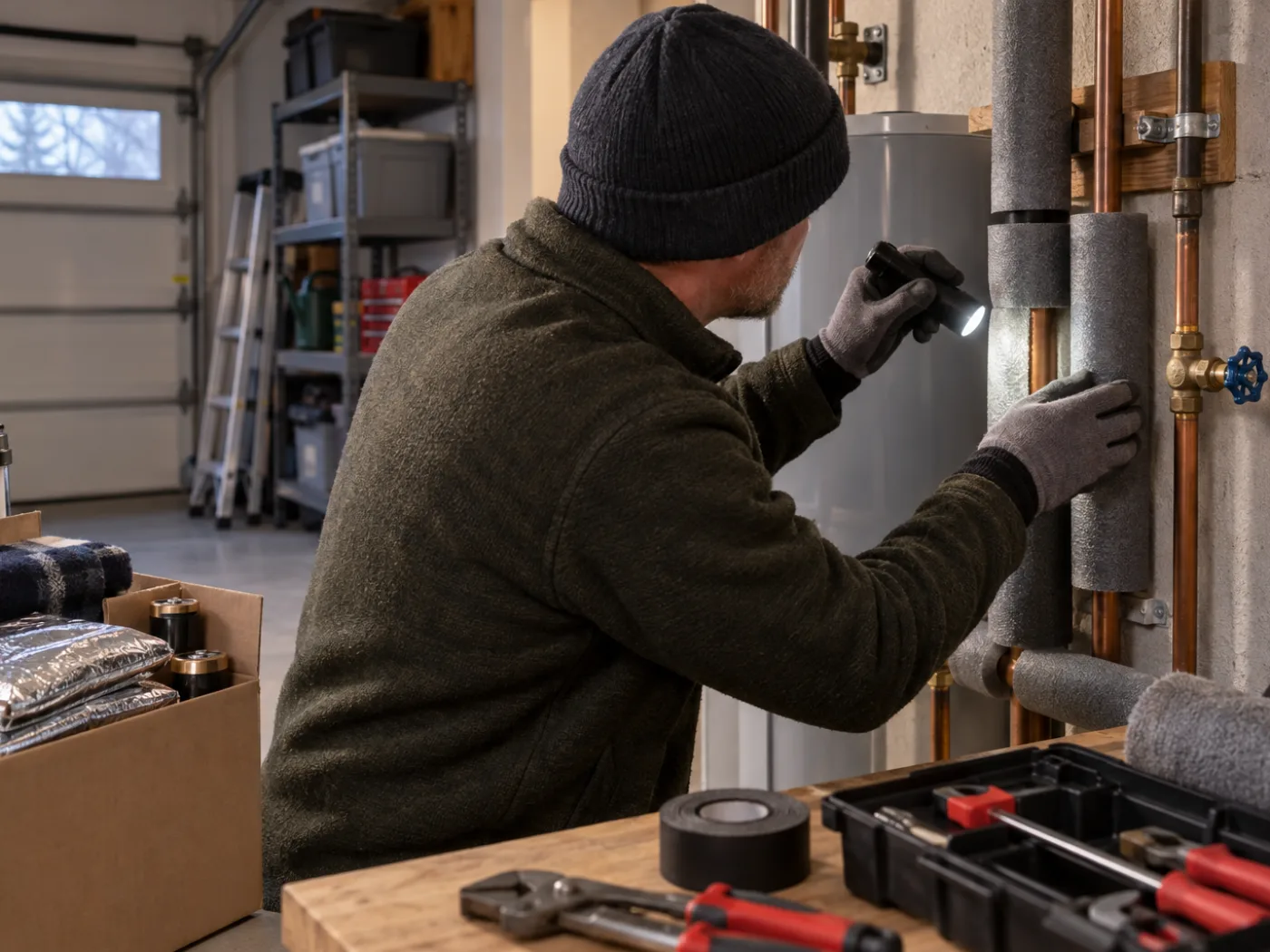
The most vulnerable water lines are usually those closest to outdoor air: in a garage ceiling, exterior-wall cabinet, crawl space, unconditioned basement edge, or attached utility room. Use a flashlight and look for beads of water, rust, green or white deposits, swollen insulation, stains, or a musty smell. Those signs may indicate an existing slow leak that should be repaired before it is hidden by new insulation.
Foam sleeves can be useful on accessible pipes, but they are not a universal fix. Keep valves and joints inspectable, and do not place material near a hot flue or appliance unless it is approved for that location. Electric heat cable is not ordinary extension cord. If it is appropriate at all, use a listed product approved for the pipe material and location, follow its rules about overlap and controls, and retire damaged cable.
Opening the cabinet under a sink on a cold exterior wall may help warm room air reach the plumbing. First move cleaners, pesticides, medicines, and sharp objects where children and pets cannot reach them. Allowing a faucet to drip can be a limited supplemental measure in some buildings, but it may conflict with local water restrictions, septic conditions, or a property’s operating rules. It is not a substitute for correcting drafts, maintaining heat, and identifying exposed pipe runs.
If one faucet has no water or only a weak flow while the rest of the home is normal, a frozen section is possible. First rule out a neighborhood outage or whole-house supply issue. If the line is visible, inspect it for splitting, bulging, or active leakage and be ready to use the main shutoff if water begins escaping.
Never use a torch, lighter, charcoal device, or open flame to thaw a pipe. Do not place a portable electric heater on a wet floor or near combustibles. If the frozen section is inside a wall, inaccessible, or unsafe to warm, contact a plumber. Stay present during any thawing attempt because a concealed crack may begin leaking as the ice melts.
Before the first cold night, switch the thermostat to heating mode and observe a normal cycle. Confirm that the system starts, warm air or radiator heat reaches occupied rooms, and there is no unusual banging, electrical odor, heavy fuel smell, visible smoke, or persistent soot. A brief dusty odor at the beginning of the season can occur, but do not assume that smoke, scorching, or strong fuel odor is normal.
Use the filter size and airflow direction specified for the equipment. A more restrictive filter is not automatically better; it can create resistance the system was not designed to handle. Follow the equipment manual or service professional’s recommendation. Clear supply and return vents, and do not store paper, paint, gasoline, solvents, or boxes around a furnace, boiler, or water heater.
The CDC advises that fuel-burning equipment be vented outside and that a qualified technician check the furnace system and vent each winter season. If a fireplace or wood stove is part of the emergency-heating plan, have the chimney or flue inspected on an appropriate schedule as well. Renters should make a written service request and should not add an unapproved fuel-burning heater.
Carbon monoxide cannot be identified by smell or color. Maintain working alarms when fuel-burning equipment is present and follow the alarm manufacturer’s placement, testing, and replacement directions as well as local requirements. See the Smartor carbon monoxide alarm guide for a room-by-room checklist.
Air leaks around windows and doors increase heating demand and can chill nearby plumbing. In daylight, inspect frames for gaps, failed weather stripping, loose locks, and cracked caulk. Use weather stripping on moving components and an appropriate sealant on small stationary gaps. Do not cover rotten wood or a wet opening with caulk; fix the moisture source first.
Sealing an ordinary draft is not the same as covering a combustion-air opening, flue, dryer vent, or kitchen and bathroom exhaust. Never block furnace, boiler, water-heater, fireplace, or appliance intake and exhaust paths with plastic or insulation. Avoid injecting expanding foam into outlets, panels, or unknown cavities. Large gaps, recurring condensation, and water stains deserve a building professional’s diagnosis.
A wet roof or cold ladder is a poor place for a last-minute inspection. From the ground, use binoculars or camera zoom to look for missing roofing, sagging gutters, detached downspouts, and branches touching the house. Check whether downspouts send water toward the foundation, where it can contribute to moisture and ice. Do not reroute drainage into a neighbor’s property or an unknown buried line without understanding the lot and local rules.
The CDC recommends repairing roof leaks and trimming branches that could fall on a home or other structure during a storm. Work near utility lines, large dead trees, and roof edges belongs with the utility or an insured, qualified contractor. Checking attic surfaces and ceilings for stains during fall is much safer than climbing onto an icy roof after a storm.
Winter storms can disrupt heat, electricity, communications, and roads at the same time. Ready.gov advises households to gather supplies for staying home for several days, including medication and the particular needs of each person and pet. Adapt this list to your household and review dates and battery condition at each seasonal change:
Never run a generator indoors, in a basement, in a garage, on an enclosed porch, or near an opening. Ready.gov says generators and fuel should be used outdoors at least 20 feet from windows, doors, and attached garages. Keep the equipment dry, prevent unsafe backfeeding by using approved installation methods, and allow the engine to cool before refueling.
If heating cost makes it difficult to maintain a safe home temperature, do not substitute an oven or improvised combustion device. Program eligibility, funding, and application windows can change. Use Smartor’s LIHEAP energy assistance guide as a preparation checklist, then confirm current terms with the official state or tribal administering agency.
A small leak can become severe when nobody is present. There is no single universally safe “vacation thermostat” setting because the heating system, pipe route, weather, building envelope, and insurance conditions differ. Check the equipment instructions and ask the owner, plumber, HVAC professional, or insurer when appropriate.
A family has a kitchen sink on a north-facing wall and a bathroom above the garage. The day before the first freeze, they disconnect the garden hose, clear the sink cabinet, and feel for cold air around pipe penetrations. They do not open the garage ceiling. Instead, they photograph damaged insulation and any stain that can be seen from an accessible area. They run the heat, identify the main water shutoff, and place the plumber’s number with the outage supplies.
That night, they open the sink cabinet only after relocating cleaners where children cannot reach them. They keep normal heat rather than turning the thermostat sharply down. If pressure falls the next morning, they compare other fixtures, check for an area outage, and call a plumber instead of applying a flame. The family separates short-term risk reduction from the permanent repair.
A renter feels a strong window draft and considers switching central heat off while using one portable heater. First, the renter photographs the failed weather stripping and lock and sends a dated maintenance request. Furniture is moved away from supply and return vents, and heat delivery is checked in every room. If a portable heater is used, it is placed on a stable floor away from bedding and operated according to its instructions rather than through a power strip.
The renter turns the heater off when leaving and reviews the lease and building’s minimum-heat procedures. Windows are not sealed in a way that blocks emergency escape or required ventilation. For continuing affordability problems, the renter contacts the utility and official assistance program instead of relying on unsafe heating.
A household plans to leave for two nights while a hard freeze is possible. Before departure, they test the heat and alarms and give a trusted neighbor an emergency contact. Both adults verify that leak-sensor alerts reach their phones. They consult the smart thermostat instructions to learn whether it preserves its local setting when the internet fails.
They review medication, pet, and return-road plans before worrying about refrigerator contents. If the forecast worsens, changing or canceling the trip is also a home-safety decision. A remote app is not a reason to ask someone to drive through hazardous conditions; official travel warnings and road closures take priority.
There is no single threshold that guarantees freezing in every building. Outdoor temperature, duration, wind, insulation, pipe location, and indoor heat interact. Prepare when freezing conditions are forecast and focus on the most exposed parts of your specific home.
It may be a supplemental measure for some plumbing systems, but it is not appropriate everywhere and may conflict with water-use or property rules. It does not replace disconnecting hoses, maintaining heat, correcting drafts, and locating exposed pipes. Ask the property manager or a plumber about the building.
No. The decision can affect boilers, fire sprinklers, septic systems, water heaters, ice makers, and insurance conditions. Understand the home’s systems and confirm the procedure with the appropriate owner, contractor, or insurer.
It still needs inspection. An attached hose or timer can prevent drainage, and installation angle, a worn washer, or another defect can cause trouble. Remove attachments and check for leaking or wall damage.
Lease and building rules vary. Even removable insulation can hide a valve or leak. Notify management first. Opening a wall or installing electric heat cable may require permission and a qualified professional.
No. Ready.gov warns against heating a home with a gas stovetop or oven because of fire, burn, and carbon monoxide risks. Follow local emergency guidance and move to a safe warming location when necessary.
Do not remain inside to investigate. Move people and pets to fresh air and call 911 or follow local fire-department instructions. Do not re-enter until responders say it is safe.
LIHEAP and state, tribal, local, or utility programs may offer bill assistance, crisis support, or weatherization help. Eligibility, funding, and dates vary. Confirm current information with the official administering agency and use the official number on the utility bill if shutoff is imminent.
First-freeze preparation is an exercise in ordering risk. Disconnect outdoor water accessories, then inspect plumbing in exterior walls, garages, basements, and crawl spaces. Test the heat and alarms instead of assuming they work. Check modest drafts, drainage, and trees without blocking ventilation or climbing onto a dangerous roof. Finally, put outage supplies and contact information in one known location.
Do not conceal warning signs with insulation or an improvised heater. Active leaks, fuel odors, repeated breaker trips, alarms, and wet ceilings may be beyond routine seasonal maintenance. Move away from immediate danger and involve the property manager, utility, emergency services, or a qualified contractor rather than improvising with electricity or flame.
브라우저 메뉴에서 앱 설치 또는 홈 화면에 추가를 선택해 주세요.