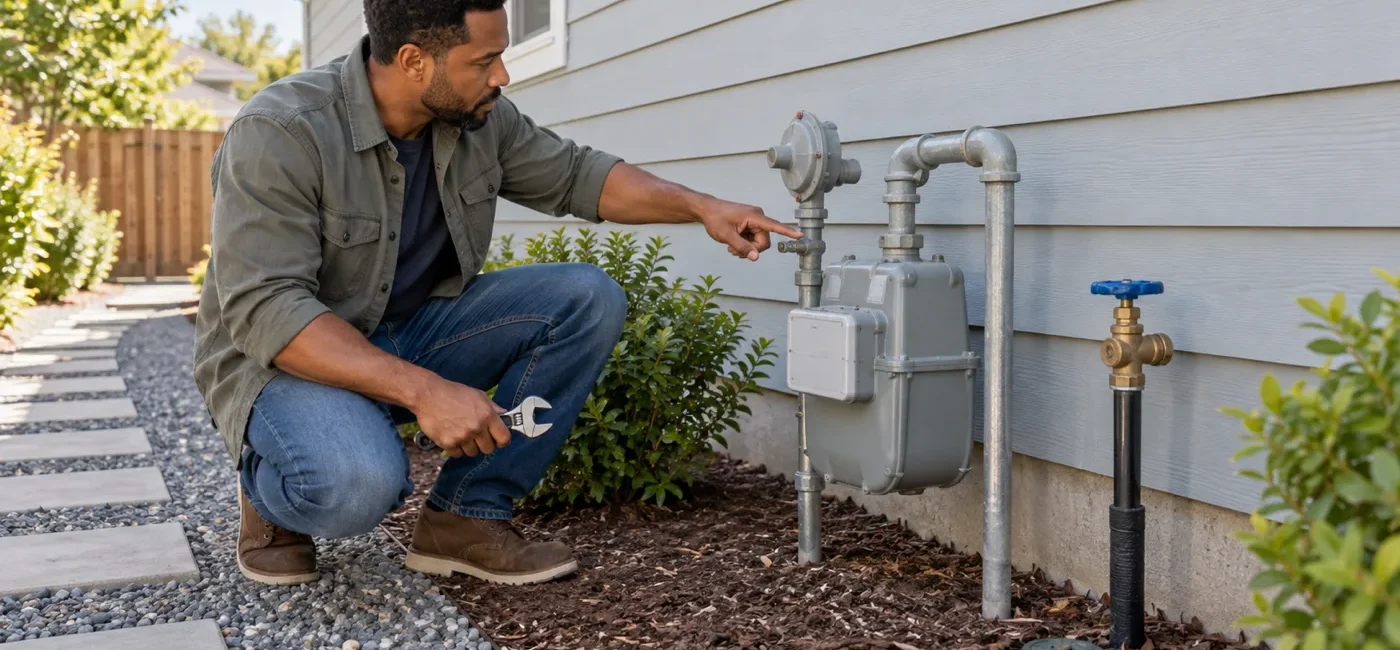
How to Shut Off Home Utilities Safely: Gas, Water, and Electricity
Smartor 편집팀
September 20, 2026

A burst washer hose, a suspected gas leak, or a damaged electrical system can turn into a much larger emergency within minutes. The worst time to look for a shutoff valve or breaker panel for the first time is while water is spreading or an alarm is sounding. The safer approach is to identify each utility control on an ordinary day, confirm the correct procedure with the provider, and give every household member a simple plan they can follow.
This guide explains how U.S. homeowners, renters, and condo residents can prepare for an emergency involving natural gas, water, or electricity. Meter designs, building systems, local codes, and utility rules vary. Renters should learn the building’s emergency process before operating shared equipment. If you smell gas, hear hissing, see smoke or sparks, find water around electrical equipment, or see someone collapse, do not stay behind to protect the property. Move to safety and call 911 and the appropriate utility from a safe location.
This article provides general home-safety information, not individualized electrical, gas, plumbing, legal, or insurance advice. Follow instructions from your utility, fire department, property manager, and qualified tradespeople for your specific home. Do not turn off natural gas merely to practice, and never restore gas service yourself after it has been shut off.
Shutting off a utility is not automatically the first step in every incident. When there are clear signs of danger, moving people outside comes first. In a room where gas may be leaking, switching a light on or off, unplugging a device, using a phone, starting a vehicle, or operating an electric garage door opener could create an ignition source. Do not remain indoors trying to find the source. Leave, move away from the building, and report the emergency.
Do not approach an electrical panel if the floor is wet, the cabinet feels hot, you hear buzzing or arcing, or you see smoke, sparks, or physical damage. A plumbing leak becomes an electrical emergency when water reaches outlets, appliances, wiring, or the service panel. If there is no safe path to a control, let the fire department or utility disconnect service from outside. Property can be repaired; electrocution and an explosion cannot be undone.
If you are unsure about any answer, do not improvise. For a broader household evacuation plan, combine this guide with the home fire escape plan checklist, including two exits, an outdoor meeting place, and a family drill.
You do not need a professional floor plan. Sketch the entrance, garage, basement, utility room, crawlspace, and major exterior walls on one sheet of paper. Mark the gas meter and shutoff, the home’s main water valve, and the electrical service panel. Take one wide photo that shows how to reach each location and one close photo that shows the control. Keep copies on a phone, in a shared family folder, and on paper in the emergency kit. A cloud-only copy may be unavailable during a power or communications outage.
Label circuits clearly, but avoid posting unnecessary system details where the public can see them. “Bedroom” is less useful than “second-floor east bedroom outlets” or “kitchen refrigerator.” An incorrect panel directory can waste time and cause mistakes. On a normal day, one adult can switch individual circuits while another confirms the affected lights or outlets, provided the panel is safe and there are no electrical problems. Have an electrician investigate unclear circuits, repeated breaker trips, exposed openings, heat, corrosion, or damage.
Ready.gov notes that shutoff procedures differ among meter configurations and advises households to contact their gas company for instructions. Responsible household members should know the location and the provider’s procedure, but they should not turn off the gas merely for a drill. Restoring service may require pressure and leak checks, appliance inspection, and relighting by a qualified professional.
If you smell gas or hear a blowing or hissing noise, get everyone outside quickly. From a safe place, call 911 and the gas utility’s emergency number. Do not return until emergency officials or the utility say it is safe. Do not operate switches, electronics, flames, a vehicle, or other potential ignition sources inside. Even if the exterior valve is visible, do not approach it if you must pass through the suspected leak area, debris, fire, or other hazards.
For a failed washing-machine hose, leaking water heater, or broken supply pipe, closing the home’s main water valve can limit damage if the route is safe. Ready.gov recommends finding and identifying the valve on the main water line entering the house and making sure it can close completely. A rusted valve, one that will not move, or one that does not fully stop flow should be evaluated before an emergency by a qualified plumber.
The street valve in a curb box is not the same control. It may require a special tool and may belong to the water provider, so do not operate it without authorization. An indoor main valve may be in a basement near the front foundation wall, a crawlspace, a garage, near the water heater, or at another service-entry point. Apartments and condos may have individual unit valves, shared risers controlled by management, or both. Obtain the building’s 24-hour emergency number before a leak occurs.
Do not force an old valve during a casual test. Corrosion, a stiff stem, or leakage around the packing can turn a preparedness check into a new leak. Ask a plumber how to inspect and maintain the specific valve. After the main valve closes, water remaining in pipes, the water heater, and upper floors may continue to drain, so visible flow may not stop instantly.
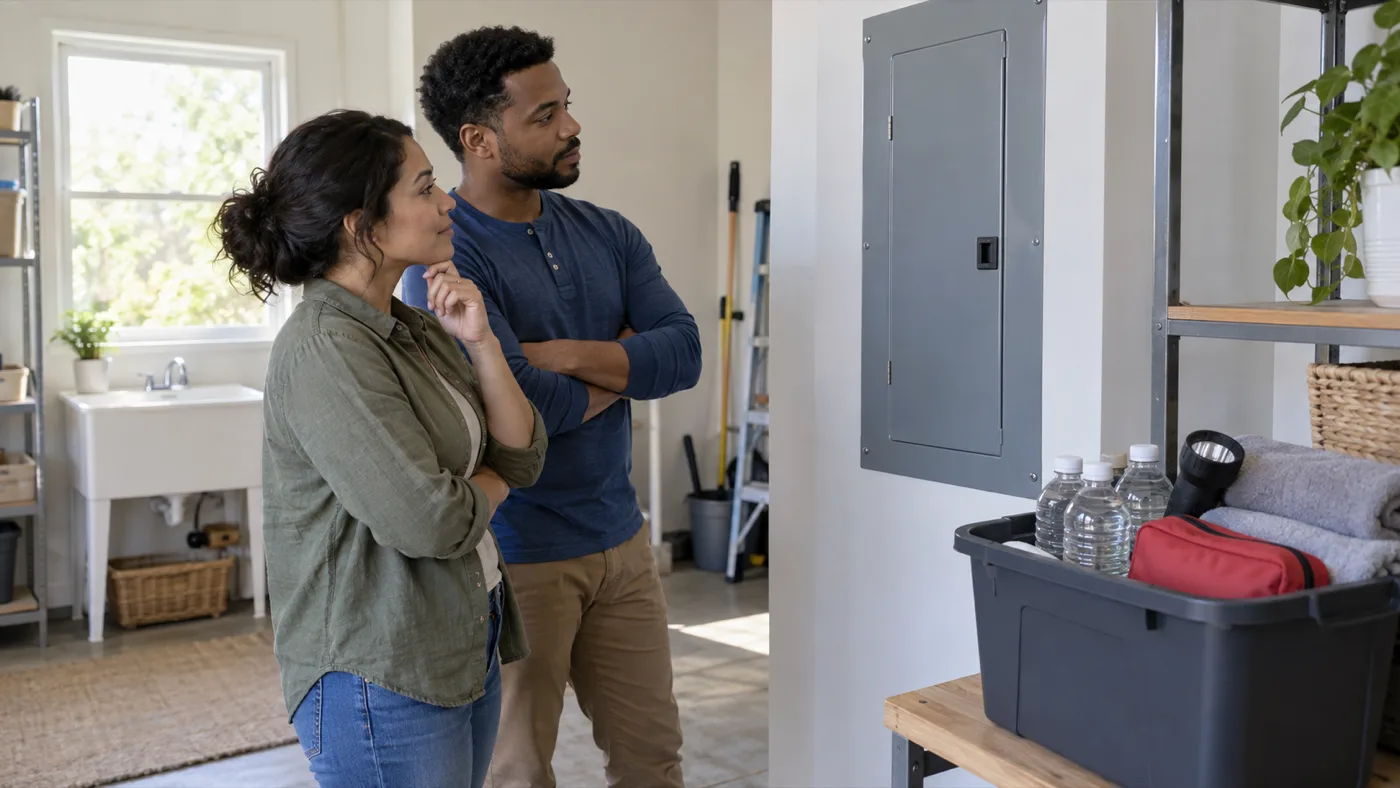
Electrical shutdowns involve both shock and arc hazards. Ready.gov advises teaching responsible household members where the circuit box is and, when it is safe and necessary to shut off all power, turning off individual circuits before the main circuit. That is a general preparation principle for a dry, undamaged, safely accessible panel—not permission to approach a panel during flooding, fire, arcing, or structural damage.
Never touch a panel that has been submerged or is surrounded by water, even if the handle looks dry. After a storm, treat every fallen service line as energized and stay well away. Never connect a portable generator to a household receptacle to feed power backward into the wiring. This practice, often called backfeeding, can electrocute utility workers, neighbors, and occupants. A generator intended to supply home circuits needs properly permitted transfer equipment installed by a qualified electrician.
Knowing how to isolate household power does not make an outage automatically safe. Ready.gov and the U.S. Consumer Product Safety Commission say portable generators must never be operated inside a home or garage. They should be outdoors at least 20 feet from windows, doors, and vents, with the exhaust directed away from the home. An open garage door does not make indoor generator use safe. Generators, charcoal grills, camp stoves, vehicles, and other fuel-burning equipment can produce colorless, odorless carbon monoxide.
CPSC recommends battery-operated or battery-backup carbon monoxide alarms on every level and outside sleeping areas. If an alarm sounds or someone develops headache, dizziness, weakness, nausea, vomiting, sleepiness, or confusion, get everyone into fresh air immediately and call 911. Do not walk around the building looking for the source. For a seasonal review of furnaces, heat pumps, venting, and alarms, see the fall home heating startup checklist.
If the floor remains dry, water is not contacting electricity, and the appliance valves are safely reachable, close those local valves first. If flow continues, close the home’s main water valve and call a plumber. If water reaches outlets, appliances, the ceiling below, or the electrical panel, do not wade toward electrical controls. Evacuate the affected area and request professional help. Photograph damage only after the area is safe.
Do not stay inside to search for a valve or operate a light. Take the household outside, move away from the building, and call 911 and the gas utility from a safe location. Do not approach an outside shutoff if debris, fire, a strong odor, or the suspected leak blocks the route. Wait for the utility or fire department to clear reentry.
Keep refrigerator and freezer doors closed. Unplug sensitive electronics to reduce the chance of damage from a surge when power returns. Activate the backup plan for powered medical equipment or refrigerated medicine. Operate a generator only outdoors, more than 20 feet from openings, and verify that carbon monoxide alarms work. Use the electric utility’s official outage map for restoration updates.
Do not step into water to reach the panel. Leave the area and report the electrical hazard to 911 or the utility so service can be disconnected safely from outside if necessary. Do not improvise with a pump or extension cord in the wet area. After the water recedes, keep affected wiring and appliances out of service until qualified professionals inspect them.
Renters often cannot access the main meter, riser, or service disconnect because it is in a locked mechanical room. In that situation, the most useful question is not only “How do I turn it off?” but “Who can turn it off at 2 a.m.?” Review the lease and move-in documents for water leaks, gas odors, electrical hazards, and emergency maintenance. If there is only a general office number, request the after-hours procedure in writing.
To protect records as well as property, use the emergency financial records kit guide to back up insurance policies, account contacts, identification, and current photos of the home.
Keep drills observational. Announce a scenario such as “Water is spreading from the laundry room,” then have household members point to the main valve and find the emergency contacts. Do not operate the gas shutoff or main electrical disconnect for practice. Children should evacuate and notify an adult rather than handle equipment. Include support for older adults, people with disabilities, pets, and anyone who relies on powered medical equipment.
Your first priority is to leave rather than remain indoors searching for windows or operating devices. Move everyone outside and call 911 and the gas utility from a safe distance. Follow the local utility’s emergency instructions for your area.
No. Ready.gov says that if gas is turned off for any reason, only a qualified professional should turn it back on. The system may need leak, pressure, appliance, ignition, and venting checks.
That depends on the valve type and condition. Do not force a corroded, leaking, or unusually stiff valve. Ask a qualified plumber how to inspect and maintain the specific model and when replacement is appropriate.
No. During an ordinary outage with no building damage, unplugging sensitive electronics is a common first step. If flooding, fire, structural damage, or electrical hazards are present, do not approach the panel; get instructions from the utility or fire department.
CPSC recommends battery-operated or battery-backup alarms on every level and outside sleeping areas. Follow the product instructions and local code for exact placement, testing, and replacement.
First determine whether water is contacting electricity and evacuate if conditions are unsafe. If it is safe, close the local fixture or unit valve and call the building’s emergency maintenance line immediately. Do not operate locked or shared building equipment without authorization.
Start today: Find and photograph the gas meter, main water valve, and electrical panel. Then confirm the address-specific procedure with each provider and make sure the entire household understands one rule: when conditions are dangerous, evacuation comes before equipment.
브라우저 메뉴에서 앱 설치 또는 홈 화면에 추가를 선택해 주세요.
[…] Smartor 편집팀 September 20, 2026 Read this guide in English → […]