
Auto Insurance Renewal Checklist: Coverage, Deductibles, and Quotes
Smartor 편집팀
September 13, 2026

When an auto insurance renewal notice arrives, the premium change usually gets all the attention. A useful renewal review goes further. It checks whether your drivers, vehicles, commute, parking location, mileage, financing, coverage limits, and deductibles still match real life. It also compares quotes on equal terms and coordinates the effective dates so there is no gap between policies.
The cheapest-looking option is not automatically the best value. A lower bill may come from lower liability limits, a higher deductible, or the removal of uninsured motorist, rental reimbursement, or other coverage. Those changes can shift more of the financial risk to you. This guide walks U.S. drivers from the renewal notice through a completed policy change without relying on a single state’s requirements.
This article provides general consumer information, not individualized insurance, financial, or legal advice. Required coverage, rating rules, cancellation procedures, and available options vary by state. Your appropriate limits also depend on your vehicle, assets, drivers, loan or lease, and risk tolerance. Confirm decisions with a licensed insurance professional, your lender or lessor, and your state insurance regulator.
A strong result is not merely “the lowest monthly payment.” It is a policy with coverage and deductibles you understand, a total price you can afford, accurate application information, and continuous protection. Start by collecting your renewal notice, the declarations page from your current policy, recent claim information, and any loan or lease agreement. The declarations page normally summarizes the covered drivers and vehicles, policy dates, limits, deductibles, optional endorsements, and discounts.
Split the review into two sessions if necessary. Use about 30 minutes to document the current policy and life changes, then another 30 to 60 minutes to compare like-for-like quotes and ask questions. Mark a decision date on your calendar as soon as the notice arrives. Waiting until the final day leaves little time to correct driver records, obtain documents, or verify a new insurer.
Place the previous declarations page beside the renewal offer. Mark every item as unchanged, changed, or needing confirmation:
If the price changed without a clear explanation, ask a precise question: “The drivers, vehicles, and limits appear unchanged. Please identify the factors that changed and any discount that was removed.” Correct inaccurate addresses, mileage, vehicle use, or driver information honestly. Never enter false details to obtain a lower quote; inaccurate material information can cause serious problems when a claim is filed.
Insurers evaluate risk using the application and renewal information available to them. Review these questions before requesting quotes:
If you started delivery or rideshare work, do not assume a personal policy applies during every phase of that activity. A platform’s insurance and your personal policy may leave different exposures depending on whether the app is on, a trip has been accepted, or a passenger or delivery is in progress. Tell the insurer how the vehicle is used and ask about an endorsement or commercial coverage before relying on it.
Names and requirements vary among states, but you can compare a policy by asking whose loss each coverage may address and under what circumstances.
Liability coverage may pay for injuries or property damage you cause to others, subject to the policy. A state minimum is a legal floor, not a promise that every serious crash will be fully funded. Consider your assets, income, driving environment, and the amount of risk you could absorb. Limits may be expressed separately for one injured person, everyone injured in one accident, and property damage, so do not treat the three numbers as one combined limit.
Coverage for a crash involving a driver with no insurance or insufficient insurance, personal injury protection, and medical payments can work differently by state. Having health insurance does not necessarily address every auto-related expense, deductible, passenger claim, or lost-income issue. Ask whether a coverage is required, whether declining it requires a signed form, who qualifies as an insured, and what events it covers.
Collision generally addresses damage to your own covered vehicle from impact with another vehicle or object. Comprehensive generally addresses specified non-collision causes such as theft, hail, falling objects, or contact with an animal. The policy controls the exact definitions and exclusions. A lender or lessor may require both, so check the financing agreement before removing either one.
Rental reimbursement, roadside service, glass coverage, replacement coverage, and gap products can be useful, but check for overlap. A vehicle manufacturer program, credit card, motor club, or finance agreement may offer a similar-sounding service. Similar names do not mean identical protection. Compare towing mileage, service-call limits, rental daily and maximum benefits, waiting periods, exclusions, and eligibility rules.
A higher deductible may reduce the premium, but you must be able to pay it after a covered loss. Collision and comprehensive deductibles can differ. Instead of focusing only on the advertised savings, calculate the tradeoff:
Example: Moving from a $500 deductible to a $1,000 deductible creates $500 of additional out-of-pocket exposure on a covered claim subject to that deductible. The annual savings is specific to the insurer, driver, vehicle, and coverage, so use the written quote rather than a generic estimate. If the savings is small and your emergency fund is limited, the higher deductible may be a poor fit. If you have sufficient reserves and meaningful long-term savings, it may be worth considering.
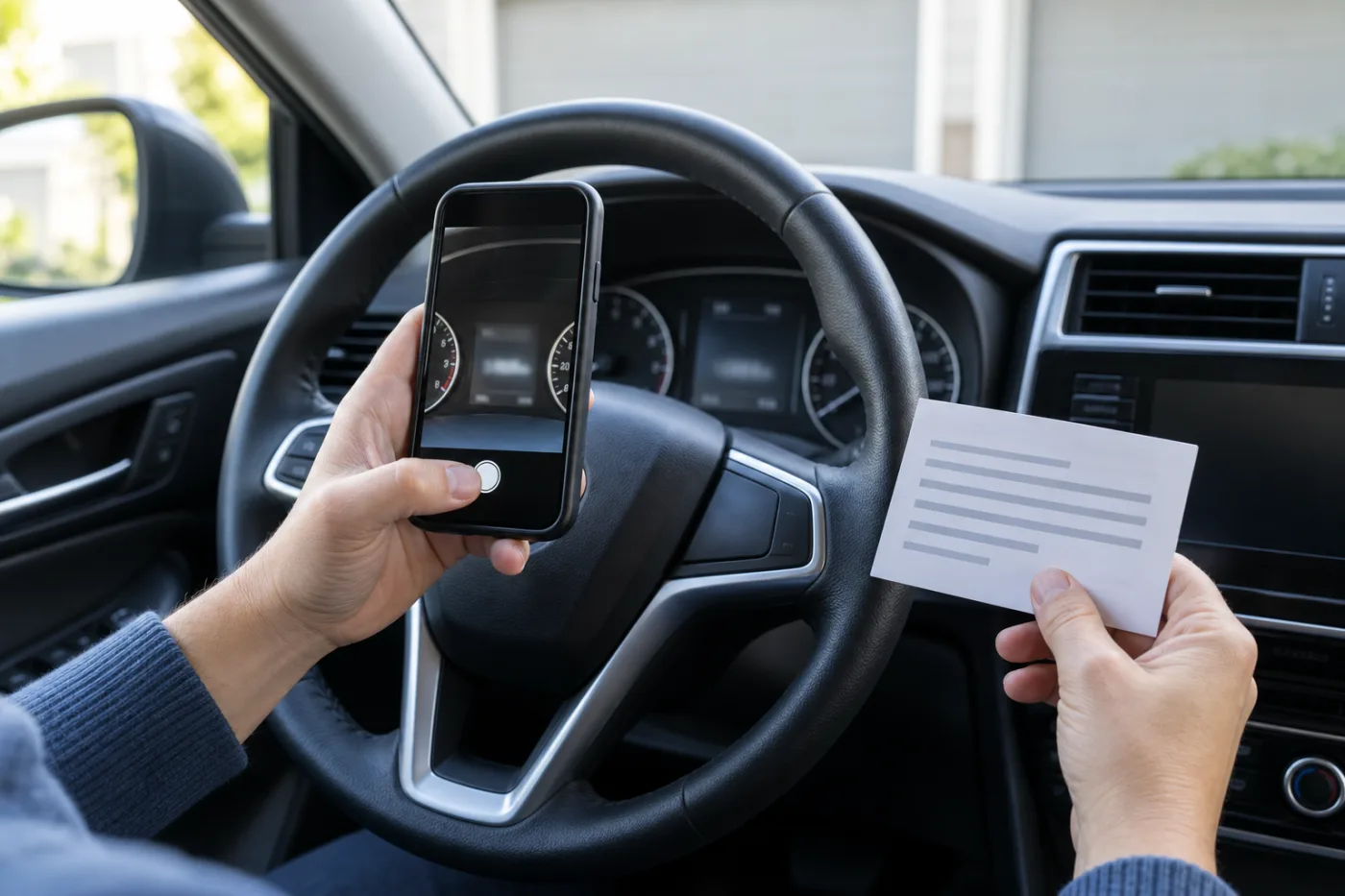
Pricing and discount methods differ among insurers, so multiple quotes can be informative. The comparison becomes misleading if one quote uses state-minimum liability while another keeps your current limits. Enter the same information in every quote:
You can combine online direct quotes, captive agents who represent one insurer, and independent agents who represent multiple companies. No single channel necessarily displays the entire market. Save the quote number, date, representative’s name, and coverage summary so you can investigate if the final offer changes.
Accurate vehicle data makes the quote more reliable. Use the U.S. vehicle recall and VIN checklist to organize the VIN and verify open safety recalls. If you are also financing a vehicle, treat insurance as a cost outside the loan payment and use the auto loan APR, term, and total-cost checklist for the borrowing decision.
Common discounts may include multi-vehicle, home or renters bundling, claims-free driving, approved education, low mileage, qualifying students, automatic payments, and paying in full. Availability and eligibility vary. A large bundle discount does not prove the package is least expensive; compare the combined price and coverage with separate auto and home or renters policies.
Telematics or usage-based insurance can use an app or vehicle device to evaluate mileage and driving patterns. Before enrolling, get written answers to these questions:
Keep the program terms and privacy notice rather than relying on a marketing summary. If several people drive the same vehicle, make sure every driver understands how trips are recorded and evaluated.
Before paying an unfamiliar seller, verify that the insurer and producer are authorized in your state. The NAIC State Insurance Departments directory links to each regulator’s official site, where consumers can find licensing tools, insurance guidance, and complaint procedures. Use contact information from the official regulator or insurer website rather than a phone number copied from a search advertisement.
Pause and verify if a seller:
Complaint ratios and financial information can provide context, but avoid deciding from one number alone. Company size, location, and product mix can differ. Review licensing, written terms, service access, and your state regulator’s consumer information together.
The most consequential switching mistake is canceling the current policy before the new policy is confirmed. A coverage lapse can create uninsured-driving exposure and may also affect vehicle registration, a loan agreement, or future insurance pricing where permitted.
Policies that use the same calendar date may still have different effective times. Do not rely on the word “midnight” without reading the written timestamp. Keep a cancellation confirmation number or email rather than treating a phone conversation as the only record.
Consider a household with two drivers and two vehicles. They first compare the renewal offer with the old declarations page and confirm whether the drivers, limits, deductibles, and vehicles are unchanged. They record that remote work reduced mileage on one vehicle and the loan on the other vehicle was paid off. Paying off the loan does not mean collision and comprehensive should automatically be removed; it means the household can reconsider the choice using vehicle value, replacement resources, and local risks.
The household uses its current coverage as a baseline and requests three quotes with identical limits and deductibles. The lowest monthly quote has installment fees and omits rental reimbursement, so they compare the corrected total rather than the headline payment. They review the data rules for a telematics option. After choosing, they receive written proof of the new effective time, then cancel the old policy and save updated insurance cards for both vehicles.
You do not have to switch insurers at every renewal. However, like-for-like quotes can show whether the current policy remains competitive after a life or premium change. Compare coverage, deductibles, service access, and discount conditions along with price.
No. Compare the verified premium savings with the added amount you would pay after a covered loss, and make sure that amount is available in your emergency fund. Also check any deductible restriction in a loan or lease.
Vehicle age alone does not answer the question. Consider actual cash value, premium, deductibles, the money available to repair or replace the car, theft and weather risk, and any financing requirement. Ask how a covered total loss would be valued before deciding.
Some states permit insurers to use a credit-based insurance score as one rating factor, while other states restrict or prohibit the practice. An insurance score is not necessarily the same as a consumer credit score. Check your state insurance department for the applicable rule and your consumer rights.
No. A bundle discount may be useful, but the combined premium, coverage, and deductibles may not beat separate policies from different insurers. Compare the total household insurance cost on matching terms.
Refund calculation and cancellation charges depend on the policy and state rules. Ask the insurer to confirm the termination date, refund amount or method, cancellation fee, and autopay status in writing.
First ask the insurer for the reason and supporting notice. If the matter is unresolved, use the NAIC State Insurance Departments directory to find your state regulator’s consumer assistance and complaint process.
An auto insurance renewal is a periodic risk review, not just a price check. Verify every change, update real-life driver and vehicle information, and compare quotes with the same limits and deductibles. Match the deductible to your emergency fund, read the conditions behind discounts and telematics, and verify the insurer’s authority. Most importantly, confirm the replacement policy’s effective date and time in writing before canceling the current one.
브라우저 메뉴에서 앱 설치 또는 홈 화면에 추가를 선택해 주세요.
[…] Smartor 편집팀 September 13, 2026 Read this guide in English → […]