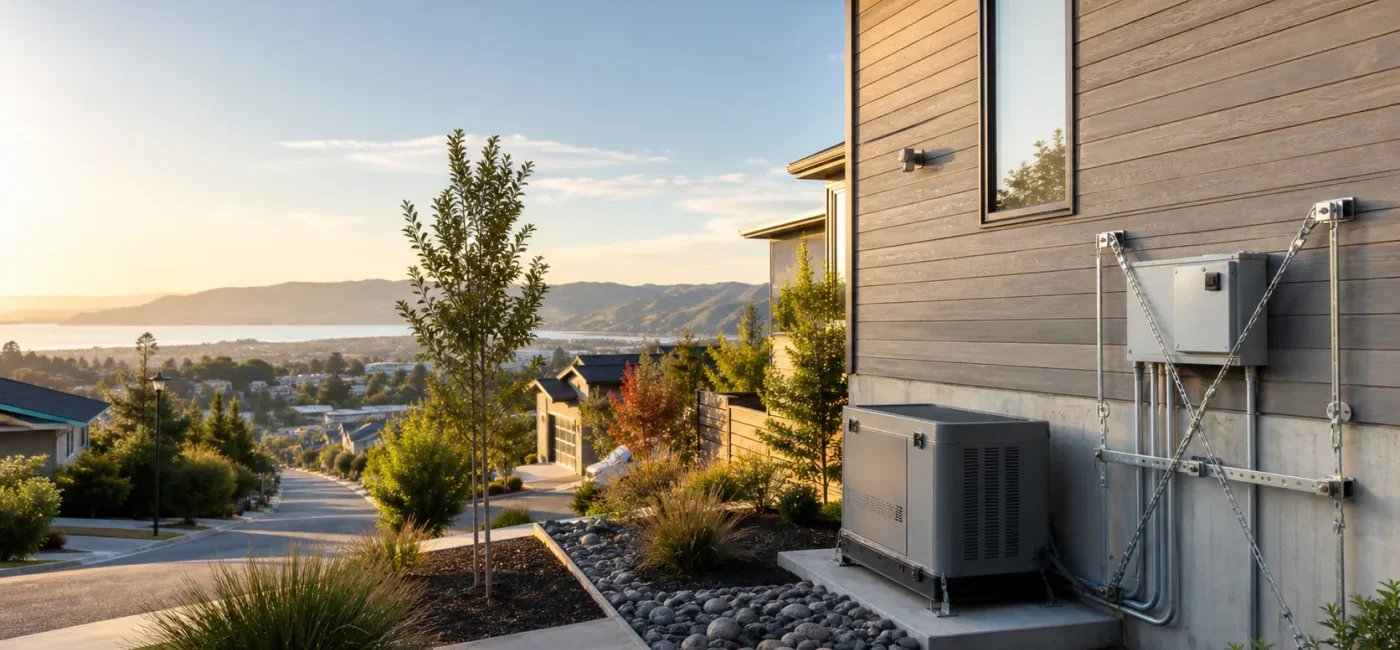
Bay Area Earthquake Risk Rises to 74%: A Practical Readiness Guide
Smartor 편집팀
September 3, 2026

The newly reported 74% chance of a magnitude 6.7 or larger earthquake in the San Francisco Bay Area during the next 30 years is not a prediction that a quake is imminent. It is a long-range probability estimate. NBC Bay Area and ABC News, citing U.S. Geological Survey experts and calculations, reported that the regional probability has risen from 72% in the 2014 forecast. The Hayward–Rodgers Creek fault system carries the highest reported individual probability at roughly 34%, while the San Andreas fault is now estimated at about 25.5%, a 3.6-percentage-point increase from the earlier forecast.
The useful response is not panic. It is to reduce the risks you can control: falling furniture, family communication, water and medication, utility safety, insurance records, and alternate transportation. A regional probability does not mean that a particular home has a 74% chance of being damaged, and it does not identify a date. It does reinforce a practical reality for residents, commuters, schools, and businesses: earthquake readiness in the Bay Area should be a current household task, not a someday project.
Major Bay Area news outlets reported an updated USGS calculation of the region’s large-earthquake probability. NBC Bay Area said USGS geophysicist Kevin Milner participated in both the earlier work and the new calculation. The resulting 30-year probability for a magnitude 6.7 or larger Bay Area earthquake was reported at 74%, compared with 72% in the 2014 forecast. ABC News reported the same regional estimate and fault-level figures.
This kind of long-range probability is not a weather forecast for a particular day. Scientists use evidence such as past earthquakes, fault slip rates, interactions among faults, geologic observations, and the passage of time in probabilistic models. As a 30-year window moves forward without a large rupture, estimates for some faults can change. That does not mean tectonic stress follows a countdown clock or will be released on schedule.
The USGS summary of the third Uniform California Earthquake Rupture Forecast, known as UCERF3, explains an important change in modern modeling. Faults are not treated only as isolated lines. One earthquake can rupture multiple connected fault segments. Incorporating those multifault scenarios lowered some estimates for moderate earthquakes while increasing the modeled likelihood of larger events. That background matters more than any single headline number because actual losses depend on the fault, soil, buildings, water systems, bridges, power, fire, and communications.
The Hayward–Rodgers Creek system commands attention not only because its probability is the highest, but also because it lies near dense communities and essential infrastructure in the East Bay and North Bay. A major rupture could produce direct shaking along with BART and road inspections, power outages, broken water lines, fires, communications congestion, and school or workplace closures. The San Andreas system, extending along much of California, produced the 1906 San Francisco earthquake and the 1989 Loma Prieta earthquake.
First, 74% is a conditional, regional, long-term probability. It does not mean a specific home has a 74% chance of being destroyed. Address-level risk varies with distance from faults, soil, liquefaction and landslide susceptibility, building age, construction type, and retrofit status.
Second, the change from 72% to 74% is two percentage points. It is a relative increase of about 2.8%, not a doubling or an explosion in risk. The earlier forecast already described a high long-term probability. The new calculation renews the case for practical preparation.
Third, individual fault probabilities cannot simply be added. Fault events are not independent coin tosses. Ruptures can involve connected segments, and the regional model accounts for dependencies and overlap that simple arithmetic would miss.
Fourth, magnitude and damage are not the same thing. Magnitude measures energy released at the source. Shaking and damage at a particular place depend on distance, depth, soil, and construction. A smaller nearby earthquake can shake one neighborhood more strongly than a larger distant event.
Fifth, a long-term forecast is not an alert. Earthquake early-warning systems detect an earthquake after it begins and may provide seconds of warning before strong shaking arrives. They do not predict an earthquake days in advance. When an alert arrives, use the time to protect yourself, not to record video or run outside.
Older wood-frame homes with crawl spaces may need an evaluation of their foundation connections and short cripple walls. Unreinforced masonry, brick chimneys, and heavy roofing can create additional hazards. An owner should not judge structural safety from appearance alone; consult a licensed professional or a local retrofit program about the right scope. Renters may not control structural work, but they can secure furniture and televisions, prepare communications and insurance, and ask the property manager about water-heater restraint, gas safety, and exits.
Multiunit buildings may face elevator shutdowns, dark stairwells, powered garage doors that will not open, damaged sprinklers or water lines, and falling exterior materials. Ask management about emergency procedures, stair locations, assembly points, the limits of backup power, and resident communications. People who cannot use stairs easily should create a personal assistance plan with trusted neighbors and management before an emergency.
Cellular calls may be congested after a major earthquake. Learn the school’s reunification location, authorized-release rules, identification requirements, and emergency contacts. Do not automatically drive to campus, where extra traffic could obstruct emergency vehicles and buses. Teach children to protect their heads and necks under a desk and follow staff instructions.
BART, Caltrain, buses, ferries, and bridges may pause for safety inspections. Identify a safe waiting place and an alternate route between work and home, especially if a bay crossing is unavoidable. Agree on what the family will do if no one can communicate for several hours. Keep walking shoes, water, a compact flashlight, and a charged power bank in the car, but avoid parking under buildings, elevated roadways, or power lines after shaking.
Employee safety and business continuity belong in the same plan. Secure shelving, server racks, gas cylinders, and overhead equipment. Assign authority for utility decisions and define how everyone will be accounted for after evacuation. Maintain offsite backups for payroll, transactions, and customer communications. Test which essential work can continue remotely if the building is inaccessible, and never publish an unverified reopening time.
Mobility devices, hearing-aid batteries, chargers, refrigerated medicines, oxygen equipment, and service-animal supplies should be added to a standard kit. Ready.gov advises wheelchair and walker users to lock wheels, when applicable, then bend over and protect the head and neck. Do not change a medication or create an improvised surplus; ask a clinician, insurer, and pharmacy about emergency refills and safe storage.
Start with heavy frames, mirrors, shelves, and tall furniture above places where people sleep or spend time. Move heavy items down and anchor bookcases, dressers, and televisions using hardware appropriate for the wall structure. Add latches to cabinets that hold glass or dishes. Renters should check lease and management rules before drilling, while beginning with permitted straps, safer furniture placement, and lower storage.
Broken glass can make walking barefoot dangerous. Store sturdy-soled shoes, gloves, and a flashlight within reach. Use battery lighting before candles after an earthquake because an unseen gas leak can turn an open flame into a fire hazard. Test batteries on a schedule and replace any that leak.
Choose a household meeting place, a neighborhood meeting place, and one out-of-state contact. Texting may work when voice networks are congested, so agree on a short format: “safe / current location / next move.” Put a contact card in each child’s bag and each adult’s wallet without listing Social Security numbers or account passwords. Assign someone to handle each pet.
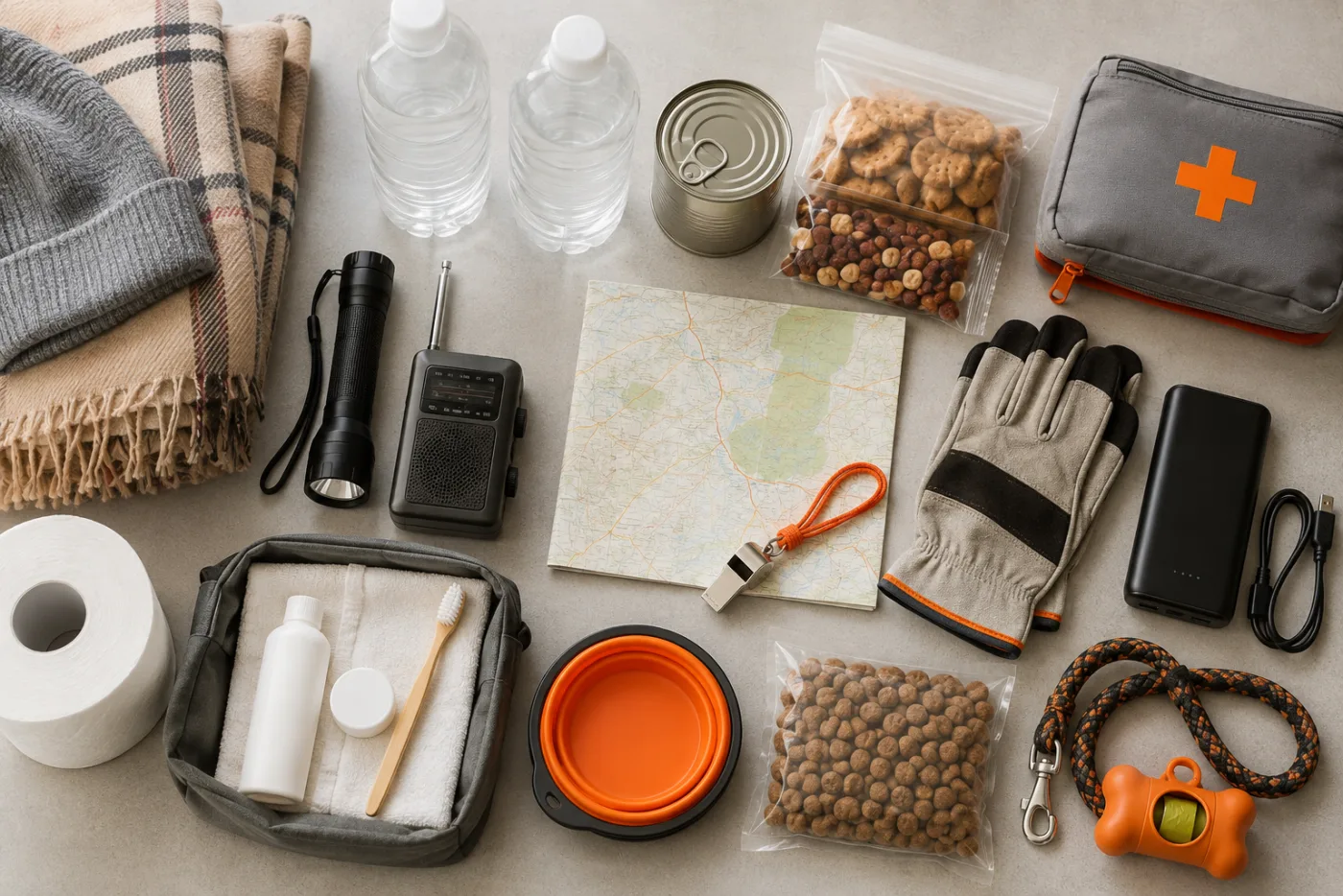
Ready.gov recommends a kit with food and water for several days, a flashlight, fire extinguisher, and whistle. You do not need to buy everything at once. Add supplies each week based on household size, infants, allergies, diabetes, pets, and foods that can be eaten without cooking. Date and rotate food and water to reduce waste. Keep power banks charged and include compatible cables.
Photograph the location of gas, electrical, and water controls and make sure responsible adults can reach them. Do not shut off gas merely because shaking occurred. If you smell gas, hear escaping gas, or see damage, avoid flames, switches, and vehicle ignition. Leave the area and contact the utility emergency line or 911. Follow the provider’s instructions, and have a qualified professional restore service after it has been shut off.
California residents should review earthquake-alert and Wireless Emergency Alert settings. If using an app, verify location permission, notifications, and any Do Not Disturb exception. No system will alert for every quake at every location. If shaking begins without an alert, Drop, Cover, and Hold On immediately. Do not cross a hazardous room to retrieve a phone.
Read whether your homeowners or renters policy excludes earthquake damage. When comparing earthquake coverage, examine the building, personal property, and loss-of-use limits; whether the deductible is a percentage or dollar amount; and treatment of masonry, exterior structures, code upgrades, and vehicles. Ask the carrier or a licensed professional for written explanations before buying.
Photograph or record each room and keep receipts, models, and serial numbers for valuable property. Store encrypted copies in the cloud and outside the home. Smartor’s home inventory and disaster-recovery guide provides a practical documentation sequence. Do not place identity documents in a public link or casual group chat.
Stay inside and Drop where you are. Cover your head and neck with one arm and hand. If a sturdy table or desk is nearby, crawl underneath and Hold On so you can move with it. If no shelter is close, protect your head and neck beside an interior wall away from windows and tall furniture. Running toward stairs or exits exposes you to falling glass and objects.
If no large object is about to fall onto the bed, remain there, turn face down, and cover your head and neck with a pillow. Jumping into a dark room with broken glass can be more dangerous. This is why removing overhead hazards and keeping shoes and lighting within reach matters.
Move to an open area away from walls, windows, signs, trees, streetlights, and power lines. Get low and protect your head and neck. The area immediately outside a building can be especially dangerous because glass and exterior materials may fall. Near the coast, long or strong shaking can be a natural tsunami warning; after shaking stops, move inland or to higher ground without waiting for a digital alert.
Reduce speed, pull over in a safe area, stop, and set the parking brake. Avoid bridges, overpasses, tunnel entrances, power lines, signs, and buildings. Afterward, watch for damaged pavement and emergency traffic. Obey closures while bridges and roads are inspected, and never record video while driving.
Current earthquakes and shaking: Use the USGS Earthquake Hazards Program map for event time, magnitude, location, and revisions. Initial automatic magnitudes can change as analysts receive more data, so revisit the official event page instead of relying on a screenshot.
Fault, liquefaction, and landslide zones: Use the California Geological Survey’s EQ Zapp and official regulatory maps. A mapped zone is not a structural inspection of an individual home. For a purchase, remodel, or retrofit, combine maps with natural-hazard disclosures, local building-department information, and a licensed professional’s evaluation.
Household actions: Ready.gov explains what to do before, during, and after an earthquake. The Earthquake Country Alliance’s Seven Steps organizes work into securing space, planning, supplies, financial protection, safe actions, communications, and recovery.
Transportation and public services: Bookmark official BART, Caltrain, 511 Bay Area, city and county emergency-management, and utility status pages. Search advertisements and unofficial accounts can resemble government sources, so verify the domain and account identity before acting.
No. A 74% probability is high but not certain. The remaining probability is not a reason to ignore preparation. Use the forecast to reduce exposure and vulnerability rather than trying to guess a date that scientists cannot provide.
No. The absolute change is two percentage points, and the relative increase is about 2.8%. The earlier regional probability was already high. The update is a reminder to refresh practical readiness, not evidence of a sudden doubling.
No location is made safe by distance from one fault alone. Strong shaking can extend well beyond a fault trace, while liquefaction, landslides, fires, and disruptions to water, transportation, power, and communications can spread across the region.
Animal behavior is not a reliable earthquake-prediction tool. Prepare a carrier, leash, water, food, medication, a recent photo, and current microchip and contact records instead.
Not automatically. Doorways in modern buildings are not inherently stronger, and a swinging door or moving people can create hazards. Ready.gov and earthquake-safety organizations generally recommend Drop, Cover, and Hold On under a sturdy table when one is nearby.
Usually not if you are indoors. The alert may provide only seconds before stronger shaking. Drop, Cover, and Hold On immediately unless a location-specific safety procedure directs otherwise.
No. Follow utility guidance and act when there are signs of a leak or damage. Avoid flames, switches, and ignition sources, leave the area, and contact the utility emergency line or 911. Once service is shut off, a qualified professional may need to restore it.
Most standard policies exclude direct earthquake damage, but contracts vary. Review separate earthquake coverage, deductibles, contents, and additional living expenses. Damage such as a subsequent fire may be treated differently depending on the policy and state law, so request a written explanation.
Yes. Anchor permitted furniture and televisions, store heavy objects low, prepare supplies, shoes and lighting, and examine renters and earthquake coverage. Ask management about stairs, assembly areas, powered garage doors, backup power, and resident accountability.
A single regional probability is not enough to make a relocation decision. Consider address-level soil and hazard maps, the building’s construction, retrofit options, insurance, work, school, and family needs. During a real-estate transaction, review natural-hazard disclosures and consult licensed professionals when appropriate.
The Smartor Editorial Team turns public scientific information and government safety guidance into practical checklists. Earthquake probabilities do not predict dates. Building retrofits, insurance, and medical decisions should be reviewed with the appropriate licensed professional for your situation.
브라우저 메뉴에서 앱 설치 또는 홈 화면에 추가를 선택해 주세요.