
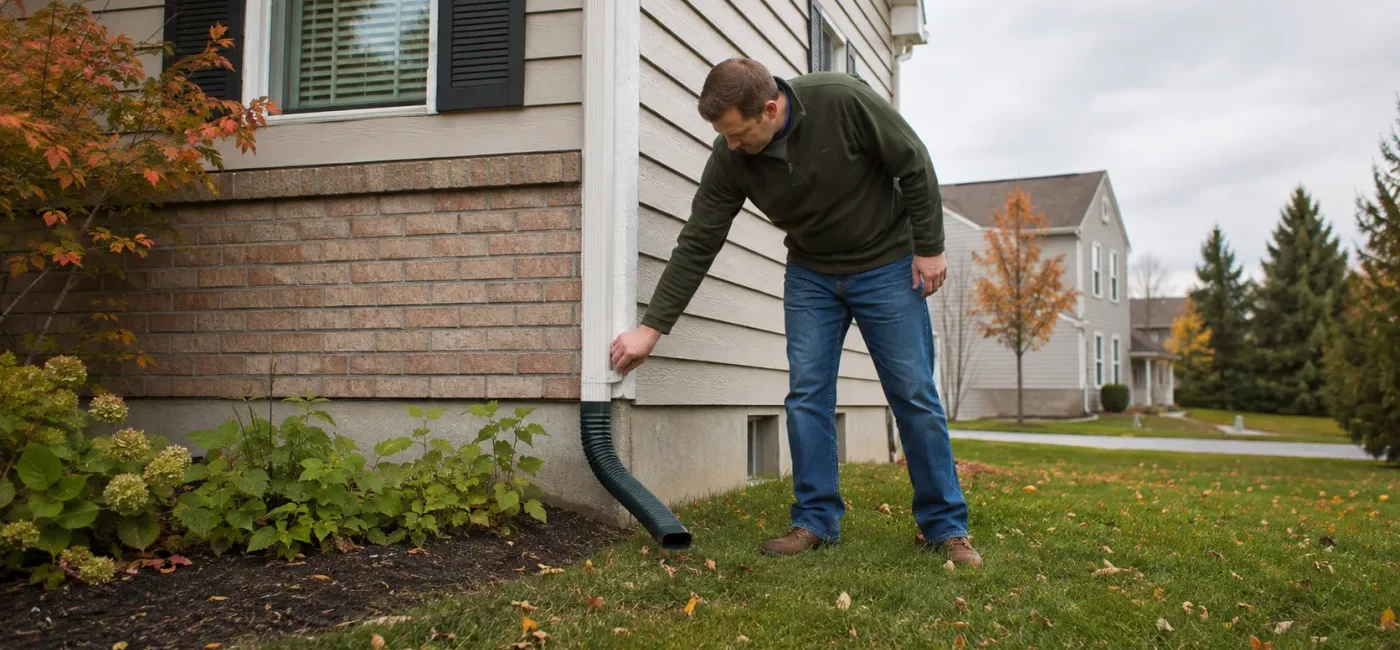
It is much easier to trace rainwater before it gets inside than to diagnose a wet basement after a storm. In early fall, leaves and small debris can expose weak points in the route from the roof to the ground. Gutters, downspouts, surface grading, window wells, exterior drains, and a sump pump should be treated as one drainage system. A blockage or disconnection at one point can send water down siding, collect it beside the foundation, or funnel it toward a low window, stairwell, crack, or utility penetration.
Ready.gov includes clearing drains and gutters, considering check valves, and considering a sump pump with a battery among its flood-preparation steps. That does not mean every house needs the same equipment or repair. Soil, foundation type, local codes, public stormwater connections, and neighboring grades all matter. This guide gives homeowners and renters a practical, ground-level inspection sequence, a documentation method, and clear signs that call for a professional. It is general educational information, not individualized structural, plumbing, electrical, legal, or insurance advice.
Follow the whole water path, not just the clog
A drainage check begins at the roof and ends where water is legally and safely released or absorbed. A typical path is roof surface → gutter → downspout → extension or approved drainage connection → safe discharge area away from the house. Water should not turn back toward siding, the foundation, a window well, basement steps, or the garage door.
- At the top: Look for leaves, pine needles, small branches, and visibly sagging gutter sections.
- Along the wall: Check elbows, seams, and mounting straps for gaps or movement.
- At the outlet: Make sure soil, mulch, snow, toys, or stored objects do not block the opening.
- Across the ground: Look for depressions, erosion, sediment trails, or persistently wet strips that lead back toward the house.
- Inside: Document water lines, white mineral deposits, peeling paint, musty odors, and damp carpet edges.
Dry-weather photos cannot reveal every problem. If conditions are safe, observe drainage from the ground or through a window during a light rain. Stop the inspection during lightning, high winds, a flood warning, or any condition that makes outdoor surfaces unsafe. Do not climb onto a wet roof or ladder.
What to bring for a 30-minute inspection
A phone camera, gloves, flashlight, small bucket, tape measure, and notes app are enough for a basic check. This guide does not ask you to climb onto the roof or clean high gutters from a ladder. Work at height, near overhead wires, or on steep roofing belongs with an appropriately equipped and insured professional.
- Start at the lowest indoor level. Photograph the basement, crawlspace entrance, floor drain, sump pit, and utility area before the next storm.
- Walk one full exterior lap. Give every downspout a number in your notes and record where it releases water.
- Pause at low points. Inspect window wells, basement stairs, the garage entrance, patios, and the area around outdoor equipment pads.
- Record direction, not a guessed universal rule. Note whether the water actually moves away from the foundation and mark every place where it returns.
- Repeat photos after the next safe rain. Use the same angle so you can compare erosion, ponding, and repairs.
Step 1: Inspect gutters and downspouts from the ground
You can spot many gutter problems without seeing inside the trough. Dark overflow lines on the gutter face, gouged soil below a corner, drips that continue long after rain, a sagging run, and staining beneath a seam can indicate a blockage, poor pitch, or leak. A downspout that has pulled away from the wall or has been crushed may not carry the expected flow.
Tasks you can do safely at ground level
- Wear gloves and remove leaves or debris from the ground-level outlet.
- Reconnect a loose ground extension and position it so it does not create a trip hazard.
- Confirm that the outlet does not point toward the foundation, a window well, a neighbor’s property, or a walkway that may freeze.
- If a downspout feeds a rain barrel, check that its overflow route is open and its insect screen is intact.
- On a dry day, use a small amount of water at the low extension—not a forceful roof spray—to check for a blocked outlet or leaking connection.
Local rules determine where downspouts may discharge. One city may permit or require a storm-drain connection while another may require disconnection from a combined sewer. Check with your city or county public works or permitting office before changing an underground connection. Simply directing water to a neighbor’s yard or public sidewalk can create erosion, icing, and liability problems.
Step 2: Check grading, low openings, and foundation clues
Clean gutters are not enough if released water rolls back toward the building. Walk the perimeter and look for mulch piled against siding, soil that has settled into a bowl, flattened grass, sediment trails, or splash marks. Note gaps where a walkway meets the foundation and locations where faucets, cables, gas lines, or other utilities penetrate the wall.
Adding sealant may hide a surface gap without fixing the water source. Correct obvious drainage and blockage issues first. If a crack is widening, forms a stair-step pattern, accompanies a bowed wall, or changes over time, ask a qualified foundation or structural professional to evaluate it. If water is near an electrical panel, outlet, furnace, boiler, or other powered equipment, do not step into wet areas or touch the equipment. Contact an electrician, plumber, utility, or emergency service as appropriate.
Window wells and below-grade entrances
Remove leaves, trash, and loose soil from a window well and check whether its drain is visible. If there is a cover, look for cracks and a gap against the wall. A cover over a bedroom egress window must still allow emergency escape from inside. Clear the drain at the bottom of basement stairs without pushing debris deeper into the line. Repeated filling calls for diagnosis of the drain line, pump, surface grade, and possible sewer backup—not repeated scooping alone.
Step 3: Test the sump pump and battery backup
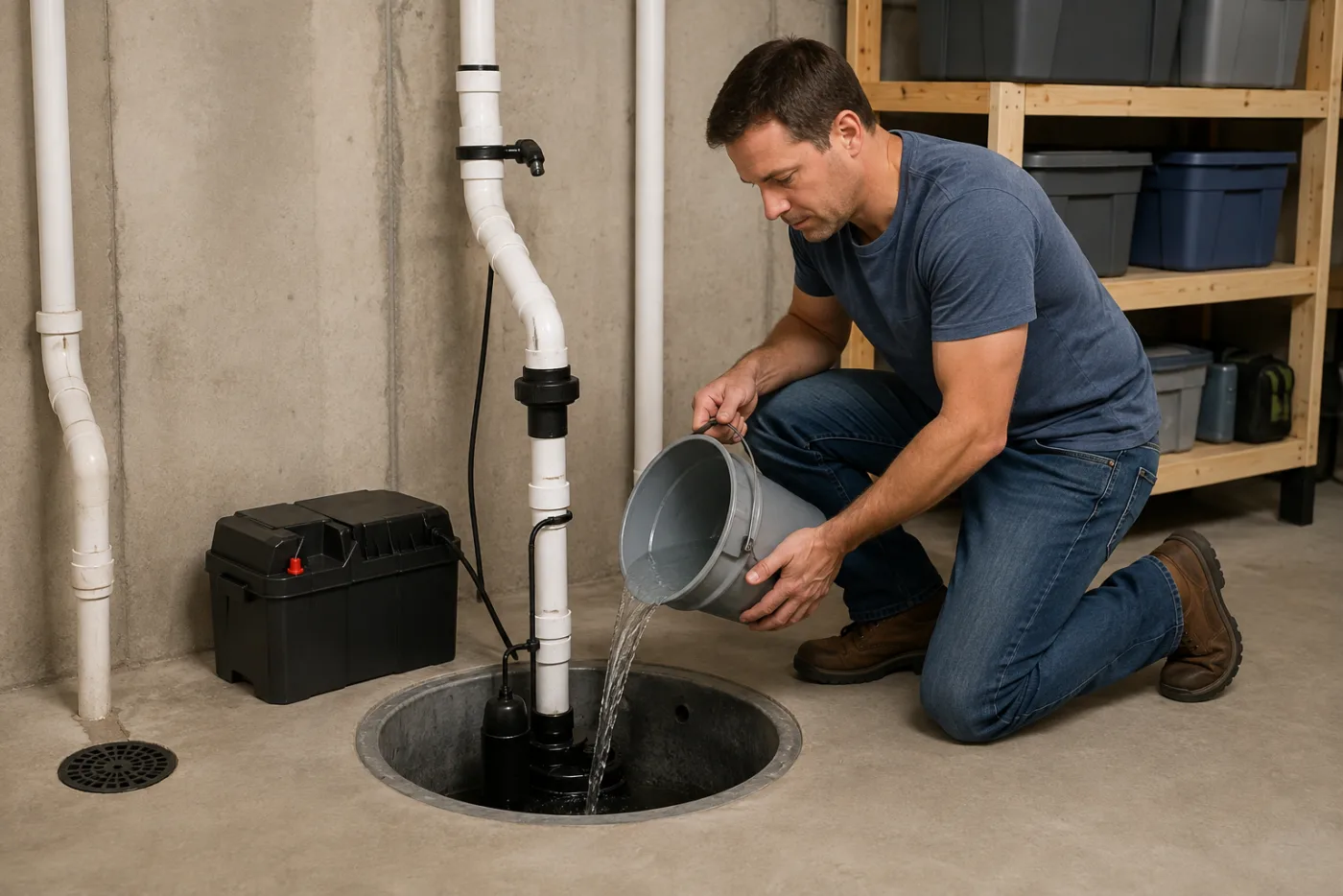
If the home has a sump pump, verify actual operation before heavy rain. The manufacturer’s manual takes priority, and you should not force open a sealed cover or handle unfamiliar electrical components. During a basic visual check, look for a damaged power cord, objects that block the float switch, excessive debris in the pit, and a loose discharge pipe.
- Make sure the floor, your hands, and the area around electrical connections are dry. Move stored items away from the pit.
- Visually inspect the plug and dedicated outlet. Do not rely on an improvised extension cord or touch a wet plug.
- If the manual permits it, slowly add clean water to the pit and watch for the pump to start automatically as the level rises.
- Confirm that the pump stops as the water drops and that there is no grinding, violent vibration, or burning odor.
- Check the exterior outlet for actual flow. A motor sound without water movement is not a successful test.
- For a battery backup, follow its manual to check status lights, alarm testing, and the battery service or replacement procedure.
Do not improvise a power-outage test by modifying wiring or repeatedly switching breakers. Do not handle a swollen or leaking battery or heavily corroded terminals. Call the equipment service provider. A pump that never starts, runs continuously, or cycles every few seconds should be professionally diagnosed, including its check valve, float, pit size, and discharge line.
Step 4: Move vulnerable belongings and documents up
Every drainage system can fail, so add a second layer of protection. Move cardboard boxes, photographs, electronics, seasonal clothing, paint, and household chemicals off the basement floor and onto stable shelving. Elevating items a little does not make them safe from a major flood, but it can reduce damage and cleanup after a shallow leak or minor backup.
- Keep insurance policies, identification copies, and home-repair receipts in a waterproof container, with password-protected digital copies.
- Take dated photos or a video of all basement walls, the utility area, and stored property.
- Record model and serial numbers for valuable equipment and keep purchase records where possible.
- Show household members the main water shutoff. Gas and electrical shutoffs should follow utility, manufacturer, or professional instructions.
- Save contacts for the pump service company, plumber, property manager, insurer’s claims line, and local emergency alerts.
Use the emergency financial records kit guide to organize policies, account information, IDs, and backups. If heating equipment shares the same basement space, pair this inspection with the fall heating startup checklist, but never energize equipment that has become wet.
Practical example: One basement corner gets wet only in rain
Suppose a two-story house develops a damp patch at the northeast basement corner only during strong rain. Begin indoors by photographing the height, width, and starting point of the mark. Outside at the same corner, you find a disconnected downspout extension, a crater in the mulch directly below its outlet, and a window well packed with leaves.
Instead of immediately buying a whole-wall waterproofing package, narrow the cause safely. Reconnect the ground extension, clear the outlet and window well, and route discharge in a locally permitted direction. Observe the same locations during the next light rain and compare indoor moisture. If water continues through a crack or the symptoms persist, bring the dated photos and notes to a drainage or foundation professional. The record helps that person understand exactly when, where, and under what conditions the problem appears.
Eight common mistakes
- Climbing onto a wet ladder or roof: The fall hazard is more immediate than the drainage repair.
- Ending a downspout beside the foundation: A clear pipe can still release all roof runoff where it returns to the wall.
- Dropping an extension across a walkway: It may create a trip hazard now and an ice hazard later.
- Covering every crack with sealant: That can obscure a drainage or structural cause without correcting it.
- Assuming pump noise equals pumping: Confirm that water reaches the exterior discharge point.
- Running a portable generator in a garage or near windows: Carbon monoxide can enter the home. Follow manufacturer and government guidance and operate portable generators outdoors only.
- Expecting last-minute flood insurance to start immediately: Ready.gov says an NFIP policy typically takes up to 30 days to go into effect. Ask the insurer about policy-specific conditions and exceptions.
- Skipping pre-repair documentation: Take necessary emergency steps first, but preserve photos and receipts when it is safe to do so.
A renter’s version of the checklist
Renters should document a blocked drain, stained wall, musty odor, or wet floor and notify the landlord or property manager in writing instead of altering roofing, plumbing, or underground drainage. Include before-and-after-rain photos, the room and exact location, the time water appeared, proximity to electrical equipment, and any damage to personal property. Use the maintenance and emergency contacts in the lease when urgent action is needed. Rights and responsibilities vary by state, city, and lease, so confirm legal questions with a local housing agency or qualified professional rather than relying on a general rule.
The day-before-rain checklist
- I checked the forecast, alerts, and local emergency information.
- I looked from the ground for sagging gutters, stains, or overflow clues.
- Downspout outlets and ground extensions are open and connected.
- Discharge does not point toward the foundation, a window well, walkway, or neighboring property.
- Window wells and basement-stair drains are clear of surface debris.
- The sump pump starts automatically and actually discharges water.
- I checked backup-battery status and alarms according to the manual.
- Cardboard boxes, documents, and valuables are off the basement floor.
- I photographed existing conditions and completed repairs.
- Professional, property-management, and insurance contacts are available offline.
FAQ
How many feet from the house should a downspout extension end?
There is no single distance that is right for every home. Soil, slope, foundation type, underground drainage, and local rules change the answer. Focus on whether discharged water travels away without returning to the foundation or window well and without creating a hazard for a neighbor, sidewalk, or street. Ask a local professional when ponding repeats.
Do gutter guards eliminate cleaning?
No. Guards may reduce large leaves, but seeds, grit, pine needles, or debris can still collect, and water can pass over the guard in the wrong place. Continue watching for overflow and sagging, and follow the product’s inspection instructions.
Can I test a sump pump when it is not raining?
Many pumps can be tested with clean water using the manufacturer’s approved method, but procedures vary. Follow the manual and do not dismantle a sealed lid, battery system, or electrical connection you do not understand.
Does homeowners insurance cover every type of basement flooding?
No general answer applies. Ready.gov states that standard homeowners policies do not cover flooding. Rain entry, groundwater, sewer backup, and a broken plumbing line may be treated differently by a policy. Ask the insurer in writing about cause-specific coverage, deductibles, exclusions, and optional endorsements. This guide is not legal or insurance advice.
Water is already inside. Should I touch the pump or electrical panel?
No. Electrical equipment in or near water can cause electrocution. If you cannot shut power off from a dry, safe location with certainty, stay away and follow instructions from emergency services, the utility, an electrician, or property management. Floodwater may also contain contaminants, and wet buildings can develop mold.
Will a rain garden solve a wet basement?
A properly located rain garden can collect runoff from a roof, driveway, or street and let it soak into soil, but it is not a universal basement-water fix. EPA guidance stresses proper siting and checking underground utilities before digging. Do not place one close to a foundation or in poorly draining soil without local design guidance. Confirm soil, plants, setbacks, and permits with local resources.
Official resources consulted
- Ready.gov — Floods: preparation, response, and recovery
- FEMA Flood Map Service Center — official flood hazard maps
- U.S. EPA — Soak Up the Rain: Rain Gardens
- CDC — About Mold and Health
This article provides general education for U.S. home drainage and water-damage prevention. Structures, plumbing, electrical systems, insurance policies, and rental obligations vary. Use qualified local professionals and authorities for hazardous, recurring, or property-specific problems.