Hotel Bed Bug Inspection Guide: Room, Luggage, and Home Checklist
Smartor 편집팀
September 14, 2026

Putting your suitcase on the bed as soon as you enter a hotel room is convenient, but changing that one habit can reduce the chance of bringing bed bugs home. Bed bugs can hitchhike in luggage, clothing, and other belongings regardless of how clean or expensive a property appears. A short room inspection, a designated place for luggage, and a consistent unpacking routine can make travel safer without turning every stain into a crisis.
This guide explains what to inspect, how to respond calmly if you find a suspicious sign, and how to handle clothing and luggage when you return home. A quick inspection cannot guarantee that a room is free of bed bugs, and bites alone cannot confirm an infestation. The practical goal is to limit contact, preserve useful evidence, involve the property promptly, and finish your prevention steps before luggage reaches your bedroom.
This article provides general travel and household-safety information. It is not a medical diagnosis or a customized pest-control plan. Seek medical care for trouble breathing, swelling of the face or throat, a severe allergic reaction, or signs that scratched skin may be infected. If you suspect bed bugs at home, follow local requirements and pesticide labels and consider a qualified pest-management professional.
Bed bugs are small, flat insects that feed on the blood of people and animals. Adults are generally reddish brown; younger bugs and eggs are smaller and lighter, which makes them harder to see. They do not fly or jump, but they can crawl into seams and narrow spaces and travel in bags, clothes, bedding, and furniture. The Centers for Disease Control and Prevention says bed bugs are not known to spread disease. Their bites may still cause itching, lost sleep, allergic reactions in some people, and secondary skin infections after scratching.
A bed bug problem does not prove that a guest or property is dirty. Unlike pests attracted to food debris, bed bugs can arrive with ordinary human movement. A luxury hotel, a newly renovated room, or an immaculate rental is not automatically risk-free. The point of an inspection is not to judge the property. It is to reduce contact between luggage and likely hiding areas and to notice visible warning signs early.
Mosquitoes, fleas, contact dermatitis, and other allergies can create marks that look similar to bed bug bites. Reactions also vary by person and may not appear at the same time; some people show little or no visible response. A row of itchy spots after sleeping is therefore not proof by itself. Try to find physical evidence in the room or luggage, and ask a health professional to assess concerning skin symptoms.
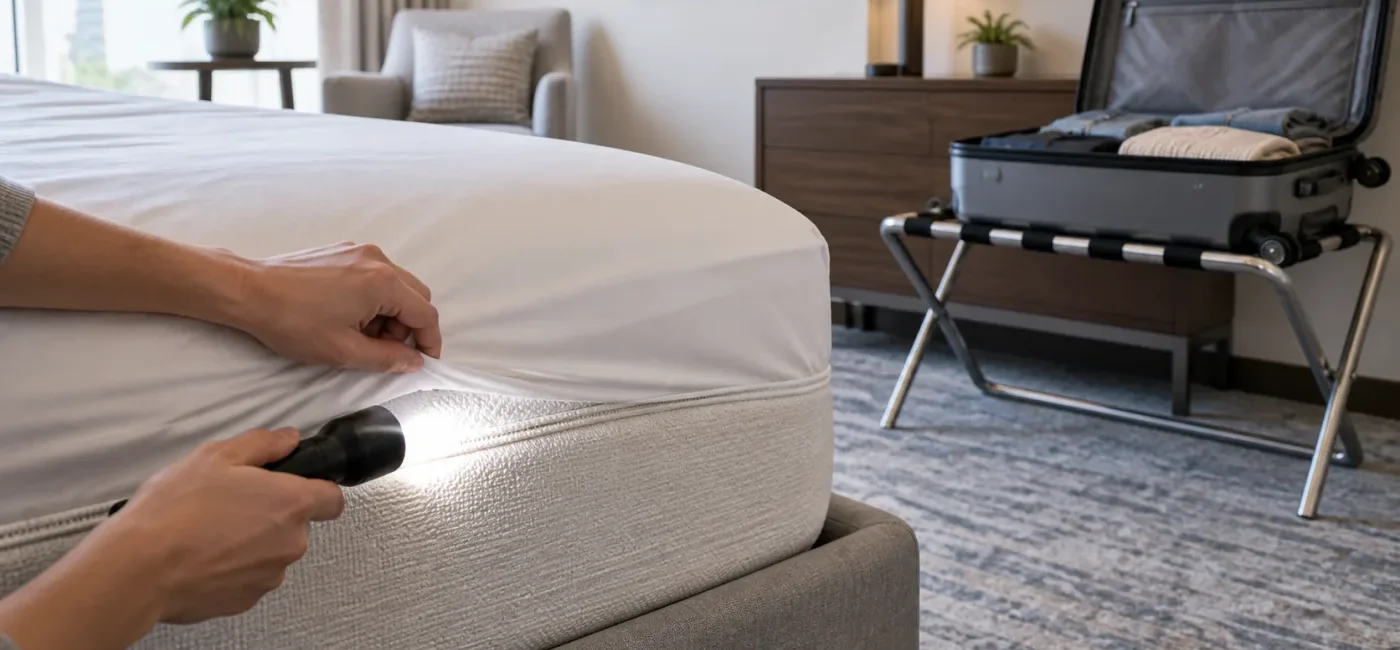
Turn on the lights and open the curtains so you can see clearly. Until the inspection is complete, keep suitcases off the bed, carpet, upholstered chairs, and sofa. A dry bathtub or hard bathroom floor is often a practical temporary location. A bathroom is not a guaranteed pest-free zone, but it usually contains less fabric and gives you a surface that is easier to inspect and clean. Keep bags zipped and away from walls.
Use your phone flashlight or a small flashlight. Do not scatter pillows and sheets around the room. At one corner, slowly pull back the sheet and inspect the mattress piping, stitching, labels, handles, and folded edges. Pay particular attention to the head of the bed, which is closest to where a sleeping person remains for hours. Do not push bare fingers into hidden gaps; angle the light across the surface instead.
Do not pry a heavy wall-mounted headboard loose or dismantle hotel furniture. You could be injured or damage the room. Visually inspect the headboard edge, the gap at the wall, screw areas, bed-frame joints, and the nearest seams of the nightstand. If you plan to use a sofa bed, check cushion seams and folding points too. This is a quick risk screen, not a full professional inspection.
Possible signs include a live or dead flat bug, pale shed skins, tiny whitish eggs or eggshells, grouped dark spots on fabric or hard surfaces, and rusty or reddish stains on bedding. Dust, lint, mold, and ordinary marks can look similar from a distance. One dot should not trigger a firm conclusion. If something appears suspicious, photograph it close up and again with the surrounding area visible. Record the room number and the location where it was found.
If you find no obvious warning signs, a luggage rack is preferable to the bed, but inspect its straps, joints, and underside first. Pull it away from the wall and bed. Keep the suitcase closed when you are not using it. Rather than transferring every item into drawers, take out only what you need and keep the rest in sealed organizers or the zipped suitcase. That makes sorting easier when you return home.
Place worn clothing in a separate sealable bag so it does not mix with clean items. Treat the outside of any travel laundry liner as potentially exposed when you unpack. Keep shoes in a designated area on hard flooring instead of under the bed. Do not drape coats, daypacks, or tote bags across upholstered furniture. These small boundaries reduce the number of surfaces your belongings touch.
Physical luggage safety and account security are separate parts of the same trip. Before connecting at an airport, hotel, or café, review Smartor’s public Wi-Fi safety checklist to reduce unnecessary exposure of accounts and payment information.
If you see what appears to be a live bug, do not crush it with bare hands or fog the room with a personal pesticide. Ask management whether they want the specimen preserved. If it must be contained, avoid skin contact and use a clear sealed container or another method recommended by the property or a professional. The priority is a competent inspection. Before posting a definitive public accusation, preserve objective photos and the property’s response; accurate records help both safety decisions and any later dispute.
Bed bugs do not recognize room numbers. They may move through cracks, around utility penetrations, or with furniture and equipment, so crossing the hall or moving directly next door is not automatically sufficient. That does not mean the entire property is infested. Ask what inspection process the hotel uses and what alternatives it can offer. Keep your belongings contained and conduct your own visual check of the new sleeping area.
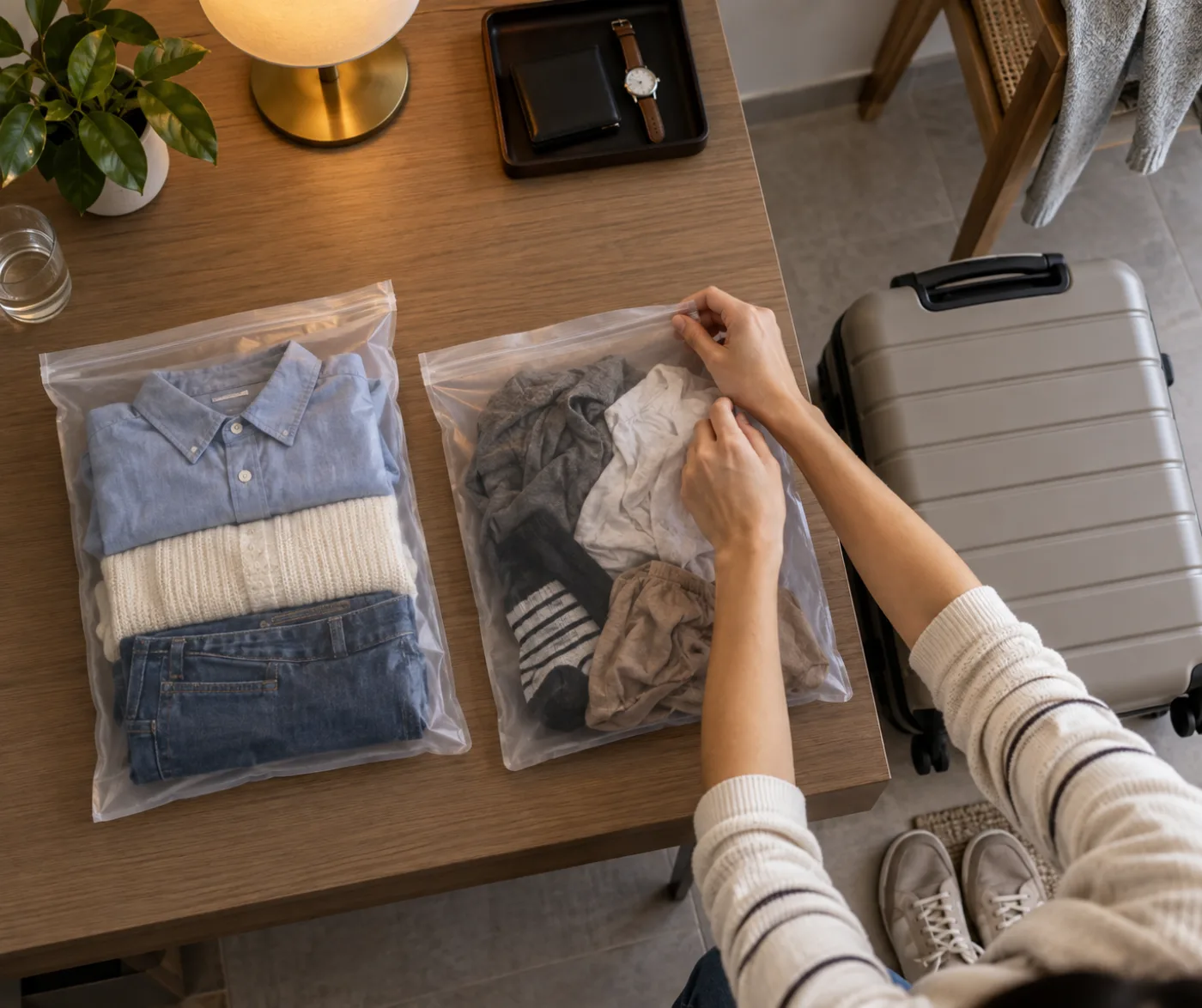
Even when you saw no evidence during the trip, a consistent unpacking routine adds a useful layer of prevention. Keep luggage off beds and sofas. Work on a bright, hard surface in a laundry room, garage, entry area, or another location that is easy to clean. In an apartment building, do not unpack in a shared hallway where belongings could obstruct neighbors or spread to common furniture.
Heat is useful in bed bug management, but “making something warm” is not the same as a controlled treatment. EPA guidance describes using a clothes dryer on high heat for suitable clothing and bedding. Dryer design, load size, starting moisture, and fabric tolerance all matter, so do not apply one time-and-temperature rule to every possession. Wet items take longer to heat, while a packed drum can prevent uniform airflow. Read care labels, use manageable loads, and get professional advice for valuable or heat-sensitive items.
A closed car in the sun or a black plastic bag outdoors is unreliable because you cannot assume every seam and the center of every item reached an effective temperature for long enough. Never place electronics, medicines, cosmetics, or batteries in a clothes dryer; heat can damage them or create a safety hazard. Freezing is also not as simple as briefly making an item cold. Results depend on the freezer’s actual temperature, exposure time, and the temperature at the item’s core. When you are unsure, seal the item and seek product-specific or professional guidance.
Your suitcase is still in the bathroom. At the mattress piping, you find several dark marks that do not wipe away and a pale cast skin. Leave the area intact, take close and contextual photos, and call the front desk. Ask for an on-site inspection and a room away from the original one. Seal the few items you removed and inspect the replacement room before opening your luggage.
Skin marks alone cannot identify the cause. Photograph the reaction and note when it appeared. Recheck the room, inform the property of your concern, and strengthen your unpacking precautions at home. Avoid scratching. If symptoms become severe or suggest infection or an allergic reaction, contact a clinician. Keep your language factual until evidence identifies the source.
Do not carry the bag into the bedroom. Keep it in the bright work area, seal nearby loose belongings, and take a photo. Contain or remove the insect without spreading it, following professional guidance when possible. Arrange accurate identification before covering beds and furniture with pesticide. Renters should also check their lease and local reporting rules before moving or discarding property.
If you are flying, do not let pest concerns create a separate checkpoint problem. Review the U.S. airport security and carry-on guide before packing any liquid product. Only bring a chemical when it is genuinely needed, and keep it in the original labeled container.
No. Bed bugs are not attracted by dirt or food scraps and can travel in ordinary belongings. A room’s appearance or nightly rate cannot confirm that it is pest-free. A short inspection is useful at every type of property.
No. Bite shape or arrangement cannot identify the source by itself. Other insects, irritation, and allergic reactions may look similar. Search for physical evidence and ask a medical professional to evaluate concerning symptoms.
Close the suitcase and seal loose items before moving so nothing is scattered. Request a replacement room away from the suspected room when possible, then inspect it. Ask whether the property can provide laundry support or a professional inspection.
Not unless the product label specifically permits use against bed bugs on that exact surface. Improvised spraying may expose people, damage materials, and still miss hidden bugs. Inspection, containment, appropriate heat for compatible items, and professional treatment when needed are safer components of a plan.
Usually not before a proper assessment. Isolate it, inspect seams and hardware, and choose a treatment compatible with the material. If disposal becomes necessary, follow local rules and package or mark the item so another person does not take it home.
The CDC says bed bugs are not known to spread disease. They can still cause itching, sleep loss, allergic reactions, and skin infection after scratching. Seek medical help for breathing problems, severe swelling, pus, warmth, fever, or redness that continues to spread.
At check-in, put luggage temporarily on a hard bathroom surface and use a flashlight to check mattress seams and the area near the head of the bed. After the inspection, keep your closed bag on an inspected rack away from the wall and separate worn clothing. If you find a suspicious sign, photograph it, notify management, contain your belongings, and request a room away from the original one. At home, keep the suitcase out of the bedroom, sort items by care instructions, use appropriate dryer heat only for compatible fabrics, and inspect zippers, seams, pockets, and wheels. The effective approach is not panic spraying; it is isolation, verification, documentation, suitable treatment, and follow-up.
브라우저 메뉴에서 앱 설치 또는 홈 화면에 추가를 선택해 주세요.
[…] Smartor 편집팀 September 14, 2026 Read this guide in English → […]