U.S. Construction Spending Falls 1.9% in September as Housing Slumps and Data Centers Grow
Smartor 편집팀
November 2, 2026

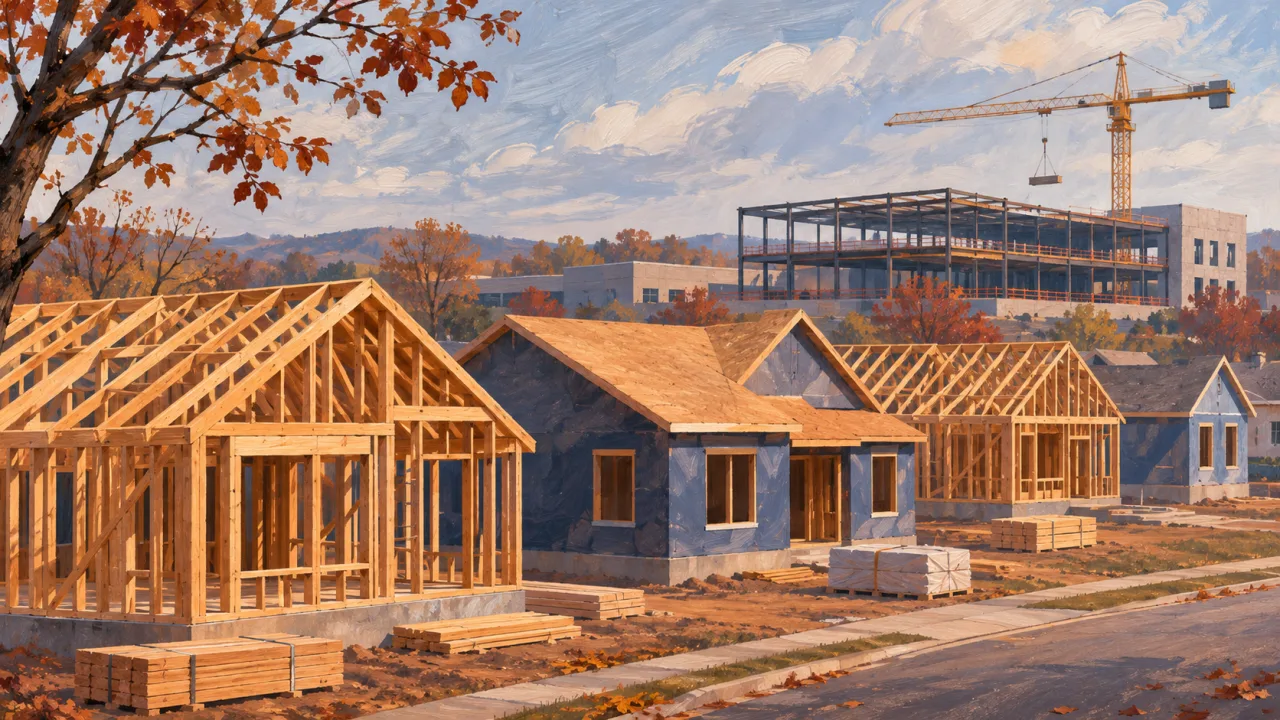
Featured image: AI-generated explanatory illustration of U.S. residential and nonresidential construction, not a photograph of a specific building site.
U.S. construction spending fell 1.9% in September to a seasonally adjusted annual rate of $2,186.1 billion, the Census Bureau reported on November 2. Private residential construction spending dropped 5.5% from August, while private nonresidential spending increased.
Total construction spending was 2.7% below its September 2025 level. The revised August estimate was an annual rate of $2,227.4 billion. Spending during the first nine months of 2026 totaled $1,649.6 billion, down 2.9% from $1,698.6 billion in the same period last year. The monthly figures are seasonally adjusted annual rates, rather than cumulative amounts spent during those months.
Private construction spending declined 2.4% from August to an annual rate of $1,639.3 billion. Residential spending fell to $848.8 billion from a revised $898.0 billion. Private nonresidential construction moved in the other direction, rising 1.1% to $790.6 billion.
In an analysis published the same day, the National Association of Home Builders identified a sharp pullback in remodeling as the main driver of the residential decline. Remodeling spending fell 13.0% from August and 18.0% from a year earlier, the association said. Spending on both single-family and multifamily construction was unchanged from the previous month, but was down 2.4% and 0.2%, respectively, from September 2025.
Data centers remained a source of growth in nonresidential construction. The NAHB said spending on those facilities rose 8.6% from August and 90.3% from a year earlier, accounting for 12.2% of total private nonresidential construction spending in September. The association linked the expansion to the buildout of artificial intelligence infrastructure.
Public construction spending was estimated at an annual rate of $546.8 billion, down 0.1% from August. Educational construction was virtually unchanged at $113.1 billion, while highway construction slipped 0.3% to $149.2 billion. The reported monthly changes in total public, educational and highway construction were within the Census Bureau’s margins of error and did not establish statistically significant increases or decreases.
브라우저 메뉴에서 앱 설치 또는 홈 화면에 추가를 선택해 주세요.