
Clothes Dryer Fire Safety Guide: Lint, Venting, and Maintenance Checklist
Smartor 편집팀
September 26, 2026

한국어판: 한국어로 읽기 →
If laundry takes much longer than it used to, the dryer or laundry room feels unusually hot, or clothes come out damp and musty, the problem may be more than an aging appliance. Restricted airflow between the lint screen and the outdoor exhaust can increase drying time and allow heat to build. The U.S. Fire Administration reports that failure to clean was the leading factor contributing to the ignition of home clothes-dryer fires from 2018 through 2020, accounting for 31%.
Dryer safety depends on four habits: clean the lint screen for every load, verify that exhaust air can leave the home, avoid improvised electrical or gas work, and stop using the machine when warning signs appear. This guide explains what U.S. homeowners and renters can check on electric, gas, vented, and heat-pump dryers—and when the work belongs to building management or a qualified professional.
Note: This is general home and fire-safety information, not an inspection or individualized electrical, gas, HVAC, or legal recommendation. Follow the appliance manual, local building and fire codes, and your lease. Have qualified professionals handle disassembly and repairs involving wiring, gas, or concealed exhaust systems.
“Cleaning the dryer” does not mean emptying only one screen. Follow the airflow path through three zones so an obstruction is less likely to be missed:
Lint can also collect inside the dryer cabinet, but opening appliance panels is not routine user maintenance unless the manufacturer specifically provides a procedure. Unplugging does not eliminate every risk: sharp metal, stored electrical energy, gas connections, and incorrect reassembly can still cause harm. Have internal accumulation evaluated by an appliance technician.
Remove lint before starting the dryer. Cleaning only after a load makes it easy for the next user to forget, so make “check before start” the household rule. Replace a screen that is torn, punctured, warped, or no longer seats correctly; damage can let more lint pass deeper into the appliance and duct.
Quick check: On some screens, water pooling instead of passing through apparently clean mesh can suggest a coating of residue. Screen materials differ, however. Do not attack the mesh with a stiff brush, bleach, or an unapproved chemical; check the model instructions first.
A short monthly observation makes gradual deterioration easier to notice. Compare similar loads: Are towels taking longer? Do clothes remain damp after a normal cycle? Is the top or side of the appliance much hotter than before? Does humidity or a lint odor remain in the room?
Smoke, sparking, a burning odor, repeated breaker trips, or a gas odor is not a “watch it for another cycle” situation. Stop using the appliance. Leave the building and call 911 for visible fire or smoke. If you smell gas, do not operate a switch or phone indoors; leave and call 911 or the gas utility’s emergency line from a safe location.
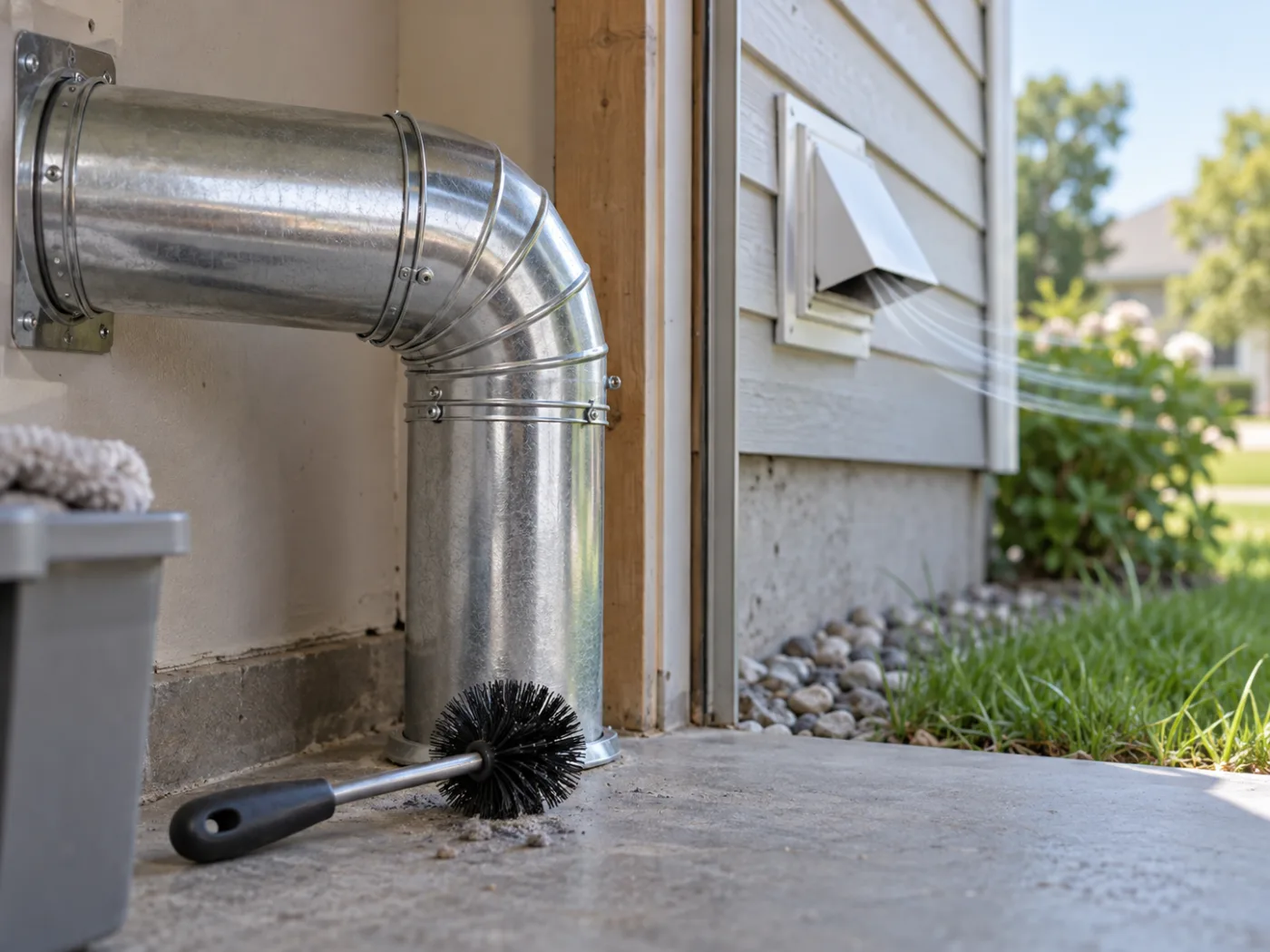
While the dryer runs, observe a safely accessible, ground-level exterior termination. The hood or flap should open and discharge warm, moist air. Keep hands out of the duct and away from hot or moving parts. Watch for insects and animals. If the exhaust ends on a roof or high wall, skip the ladder and hire an appropriate professional.
Do not add a fine insect screen to the outlet unless the approved installation specifically calls for it; fine mesh can collect lint and create a blockage. A nest, leaves, vegetation, ice, snow, or a flap painted shut can also restrict airflow. The exterior hood and duct must comply with the dryer instructions and local code.
Example: The lint screen is clean, but a towel load has increased from 40 to 75 minutes and the exterior flap barely moves. Raising the temperature or adding time masks the symptom. The safer response is to stop and have the exhaust path checked for a crushed connection, separated joint, obstruction, or excessive restriction.
A conventional vented dryer must discharge moisture and lint outdoors. Exhausting into an attic, crawlspace, wall cavity, garage, or living area can deposit moisture and lint where they do not belong. Duct material and installation must follow the appliance instructions and local code. Ask a professional whether an old or easily crushed connector should be replaced with an approved metal installation.
Do not pull a dryer forward by yourself as if it were light furniture. The appliance can be heavy, and moving it can damage the cord, gas connector, or duct. Do not tighten a gas fitting or improvise a leak test. Use a qualified gas professional where the work or local law requires one.
USFA advises plugging major appliances—including washers and dryers—directly into a wall outlet and never using an extension cord. An extension cord can overheat and start a fire. Stop use and request an electrical inspection if the plug does not fit snugly, the receptacle or cover is discolored, the cord is pinched or cracked, or there is a hot electrical smell.
A gas dryer also depends on normal combustion and an intact gas connection. Do not adjust a burner because you see soot or suspect an abnormal flame. A CO alarm is an essential warning device, but it does not maintain a fuel-burning appliance. Review our carbon monoxide alarm placement and testing guide, and keep professional service current according to the manufacturer and local requirements.
Washing does not necessarily remove every combustible residue. Items exposed to gasoline, paint thinner, cooking oil, massage oil, automotive or machine oil, wax, or cleaning solvents can be dangerous when heated. Follow the material label and appliance manual, and keep a questionable item out of the dryer until you have reliable handling instructions.
ENERGY STAR notes that a load needs enough drum space to tumble and allow hot air to circulate; an oversized load can take longer to dry. The opposite extreme is not efficient either—repeatedly drying one small item can use substantial energy for little useful tumbling. Match load size to the washer, dryer capacity, and manufacturer guidance.
Conventional gas and electric dryers usually send humid air outdoors through a duct. Heat-pump dryers generally reuse air in a closed loop and collect or drain condensed water, so they may not need an outdoor exhaust. ENERGY STAR says heat-pump dryers can use around 70% less energy than conventional dryers, although actual savings depend on purchase cost, usage, rates, and installation.
Ventless does not mean maintenance-free. A heat-pump model may have multiple lint filters, a heat exchanger or condenser, a water tank, and a drain line. Clean each part on the model’s schedule. Do not assume a filter or exchanger is washable; the manual controls because water can damage components on some models.
There is no single service interval that fits every home. The manual, duct length and bends, household use, pet hair, and changes in drying time all matter. These conditions justify an inspection:
Before hiring, ask for a written scope: Does the service include the lint-screen housing, connector, concealed duct, and outdoor hood? Does it include safe appliance disconnection and reconnection, gas work, or roof access? Ask about licensing and insurance where applicable and how airflow will be verified after cleaning. Be cautious of fear-based upsells or claims of a universal legally required interval without a citation to your local rule.
Renters can clean an accessible lint screen every time, note cycle time and unusual heat or odor, and submit a detailed maintenance request. Do not open a shared duct, gas valve, 240-volt receptacle, payment device, or locked panel. If a shared dryer has no screen, a damaged screen, overheating, or a burning odor, stop using it and report the machine number and time to management.
Owners should keep the dryer model and serial number, installation date, duct service dates, and repair records. Search the CPSC recall database by exact identifying information. Recall remedies vary—repair, replacement, or refund—so follow the official consumer instructions instead of discarding, donating, or selling the product on your own.
If your household does not know the emergency controls, review how to shut off gas, water, and electricity safely. Practice two exits and an outdoor meeting place with the home fire escape plan checklist.
Yes. A screen does not capture every fiber, and a long run, multiple bends, crushed connector, animal nest, or stuck outdoor flap can restrict flow. If drying time increases, the laundry room overheats, or exhaust is weak, have the whole path evaluated instead of repeatedly cleaning only the screen.
Use the manufacturer’s guidance, system design, household use, and observed performance rather than assuming one interval fits every home. Regularly check cycle time and exterior airflow. A long concealed duct or any warning sign is a reason to schedule qualified inspection and cleaning.
Follow the dryer and product directions. Some residue may restrict airflow through certain lint screens, so inspect the mesh and use the approved cleaning method. Using an allowed product never replaces lint removal and exhaust maintenance.
Yes. It may have no outdoor duct, but its lint filters, heat exchanger, water tank or drain, and electrical connection still require model-specific care. Recalls, damaged cords, restricted filters, and abnormal heat still matter.
Some warmth is expected, but a dramatic change, a very hot room, longer cycles, or a burning odor should not be dismissed. Stop use and have airflow and the appliance checked.
Do not. Turn it off before leaving or sleeping and operate it only while someone is awake and able to respond to a problem.
브라우저 메뉴에서 앱 설치 또는 홈 화면에 추가를 선택해 주세요.
[…] English version: Read this guide in English → […]