
Rental Car Insurance Guide: CDW, Credit Cards, and Coverage Checklist
Smartor 편집팀
September 28, 2026

한국어판: 한국어로 이 가이드 읽기 →
The most confusing part of renting a car often happens at the counter, not in the parking lot. You may be asked to accept or decline a collision damage waiver, supplemental liability protection, personal accident insurance, and personal effects coverage while other customers wait behind you. Automatically accepting everything can create expensive duplication. Automatically declining everything can leave gaps that become painfully clear only after a crash, theft, or damage claim.
A better question than “Do I need rental car insurance?” is: Who would pay for damage to the rental, injuries or property damage to other people, medical costs for my group, stolen belongings, towing, administrative charges, and loss-of-use fees? Your personal auto policy, credit-card benefits, travel insurance, employer coverage, and the rental company’s products may handle different pieces in a different order. Two phone calls and a few written confirmations before the trip can replace a rushed counter decision with a deliberate one.
Important: This guide provides general U.S. consumer information, not individualized insurance, legal, or financial advice. Policy language, state law, card benefits, rental contracts, locations, vehicle classes, and trip purposes vary. Confirm current limits, deductibles, exclusions, and claim requirements in writing with the insurer, card benefit administrator, and rental company that apply to your trip.
Product names vary, but the decision usually involves five distinct risks. Do not assume one waiver or policy fills every box.
The Wisconsin Department of Agriculture, Trade and Consumer Protection explains that a collision damage waiver is not itself insurance; it is a guarantee purchased from the rental company that it will pay for covered damage to the rented car. That distinction matters. Personal collision coverage does not automatically mean every rental-company charge is covered, and a credit-card rental benefit does not automatically include liability insurance.
Do not read the important fine print for the first time while standing at the counter. Complete this review when you book or several days before pickup. Record the date and department for each call, and download the current policy or benefit guide whenever possible.
Cards that look similar can have different benefits because the issuer, product tier, and account agreement matter. Do not rely on an old benefits booklet or an online list that describes another card. Debit-card rules and benefits can also differ, and a rental-company hold may restrict money in a linked bank account.
A Collision Damage Waiver or Loss Damage Waiver generally reduces or waives the renter’s contractual responsibility when the rental vehicle is damaged or stolen. It may become invalid after conduct prohibited by the agreement, such as allowing an unauthorized person to drive, operating while impaired, or taking the vehicle where the contract forbids it.
The potential advantage is a simpler damage process and less exposure to a personal-policy deductible or certain rental-company charges. The disadvantage is a daily price that can add substantially to the total, along with exclusions that differ by company. A traveler with strong personal and card protection may still buy the waiver to reduce claim friction. Another traveler may decline it after confirming that existing protection covers the relevant risks. Compare not only premium versus deductible but also your tolerance for paperwork, reimbursement delays, and a claim on your personal policy.
A waiver for damage to the rental car does not necessarily pay for injuries to another driver, a pedestrian, or damage to another vehicle or building. If you have personal auto insurance, ask whether your liability limits follow you into the rental and whether every intended driver is protected. If you do not own a car and have no personal auto policy, consider discussing non-owner coverage and rental-company liability options with a licensed insurance professional before the trip.
State minimums and rental-company obligations vary. A legally required minimum also should not be confused with enough protection for a serious loss. Every person who may drive should be authorized on the rental agreement; family status alone is not a reliable substitute for being listed.
A personal accident product may overlap with health insurance, PIP, medical payments coverage, or travel insurance. Overlap does not automatically mean it has no value: network restrictions, deductibles, emergency transportation, passenger eligibility, and out-of-country care can create gaps. Conversely, a low-limit product may add little if the travelers already have appropriate coverage.
Personal effects coverage may overlap with homeowners, renters, or travel insurance. Ask whether property stolen away from home is covered, whether the deductible is larger than the likely loss, and whether cash, electronics, or business equipment are excluded. Prevention remains the first line of defense: do not leave valuables in a rental car, even in the trunk.
After speaking with the insurer and card administrator, put the answers on one page. Write down limits, deductibles, excluded vehicles, and the order of coverage instead of simply writing “covered.”
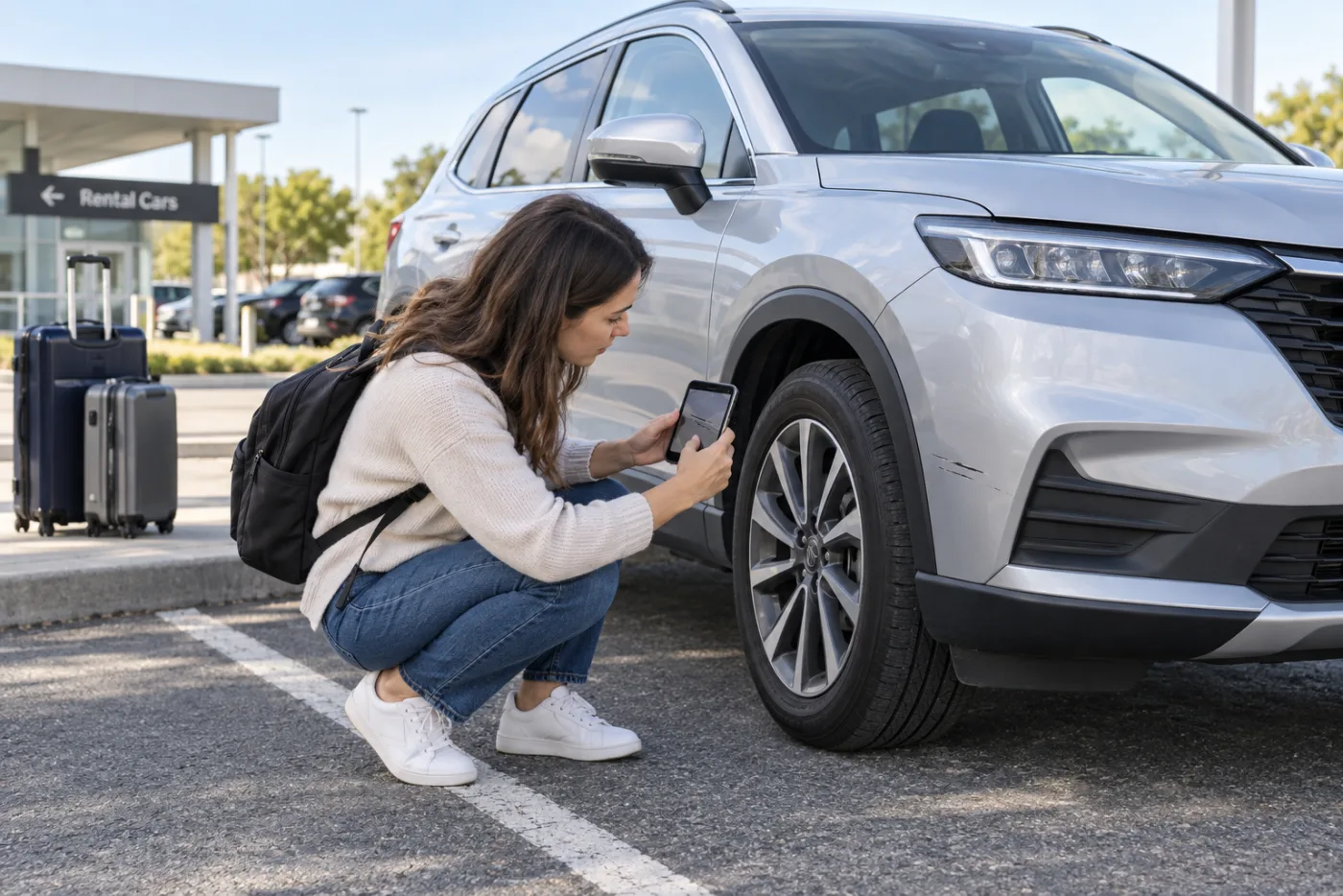
Coverage decisions do not replace a good condition record. Walk around the vehicle in a well-lit area and take photos plus a short video. If an employee says a mark is too small to matter, confirm that it appears on the condition report anyway.
For a road trip, pair this process with the roadside breakdown and emergency-kit guide. Do not install equipment or attempt a repair on the rental without first following the company’s instructions.
People and immediate hazards come before coverage debates. Move out of a dangerous traffic lane if it is safe and lawful to do so. Call 911 for injuries, fire, or an active roadway hazard, and follow local accident-reporting requirements.
An unapproved tow or repair can create a separate dispute. Do not drive an unsafe car, but except in an immediate emergency, use the contact and authorization process in the rental agreement.
When practical, return the vehicle during staffed hours and obtain a final receipt. With an after-hours key drop, the contract may keep responsibility with the renter until the company inspects the car.
Alex has liability, collision, and comprehensive coverage on a personal auto policy and a credit card with a rental collision benefit. The insurer confirms that rental damage can be covered subject to a deductible. The card administrator confirms that its benefit is secondary and may address some eligible costs after the personal policy. The card does not provide third-party liability.
Alex compares the rental company’s waiver price with the deductible, possible loss-of-use gaps, and the burden of filing two claims. Declining the waiver may be reasonable after written confirmation, while buying it may be reasonable if avoiding a personal claim and reducing paperwork is worth the cost. Either way, Alex pays with the eligible card, follows its conditions, and separately confirms liability protection.
Jordan normally uses public transportation and has no personal auto policy. The credit-card benefit addresses eligible damage or theft of the rental but does not provide liability coverage or medical protection. Jordan separately evaluates the rental company’s damage waiver and liability option, then checks health and travel-insurance coverage for emergency care.
Someone who rents frequently can ask a licensed professional whether a non-owner auto policy fits their situation. That policy should not be assumed to cover physical damage to the rental itself. The best choice for one annual vacation can differ from the best arrangement for a person who drives rentals every month.
A couple plans to share driving. Their insurer and card administrator both require an eligible or authorized driver. They list both people on the rental agreement rather than assuming marriage creates automatic authorization. If an adult child might drive, they check age rules, additional-driver fees, and coverage before handing over the keys.
When the route includes mountain roads or parks, the family also uses the scenic-drive road, weather, and daylight checklist. Insurance helps allocate financial loss after an incident; it does not make fatigued driving or a prohibited road safe.
No. A personal policy may extend to the rental but still have a deductible, vehicle or business-use exclusions, and gaps for loss of use, diminished value, or administrative fees. Describe the actual trip to the insurer, obtain the answer in writing, and compare it with the rental product.
Some cards provide eligible collision or theft protection for the rental vehicle. Not every card does, and liability, injuries, and belongings may be outside the benefit. Current terms may require full payment with the card, declining CDW, and compliance with vehicle, location, and duration limits.
The names and terms vary, but both commonly refer to a waiver that reduces contractual responsibility for covered damage or theft of the rental. Read the specific agreement to identify included charges and exclusions.
Not necessarily. The accident and product terms may still require notice to a personal insurer. Follow the separate notice requirements of the rental company, personal insurer, and card benefit administrator. Delayed notice can complicate a claim.
Do not assume it does. Benefits can differ or be absent, and the rental company may require a larger hold or additional identification. Verify both the card terms and the rental company’s debit-card policy in advance.
It depends on the company, vehicle, and insurance. Border authorization and local liability requirements can differ, especially for Mexico. Obtain clear written permission and coverage information before the trip; an unauthorized crossing may violate the agreement.
Yes. Mark it on the condition report and capture both a close view and a wider view that shows its location. Repeat the documentation at return and retain the final receipt.
Stop in a safe location and contact the rental company’s roadside number first. The contract and equipment determine the approved procedure, and roadside work can be dangerous. Call 911 first for an immediate threat to life, fire, or traffic safety.
Rental car protection is not one yes-or-no purchase. Separate damage to the rental, liability to other people, medical costs, belongings, and charges beyond repairs. Then identify whether a personal policy, credit-card benefit, travel policy, employer plan, or rental product handles each risk and under what conditions. A one-page coverage map matched to the actual drivers, vehicle, destination, and rental length can reduce both duplicate spending and uninsured gaps.
Pickup and return photos, the agreement, and receipts are as important as the coverage decision. After an incident, protect people first and notify the rental company, insurer, and card benefit administrator through their respective procedures. When an answer is unclear, request the current written terms instead of relying only on a verbal explanation at the counter.
브라우저 메뉴에서 앱 설치 또는 홈 화면에 추가를 선택해 주세요.