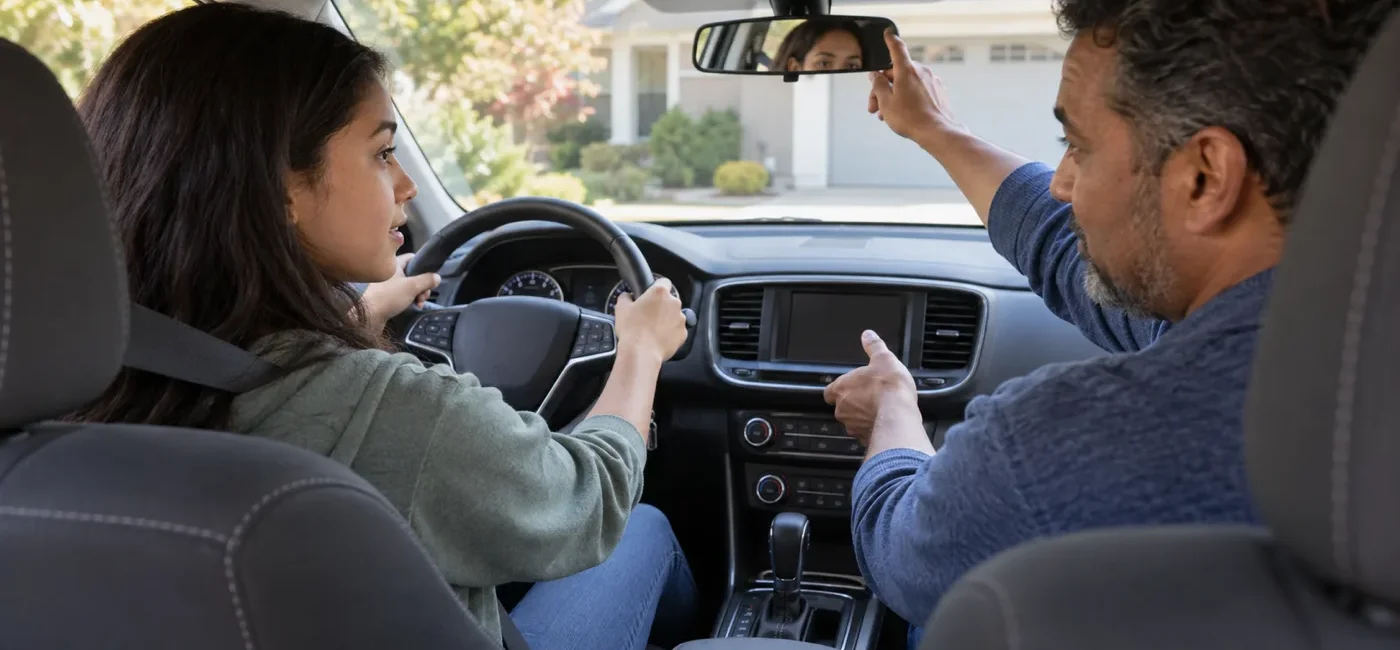
Teen Driver Safety Guide: GDL, Night Driving, Passengers, and Parent Rules
Smartor 편집팀
September 20, 2026

A driver’s license does not mean a teenager is ready to handle every road, passenger, weather condition, and time of day alone. New drivers need more than reminders to “be careful.” They need a system that checks the current license restrictions, builds experience from easy conditions to difficult ones, and puts family rules for passengers, nighttime driving, phones, and impaired driving in writing.
The National Highway Traffic Safety Administration (NHTSA) explains that all 50 states and the District of Columbia use graduated driver licensing, or GDL, to phase in driving privileges. The exact ages, supervised-practice requirements, passenger limits, and nighttime restrictions vary by state. This guide is therefore not a substitute for your state DMV rules. It is a practical framework for families to manage the first 90 days and the months that follow.
This article provides general U.S. traffic-safety information, not legal, insurance, medical, or individualized driver-training advice. License conditions and insurance obligations vary by state, age, vehicle, household, and policy. Confirm your situation with the state DMV, your insurance policy and carrier, a qualified driving school, and other appropriate professionals.
States use different names for learner permits, intermediate licenses, provisional licenses, and full privileges. Do not rely on a family member’s memory or an undated summary. Open the official state DMV page, identify the teen’s exact stage, and record:
A note that says only “no driving after 11 p.m.” may omit who the restriction covers, when it begins and ends, and whether a school, work, medical, or family exception requires documentation. Write the details and the official URL. Review the page whenever the license stage changes and again at the start of a school term or insurance renewal.
If a newly licensed teen asks to drive two friends after school, do not decide based on the short distance. Check the current passenger limit, the definition of family members, and any adult-supervision requirement. Even when the ride is legal, a family agreement can be stricter while the teen has only two weeks of solo experience. Give the teen a simple response to peer pressure: “My new-driver rules do not allow passengers yet.”
The CDC notes that crash risk is particularly high during the first months of licensure. Supervised practice and unrestricted solo driving should not be treated as adjacent steps. Put a progression on the calendar, and move forward because the teen demonstrates consistent skills—not merely because a date has passed.
A useful practice log records the date, duration, day or night, road type, weather, skills practiced, difficult moments, and the next goal. Total hours alone do not show whether a teen can scan for hazards, choose safe gaps, control speed, or recover from a wrong turn. Also note how often the supervising adult had to intervene.
New drivers have less spare attention for fixing a problem while moving. Resolve predictable issues before shifting out of Park:
Adults need to model the same behavior. A parent who checks messages at a red light or programs navigation while moving undermines the family rule. If the route must change, pull into a legal, safe parking location before touching the device.
The CDC provides a Parent-Teen Driving Agreement to help families get on the same page. The purpose is not to create a dramatic punishment document. It is to define when driving is allowed, what behavior is required, and how the teen can ask for help without making a dangerous decision.
Replace “drive responsibly” with language such as “the phone may be handled only after the car is legally parked and the transmission is in Park.” Replace an emotional, indefinite loss of driving privileges with a predictable response: “A phone-rule violation pauses solo driving for seven days; three supervised drives and a family review are required before restoration.”
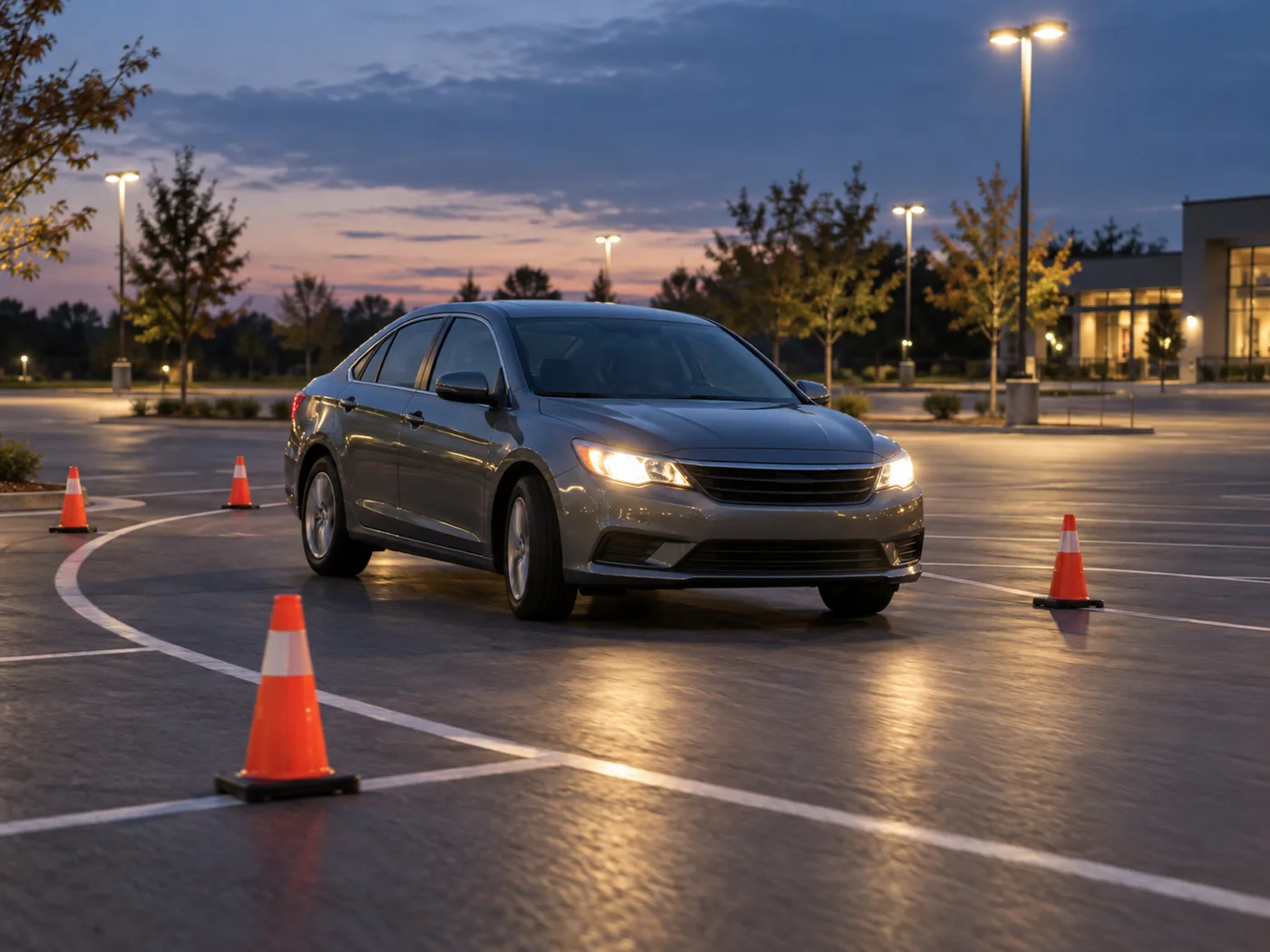
The CDC reports that teen and young-adult passengers increase crash risk for an unsupervised teen driver, and that the risk rises with additional passengers. Night driving is harder for all drivers and is particularly risky for inexperienced teens. A legal privilege does not have to become an immediate family privilege.
A simple starting rule is no peer passengers while the teen builds consistent solo experience. Add one passenger only after safe performance is established and state law allows it. Practice darkness first on a short, familiar route in clear weather with an adult. Avoid stacking hazards, such as a rainy Friday night, several friends, fatigue, and an unfamiliar freeway.
It is easier to remove a cue before driving than to resist it repeatedly. Configure the phone to enter a driving focus automatically, keep emergency exceptions narrow, and store it in a bag or compartment outside the driver’s reach. Select music and enter the destination before moving.
If parents require location sharing, they should not also demand an immediate response from a moving driver. Normalize “reply after parking.” A dashboard screen, smartwatch, food, makeup, pets, and active passengers can also take attention away from driving. A rule that mentions only texting is incomplete.
The posted limit is not a promise that the limit is safe in rain, darkness, construction, a curve, or a pedestrian-heavy area. Ask the teen to narrate hazards early instead of reacting only when brake lights appear.
Repeated hard acceleration and braking may show that the driver is looking too close to the hood rather than scanning farther ahead. After a mistake, pull over safely and discuss what appeared late and where speed should be adjusted next time. Calm, specific feedback produces more learning than a long argument inside a moving vehicle.
Do not let the first wet-weather drive be a solo school commute. Begin with light rain, daylight, a familiar low-speed road, and an adult supervisor. Practice wiper controls, defogging, headlights, smoother braking, and a longer following interval. In snow or ice, the safest choice may be not to drive, depending on tires, road treatment, visibility, and experience.
Break freeway practice into ramp acceleration, gap selection, mirror and blind-zone checks, lane stability, following distance, and early exit preparation. Start in light daytime traffic and agree on short coaching phrases before the trip. For a longer family trip, use the fall scenic-drive safety checklist to add official road conditions, weather, sunset, fuel, and rest stops to the plan.
When possible, avoid giving a novice driver a high-performance vehicle, an unusually small vehicle, or a car missing modern crash-protection systems. Favor predictable handling, a manageable size, electronic stability control, strong crashworthiness, and a sound maintenance history. Automatic emergency braking, forward-collision warning, and lane-departure warning can help, but they do not replace attention or judgment.
For a used vehicle, verify the title, recalls, tires, brakes, repair history, and signs of flood or collision damage with an independent mechanic. The flood-damaged used-car checklist explains how to review title branding, corrosion, odors, and electronic problems before purchase.
Ask the insurer when the teen must be added, which vehicle the teen is assigned to, and how student, training, or telematics discounts work. Understand what driving data is collected and who can see it. Never misstate a driver, garaging address, or vehicle use to reduce the premium. Use the auto insurance renewal checklist to compare liability limits, deductibles, medical provisions, rental coverage, and roadside assistance.
Practice the sequence while the car is parked so the teen is not reading it for the first time under stress.
Keep registration and proof of insurance, emergency contacts, a charging cable, flashlight, reflective gear, and seasonal basics in the vehicle. Also teach that leaving the vehicle on a high-speed shoulder to retrieve equipment may be more dangerous than waiting belted inside or at another safer location. The correct choice depends on the scene.
The review should not feel like an interrogation. Reinforce honest reporting, then distinguish a skill gap from a deliberate rule violation. A skill gap calls for teaching and supervised repetition. A rule violation calls for the consequence already written in the agreement and a clear restoration path.
Driver education is an important foundation, but it cannot provide extensive experience in every route, weather condition, and time of day. NHTSA advises parents not to rely on driver education alone. Combine it with GDL compliance, supervised practice, limited solo privileges, and regular review.
It may help confirm that a parked vehicle reached a destination, but it does not prevent a crash or replace judgment. Agree on privacy, battery use, false alerts, and who can see the data. Never require the teen to interact with the app or answer a message while driving.
First follow the state GDL passenger restriction. After it becomes legal, look for consistent solo performance with speed, following distance, scanning, seat belts, and phone rules. Add the privilege gradually under the written family agreement.
Model year matters because safety designs evolve, but it is not the only factor. Crashworthiness, size and power, stability control, tire and brake condition, recalls, maintenance, and repair quality all matter. Use reputable safety ratings and an independent inspection within the family’s budget.
Reporting duties depend on state law, the policy, injuries, and the facts. Prioritize safety and injury assessment, avoid making an immediate admission or informal cash settlement, and follow applicable police-reporting thresholds and the policy’s notice terms.
Choose one skill per drive, agree on short coaching words, and stop in a safe place when emotions rise. If the pattern continues, consider additional instruction from a qualified professional driving instructor rather than forcing an unsafe family session.
브라우저 메뉴에서 앱 설치 또는 홈 화면에 추가를 선택해 주세요.
[…] Smartor 편집팀 September 20, 2026 Read this guide in English → […]